Cadd9 Guitar Chord
Cadd9 is the C added ninth chord. It has four notes: C, E, G and D. It is a strummer's favourite: no barre, an easy open shape, and in songs in the key of G it often takes the place of plain C because it moves to and from G with almost no finger travel.

An open C shape with the B string moved up to the 3rd fret, where the D lives. Three fingers, no barre, two open strings.
How to play Cadd9, step by step
- Index finger: 2nd fret, D string
- Middle finger: 3rd fret, A string
- Ring finger: 3rd fret, B string
- Leave the G and high E strings open. Strum from the A string down, skipping the low E.
Once this feels solid, learn the 4 finger version below. With the pinky on the high E string, the top of the chord matches the top of a common G grip, so switching between G and Cadd9 becomes two fingers instead of a whole new chord.
More ways to play Cadd9
There are 2 common Cadd9 shapes in total: the standard one at the top of the page, plus these, easiest first. You only ever need one. Tap any card to hear it.

Fuller and rounder than the standard shape, with a G on top instead of an open E.
Songs that use the Cadd9 chord
- Learn this song(opens a new tab on our partner site)
Dust in the Wind
Kansas
- Learn this song(opens a new tab on our partner site)
Imagine
John Lennon
- Learn this song(opens a new tab on our partner site)
Good Riddance (Time Of Your Life)
Green Day
- Learn this song(opens a new tab on our partner site)
Behind Blue Eyes
The Who
Mayberry
Rascal Flatts
Capo 2
Learn this song(opens a new tab on our partner site)
If it buzzes or sounds muddy
- Open G string dies
- The index finger on the D string is leaning over. Curl it so it presses straight down and the G string underneath has room to ring.
- High E sounds choked
- The ring finger on the B string is touching the high E with its pad. Come down on the very tip so the open string clears it.
- Low E rumbles into the chord
- The low E is not part of this voicing. Start the strum from the A string, or let your middle fingertip brush the low E to keep it quiet.
What makes it a Cadd9
C · E · G · D 1 3 5 9
Cadd9 is a C major triad (C, E, G) with a ninth added: D. The ninth is the second note of the C scale played an octave higher, and because the third (E) stays in the chord, Cadd9 still sounds fully major, just brighter and more open than plain C.
Its favourite home is the key of G, where Cadd9 is the IV chord. The added D is the fifth note of that key, a note the G and D chords already contain, which is why Cadd9 blends so smoothly with them and why so many G key songs write Cadd9 where you might expect C.
Cadd9 vs Csus2
Both chords add a D to C, but Csus2 removes the third (E) to make room for it, while Cadd9 keeps the third and stacks the D on top. That one note decides the character: Cadd9 is clearly major with extra shimmer, Csus2 is hollow and undecided, neither major nor minor. Choose Cadd9 when the chord still needs to feel like C, and Csus2 when you want suspense that resolves a moment later.
Cadd9 in major keys
Every note of Cadd9 sits inside these keys. See how it works alongside the other chords in each one.
Cadd9 chord questions
Is Cadd9 a good beginner chord?
Yes. The standard shape uses three fingers, no barre, and two open strings. Many beginners find it easier than plain C because no finger sits on the 1st fret.
What is the difference between Cadd9 and C9?
C9 contains a flat seventh (B♭) as well as the ninth, which gives it a bluesy, dominant sound. Cadd9 adds only the D, so it stays a bright major chord.
Can I play Cadd9 instead of C?
In key of G songs, usually yes, and it often sounds better because the added D belongs to the key. In other keys, listen first: the extra note can clash with the melody.
What songs use Cadd9?
Wonderwall by Oasis, Good Riddance by Green Day, More Than Words by Extreme and Dust in the Wind by Kansas all lean on Cadd9, and all four are on this page with playback.
Why does Cadd9 pair so well with G?
The two chords share notes, and in the 4 finger version they share finger positions on the top strings too. You can switch between them by moving only your fingers on the bass strings.
Chords to learn next
- Cthe plain major
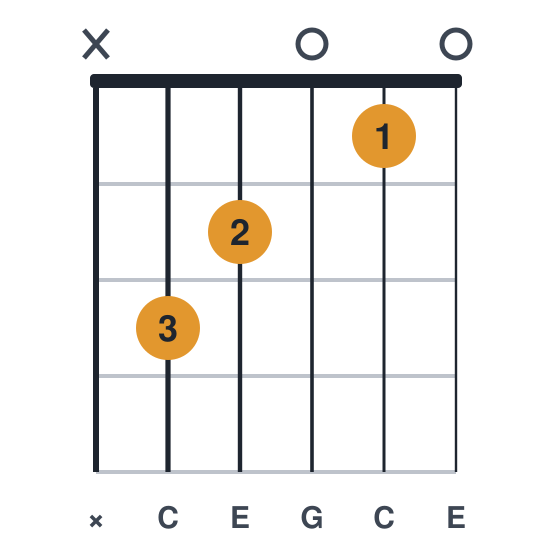
- Csus2the 9 without the 3
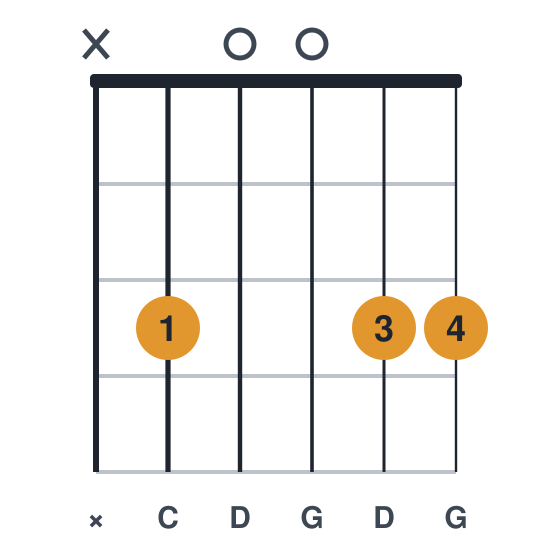
- Cmaj7another colour on the same major
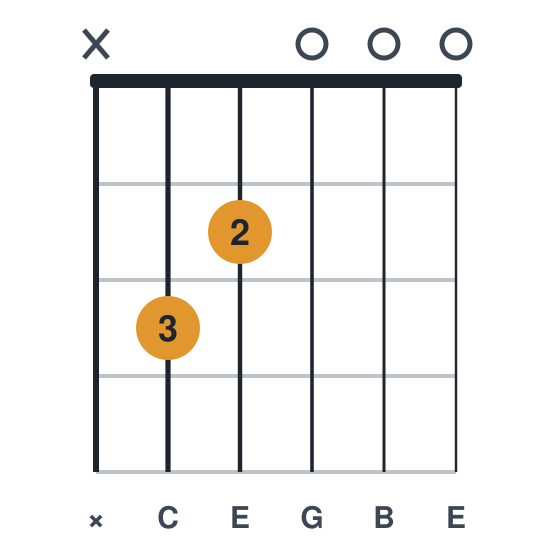
- Cmthe minor chord on the same root, a darker place to go next
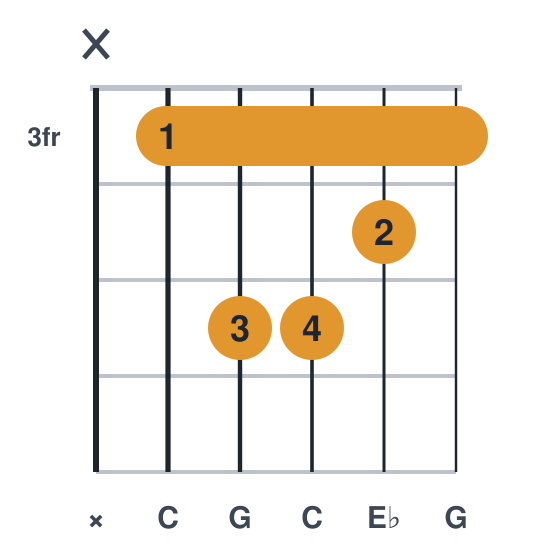


Other C chords
Cadd9 guitar chord chart (x32030) from melodician.com