E7 Guitar Chord
E7 is the E dominant seventh chord. It has four notes: E, G♯, B and D. The open shape takes two fingers and you strum every string, so E7 is one of the easiest chords on the guitar. It is also the engine of blues in E, where whole songs run on it.

Two fingers and four open strings. Strum everything; every string belongs to the chord.
How to play E7, step by step
- Index finger: 1st fret, G string
- Middle finger: 2nd fret, A string
- Strum all six strings.
This is open E major with the ring finger lifted off the D string. Once you notice that, switching between E and E7 becomes a one finger move.
More ways to play E7
There are 3 common E7 shapes in total: the standard one at the top of the page, plus these, easiest first. You only ever need one. Tap any card to hear it.

Tight and trebly next to the open shape, with no low end at all.

Rounder and more contained, with none of the open string shimmer.
Songs that use the E7 chord
Here Comes The Sun
The Beatles
Capo 7
Learn this song(opens a new tab on our partner site)- Learn this song(opens a new tab on our partner site)
Imagine
John Lennon
Yesterday
The Beatles
Capo 5
Learn this song(opens a new tab on our partner site)- Learn this song(opens a new tab on our partner site)
Day Tripper
The Beatles
- Learn this song(opens a new tab on our partner site)
Still Got the Blues
Gary Moore
Folsom Prison Blues
Johnny Cash
Capo 1
Learn this song(opens a new tab on our partner site)
If a string thuds or buzzes
- Open D string sounds dead
- The middle finger on the A string is tipping over onto it. Bring the finger down more vertically so the D can ring open.
- Open B string is muted
- The index finger on the G string is the usual culprit. Curl it so only the tip touches the fretboard and nothing rests on the B.
- G string buzzes
- Slide the index finger back so it sits just behind the 1st fret wire and press with the very tip. At the 1st fret, position matters more than force.
What makes it an E7
E · G♯ · B · D 1 3 5 ♭7
E7 is an E major triad (E, G♯, B) plus a minor seventh (D). The D and the G♯ are the tense pair: they sit an awkward distance apart and resolve outward into the notes of an A chord. That makes E7 the V7 of A major and A minor. In blues in E the same chord lives a second life as the home chord, where the tension is not a problem to solve but the sound itself. Between those two jobs, E7 is one of the most played dominant sevenths on the instrument.
E vs E7
E major has three notes; E7 replaces the doubled E on the D string with a D note. On guitar that means lifting one finger: play open E, take the ring finger off, and you have E7. Use plain E when the chord should feel settled, and E7 when the music is about to move to A or when you want the loose, bluesy version of the same chord.
E7 in major keys
Every note of E7 sits inside these keys. See how it works alongside the other chords in each one.
E7 chord questions
Is E7 a good chord for beginners?
Yes. The open shape needs two fingers, has no barre, and every string is strummed. It is often learned in the same week as E major.
What is the difference between E and E7?
E7 adds a D note. In the open shapes you get it by lifting the ring finger off the D string, so E7 is actually one finger easier than E.
Do you strum all six strings in E7?
Yes. Every string is part of the chord in the open shape, including both E strings.
What does E7 resolve to?
A. E7 is the dominant (V) chord of A major and A minor. In blues in E it also works as the home chord.
What songs use E7?
Hallelujah, Don't Look Back in Anger and Angie all use E7 to lean into A minor, and Sweet Home Chicago runs on E7 as its home chord.
Chords to learn next
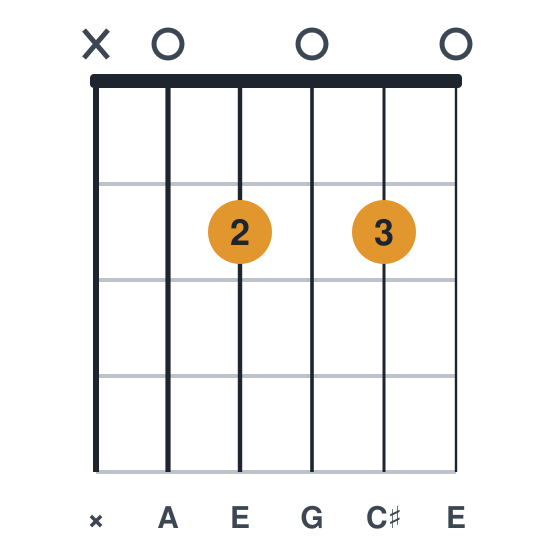
- A7E7 resolves to A
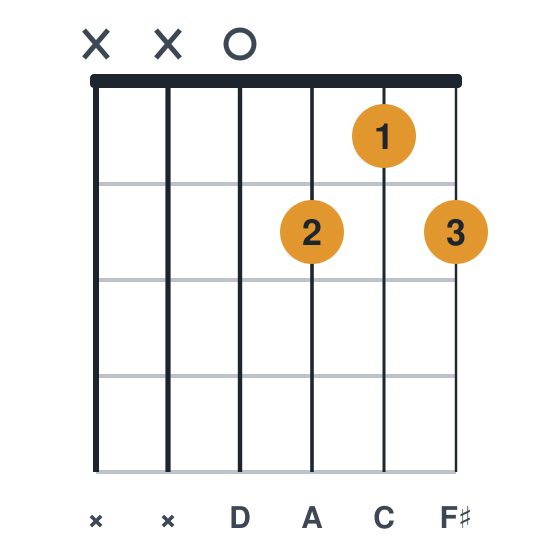
- D7the IV chord next to E7 in blues in A
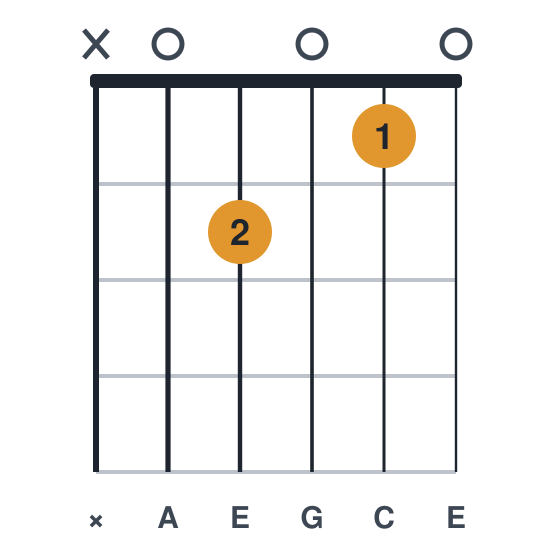
- Am7E7 is the V chord of A minor
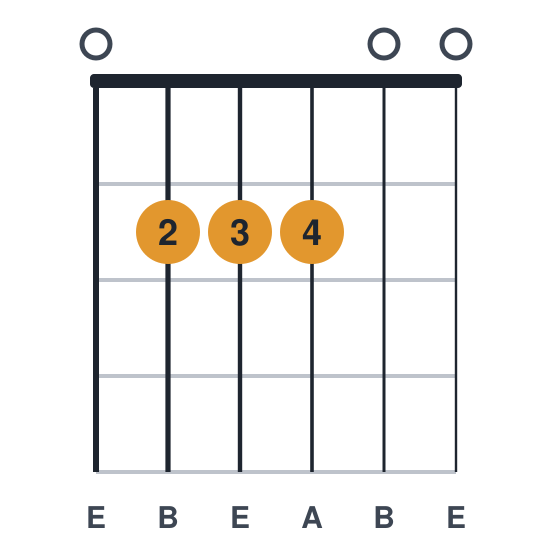
- Esus4the suspended color players hang on before resolving


Other E chords
E7 guitar chord chart (020100) from melodician.com