Cmaj7 Piano Chord
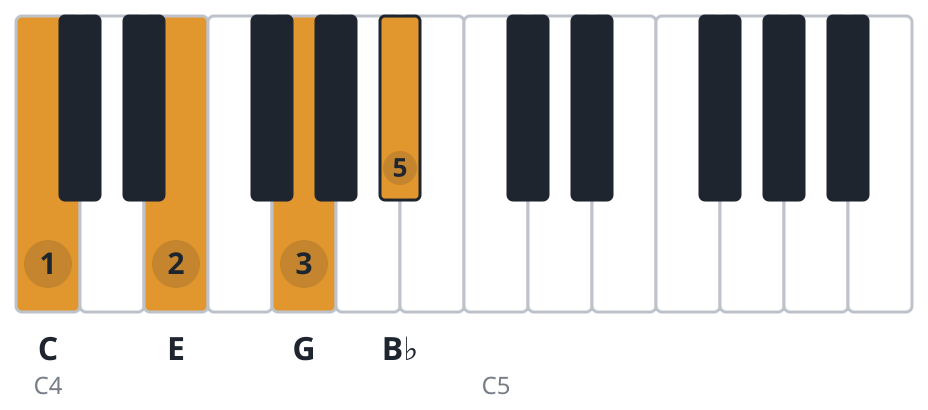
Cmaj7 is the C major seventh chord. It has four notes: C, E, G and B. All four are white keys, and the sound is the soft, unhurried one people associate with jazz and film music.

C at the bottom, then E and G and B. Right hand 1-2-3-5, left hand 5-3-2-1. Every key here is white.
How to play Cmaj7 on piano, step by step
- Start on middle C. That is the lowest note of the chord.
- Thumb (1): C
- Index finger (2): E
- Middle finger (3): G
- Little finger (5): B
- Press them together with the right hand. The left hand plays the same notes with fingers 5, 3, 2, 1 an octave lower, or just C on its own as a bass note.
The B sits a half step below the C above it. That closeness is the whole flavour of a major seventh: two notes almost touching, which is a gentle blur rather than a clash.
Inversions of Cmaj7
The same 4 notes with a different one at the bottom. All of them are Cmaj7; which you play depends on what the hand is coming from. Tap any card to hear it.


If it sounds wrong
- The top note is B flat
- That gives C7, a restless blues chord. Cmaj7 needs B natural, the white key.
- The chord sounds harsh low down
- A major seventh has two notes a half step apart, and low on the keyboard that turns into mud. Play this chord at or above middle C.
- The little finger is quiet
- The B is the note that names the chord. Lean the hand slightly outward so the weight reaches the little finger rather than pressing harder with it.
What makes it a Cmaj7
C · E · G · B 1 3 5 7
Cmaj7 is a C major triad, C E G, with a B added on top: the major seventh. The B is one half step below the octave C, and that near miss is what gives the chord its soft, unresolved quality.
It is the I chord of C major and the IV of G. In jazz it is the chord a ii V I lands on, and in pop it is the way to make a plain C sound thoughtful rather than final.
Cmaj7 vs C7
One key apart, and opposite in mood. Cmaj7 has B natural and sits perfectly still; C7 has B flat and pushes toward F.
Mixing them up is the most common seventh chord mistake there is. If a chart says maj7 it wants the settled sound; a bare 7 always means the restless one.
Cmaj7 in major keys
Every note of Cmaj7 sits inside these keys. See how it works alongside the other chords in each one.
Questions about Cmaj7
Which notes are in a Cmaj7 chord on piano?
C, E, G and B. All four are white keys.
What fingers do you use for Cmaj7?
Right hand: thumb on C, index on E, middle on G, little finger on B. Left hand: 5, 3, 2, 1.
What is the difference between Cmaj7 and C7?
The top note. Cmaj7 has B natural and sounds calm; C7 has B flat and sounds bluesy and unfinished. They are one key apart.
Why does Cmaj7 sound jazzy?
Because of the half step between the B and the C above it. That interval is rare in simple chords and common in jazz voicings, so the ear associates it with the style.
Where is the Cmaj7 chord used?
As the I chord in C and the IV in G. In jazz it is the resting chord at the end of a ii V I.
Chords to learn next
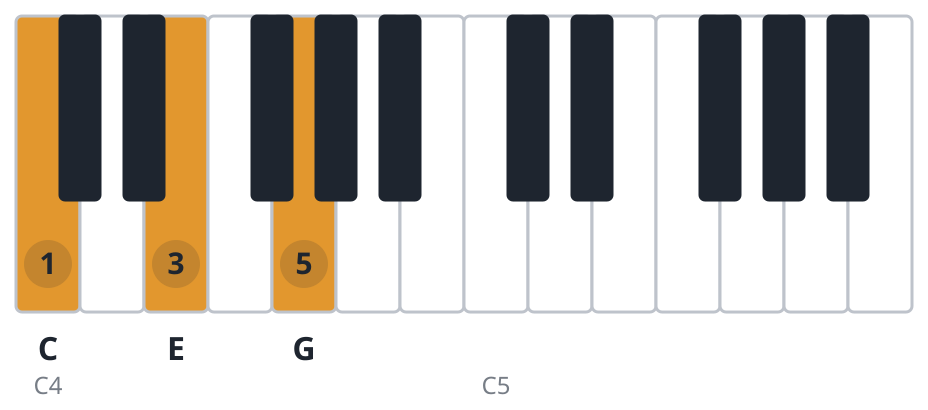
- Cthe plain major
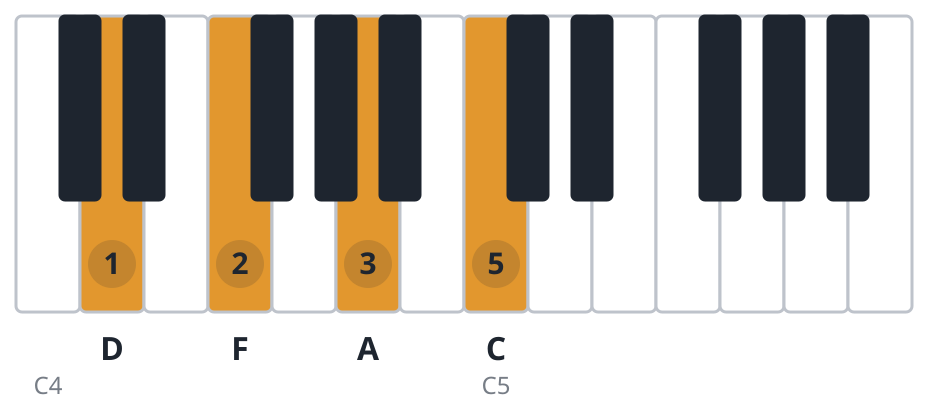
- Dm7the ii chord beside Cmaj7 in the key of C
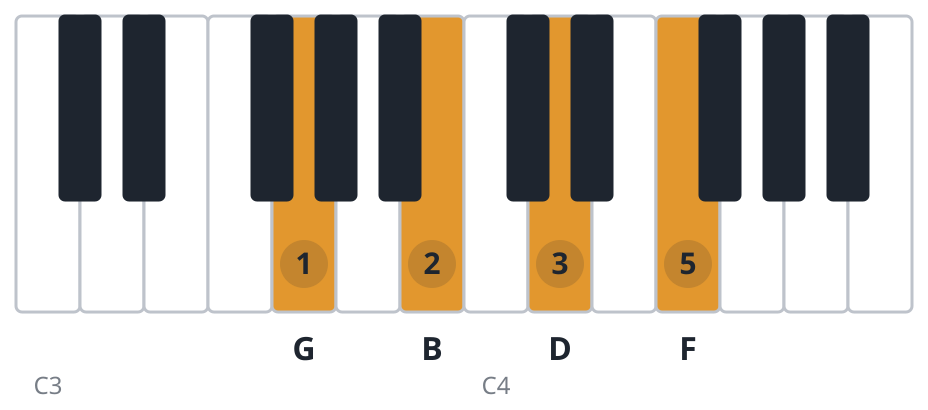
- G7the V chord of C
- C7the restless seventh, a half step below this one