Chords in the Key of G
The key of G major contains seven chords: G, Am, Bm, C, D, Em and F#dim. Every F in the key is played as F sharp, and most songs in G lean on G, C, D and Em.
The seven chords on guitar
Each chord below opens its own page, with more shapes up the neck, audio for every voicing and a printable chart. Tap the play button on any card to hear it.


The seven chords on piano
The same seven chords on a keyboard, in root position. Each one opens its own page, with every inversion and the finger numbers for both hands.
IGG B D 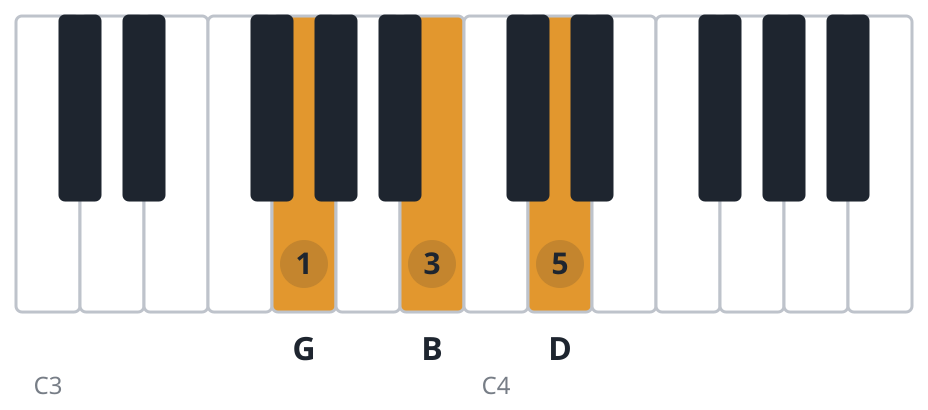
the home chord
iiAmA C E 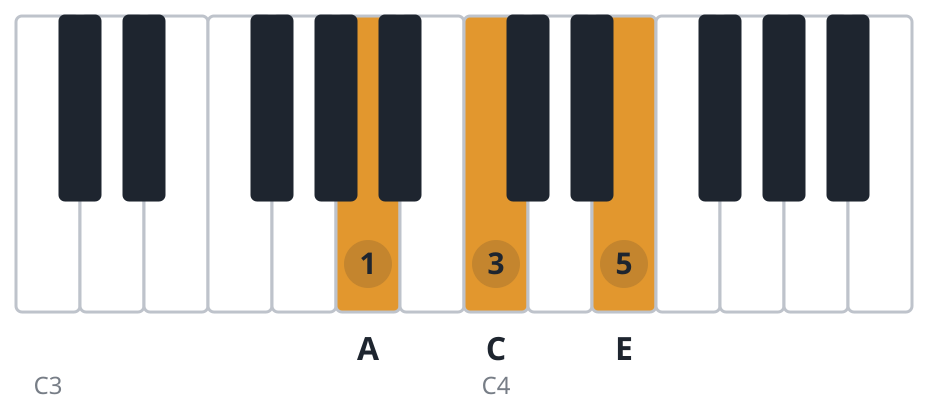
the gentle step up from home
iiiBmB D F♯ 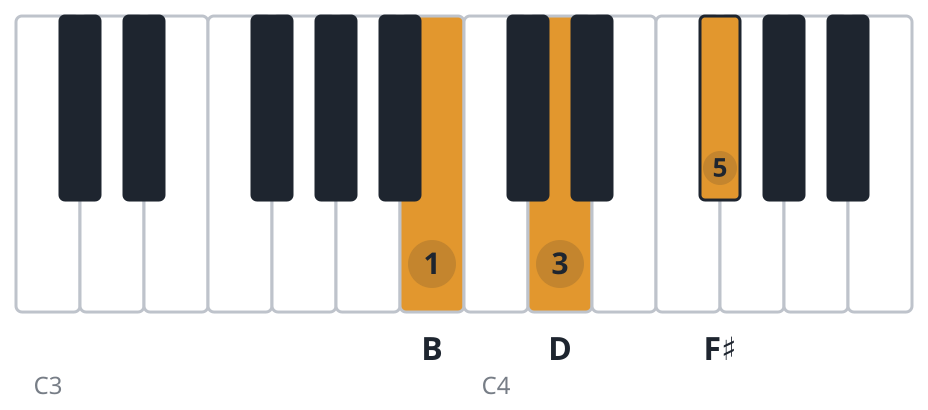
the darkest of the three minors
IVCC E G 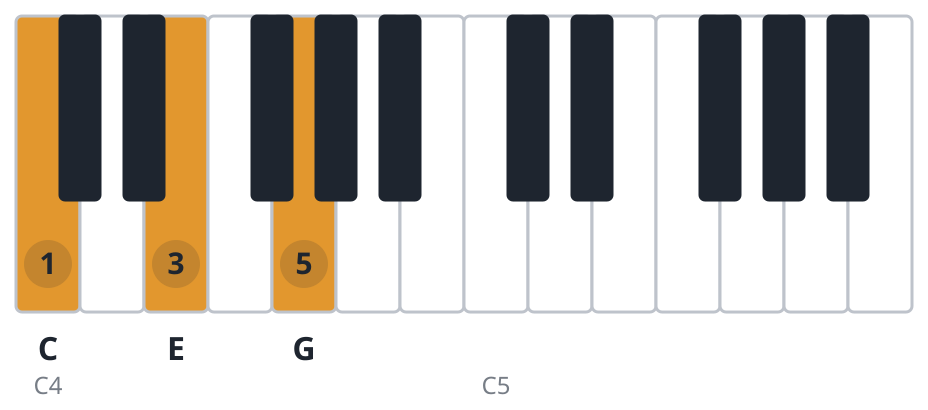
the lift away from home
VDD F♯ A 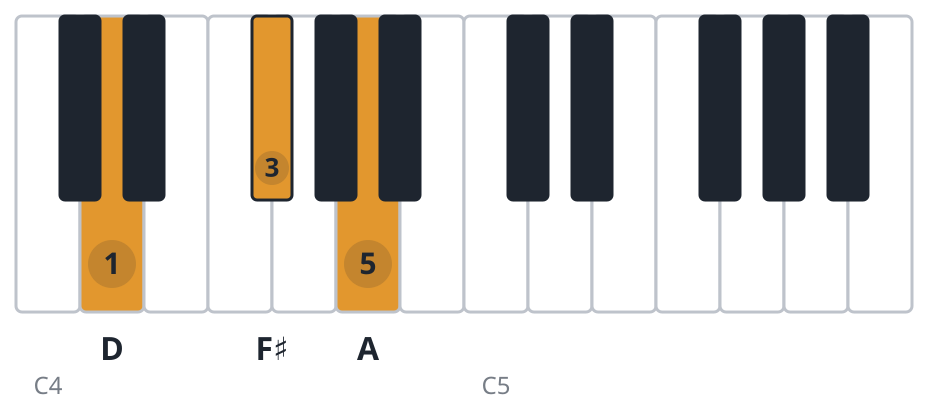
the chord that pulls back home
viEmE G B 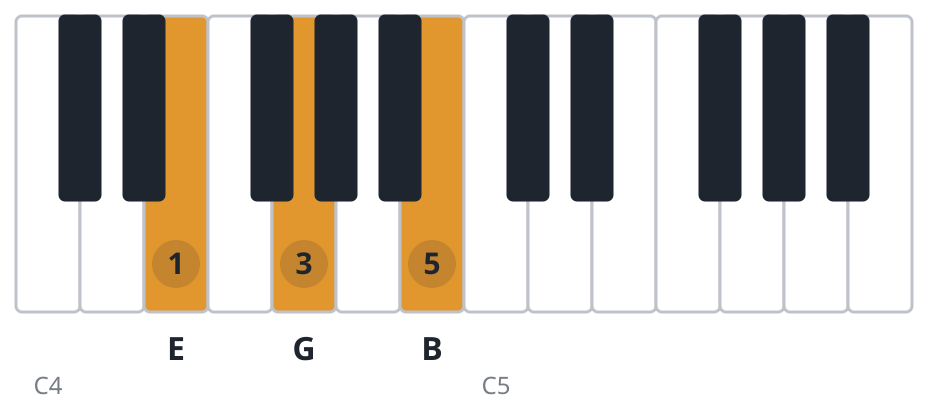
the relative minor
vii°F#dimF♯ A C 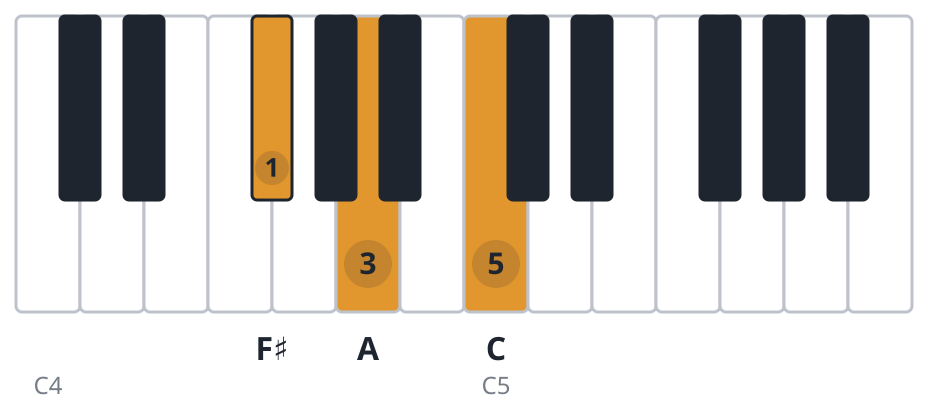
the tense one, used sparingly


The seventh chords in G major
Add one more note to each chord and the key gains its seventh chords, which is where most jazz and a good deal of soul begins.
Common progressions in G major
- I - V - vi - IV
G D Em C
Four open chords, no barre anywhere. This is the single most played chord sequence on an acoustic guitar.
- I - IV - V
G C D
Three open chords covering most of country and folk. Add a seventh to the D and it pulls back to G harder.
- vi - IV - I - V
Em C G D
The same four chords starting on the minor, which makes a bright key sound wistful without changing a note.
Why these seven chords
On a stave, G major is written with one sharp, F#, which is how a reader knows the key before playing a note.
G sits one step clockwise from C on the circle of fifths, which is another way of saying it shares six of its seven notes with C. The only difference is F#, and that single note is what makes G feel like home instead of C.
The three major chords are G, C and D. The three minors are Am, Bm and Em, with Em doing most of the work because it is the relative minor and the easiest of the three to play.
On guitar
G is the other great guitar key, alongside C. G, C, D and Em are all open shapes, and those four alone carry an enormous amount of folk, country and rock.
The one obstacle is Bm, which needs a barre. Many players avoid it with a smaller three string version, or capo at the second fret and play the whole key using shapes from F major, where the equivalent chord is easier.
On piano
G major uses one black key, F#. Everything else is white, so the shapes stay close to what a beginner learned in C.
The F# only appears in two of the seven chords, the tonic G and the diminished chord, so most of the key still feels like C under the hand.
Questions about the key of G
What are the 7 chords in the key of G?
G, Am, Bm, C, D, Em and F#dim. G, C and D are major, Am, Bm and Em are minor, and F#dim is diminished.
Is the key of G easy on guitar?
Yes, apart from Bm. G, C, D and Em are open shapes, and a great many songs in G use only those four.
What is the relative minor of G major?
E minor. It has the same one sharp and the same seven chords, but rests on Em rather than G.
What do the numbers next to each chord mean?
They are each chord's place in the key, written as Roman numerals. In G major the I is G, the IV is C and the V is D. The numbering holds in every key, so the V of C major is G. That is why progressions get written as numerals like I, V, vi, IV: learn one and you have it in all twelve major keys.
Why are some numerals capitals and some lowercase?
The case tells you the chord quality. Capitals are major, which in G major means G, C and D. Lowercase are minor: Am, Bm and Em. The small circle on vii° means diminished, and here that is F#dim.
What is the relative minor of G major?
E minor. It is written with one sharp, F#, the same signature as G major, and it contains the same seven chords. Only the chord that sounds like home changes, from G to Em.
The relative minor
E minor is written with the same one sharp, F# and contains the same seven chords as G major. What changes is which one sounds like home, so the same shapes can be played darker without learning anything new. Chords in the key of E Minor