G Piano Chord
G major is the G piano chord. It has three notes: G, B and D. All three are white keys, and the shape is the same one C major uses, moved up the keyboard.

G at the bottom, then B and D. Right hand 1-3-5, left hand 5-3-1. Every key here is white.
How to play G on piano, step by step
- Start on the G below middle C. That is the lowest note of the chord.
- Thumb (1): G
- Middle finger (3): B
- Little finger (5): D
- Press them together with the right hand. The left hand plays the same notes with fingers 5, 3, 1 an octave lower, or just G on its own as a bass note.
This chord sits below middle C in root position, which puts it where the left hand usually lives. Play it with either hand; the shape is identical, only the finger numbers reverse.
Inversions of G
The same 3 notes with a different one at the bottom. All of them are G; which you play depends on what the hand is coming from. Tap any card to hear it.


If it sounds wrong
- You have played G, B and E
- The top note is D, not E. From B, skip C and land on D. Overshooting by one key is the most common mistake in this chord.
- The B is weak
- It is under the middle finger, which is the longest one, so it tends to press at a different angle from the others. Keep the knuckles level and let all three fingers drop together.
- The chord sounds low and thick
- In root position G sits below middle C. If that is too heavy for what you are playing, use the second inversion, D G B, which puts the same chord higher up.
What makes it a G
G · B · D 1 3 5
G major is the first, third and fifth notes of the G major scale: G, B and D. The four half steps from G to B make it a major third, which is the interval that makes the chord sound bright.
It is the I chord of G major, the IV of D and the V of C. That last job is the important one: G is the chord that pulls hardest back to C, which is why the two turn up together in so much music.
G vs G7
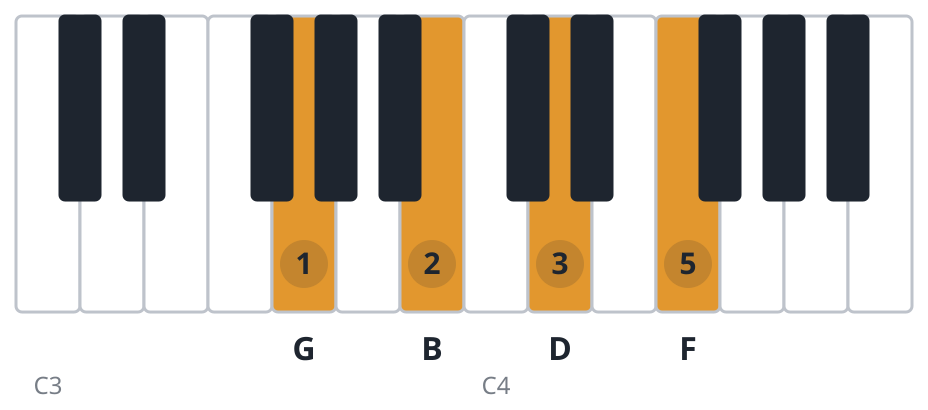
G7 is this chord with one note added: F, the flat seventh. G major sounds finished; G7 sounds like it is leaning toward C and will not settle until it gets there.
In the key of C, G7 is the chord that takes you home. Play G, then G7, then C, and the pull is obvious: adding the F is what creates it.
G in major keys
Every note of G sits inside these keys. See how it works alongside the other chords in each one.
Questions about G
Which notes are in a G chord on piano?
G, B and D, all white keys. From G, skip A to reach B, then skip C to reach D.
What fingers do you use for a G chord?
Right hand: thumb on G, middle finger on B, little finger on D. Left hand: little finger on G, middle finger on B, thumb on D.
Is the G chord hard on piano?
No. It is three white keys with the same spacing as C major, and no black keys are involved. If you can play C you already know the shape.
What is the difference between G and Gm?
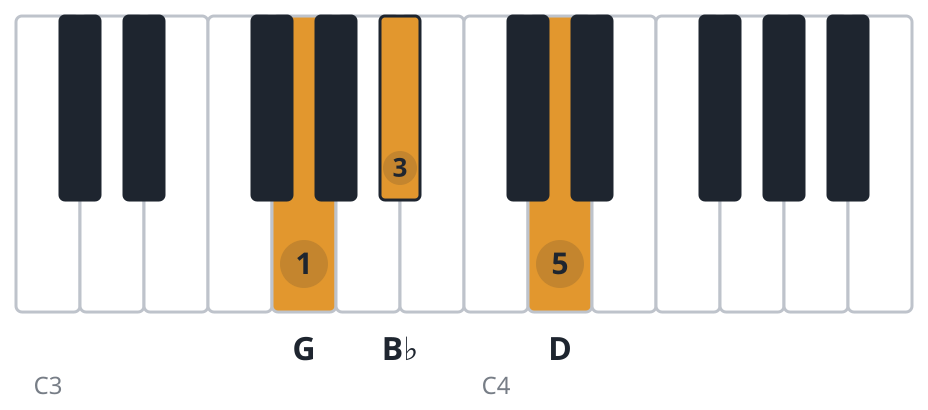
The middle note. G major uses B; G minor uses B flat, the black key just below it. That single key is the difference between bright and sad.
Where is the G chord used?
As the I chord in G, the IV in D and the V in C. The V job is the most common one, which is why G leads into C so often.
Chords to learn next
- Gmthe minor version of G, one note lower in the middle
- G7G with a seventh added, the chord that pushes to C
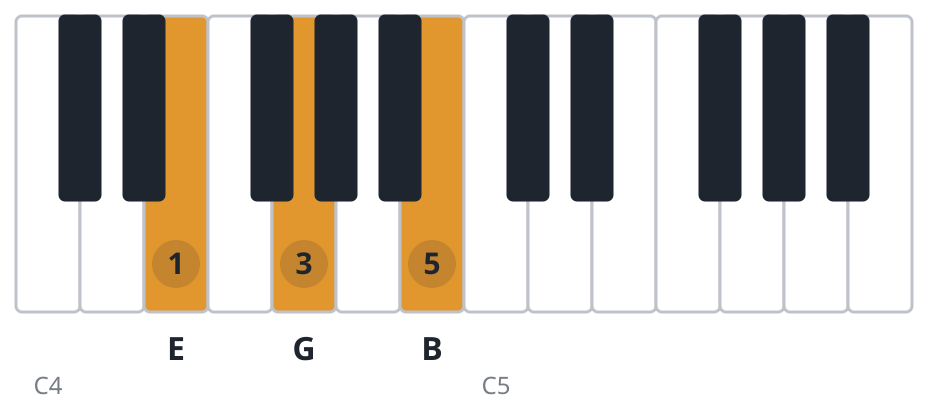
- Emthe relative minor of G, the same key signature
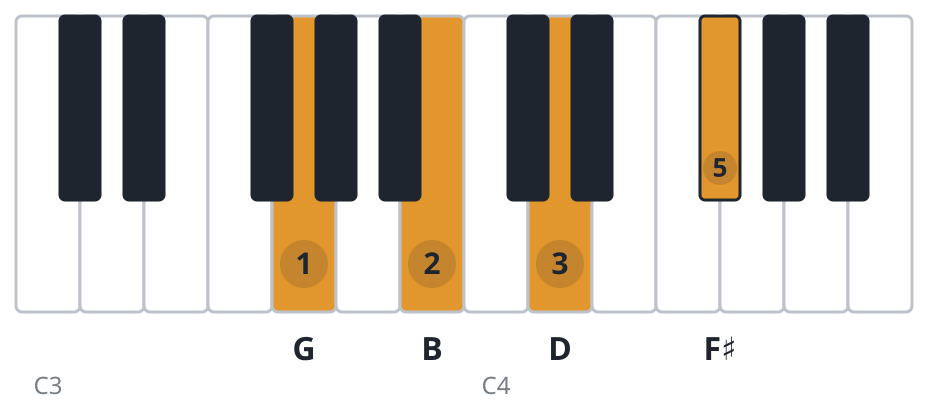
- Gmaj7the soft version of the same chord