G6 Piano Chord
G6 is the G sixth chord. It has four notes: G, B, D and E. All four are white keys, so the hand shape is the plain G major chord with one more white key, the E, under the little finger.

G at the bottom, then B, D and E. Right hand 1-2-3-5, left hand 5-3-2-1. All white keys, with the D and E a whole step apart at the top.
How to play G6 on piano, step by step
- Start on the G below middle C. That is the lowest note of the chord.
- Thumb (1): G
- Index finger (2): B
- Middle finger (3): D
- Little finger (5): E
- Press them together with the right hand. The left hand plays the same notes with fingers 5, 3, 2, 1 an octave lower, or just G on its own as a bass note.
Find G major first, G, B and D, then add the E one whole step above the D. The added note sits right next to the fifth, and that close pair at the top is what makes the chord sound like a sixth.
Inversions of G6
The same 4 notes with a different one at the bottom. All of them are G6; which you play depends on what the hand is coming from. Tap any card to hear it.


If it sounds wrong
- The top note landed on F
- That is one key too far, and it changes the chord completely: G with an F on top is G7, which wants to move to C. The sixth is E, the white key just above D.
- It sounds like E minor
- The same four notes read from E are Em7. If the E drifts to the bottom, that is what the ear hears. Keep G lowest, or anchor the chord with a low G in the left hand.
- The middle of the chord is uneven
- Four notes under one hand rarely speak equally at first. Drop the hand as one shape from just above the keys, and listen for the B and D as much as the outside notes.
What makes it a G6
G · B · D · E 1 3 5 6
G6 is a G major triad, G, B and D, with an E added: the sixth, a whole step above the fifth. The triad is untouched, so the chord keeps its G major brightness and gains a rounder, older colour from the E.
The same four notes counted from E spell Em7, the relative minor seventh. One pitch collection, two names, and the bass note casts the deciding vote. That is also why G6 works so well in songs that move between G and E minor: it is halfway between them.
G6 vs Gmaj7
Two ways to soften a G chord with one white key. G6 adds E, a whole step above the D; Gmaj7 adds F sharp, a half step under the G above. The sixth is nostalgic and finished, the major seventh floaty and modern.
Play G, B, D and rock the top note between E and F sharp to hear it. E settles the chord; F sharp suspends it. Charts are strict about which one they mean, so it is worth knowing both under the fingers.
G6 in major keys
Every note of G6 sits inside these keys. See how it works alongside the other chords in each one.
Questions about G6
Is G6 the same as Em7?
Same four notes: G, B, D and E. The lowest note names the chord. G in the bass makes it G6; E in the bass makes it Em7.
What fingers do you use for G6?
Right hand: thumb on G, index on B, middle on D, little finger on E, which is 1, 2, 3, 5. Left hand: 5, 3, 2, 1 an octave lower.
What is the difference between G6 and G7?
One key. G6 has E, a colour note that sits still. G7 has F, a flat seventh that pushes the chord toward C. They are neighbours on the keyboard and opposites in behaviour.
When would I use G6?
As a warmer final chord in the key of G, under melodies that rest on E, and in older pop, country and jazz endings where plain G would sound bare.
Is G6 hard to play?
No. All white keys and no stretch past a sixth. It is G major with one extra finger, and the 1-2-3-5 shape falls under the hand naturally.
Chords to learn next
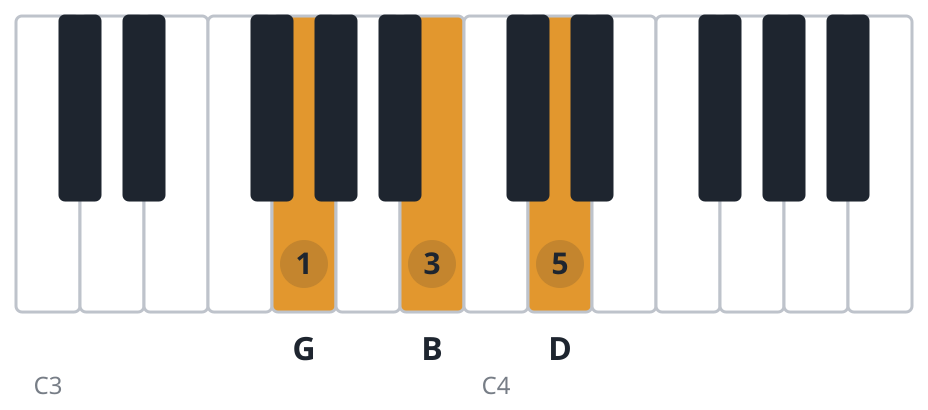
- Gthe plain major underneath it
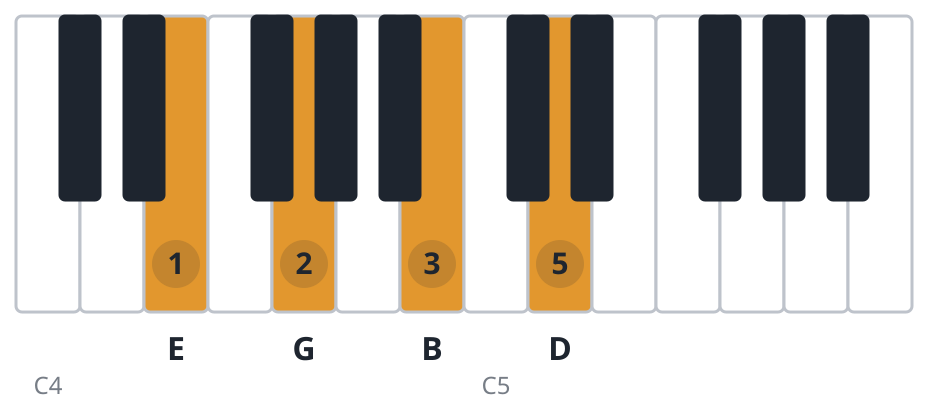
- Em7the same four notes counted from E
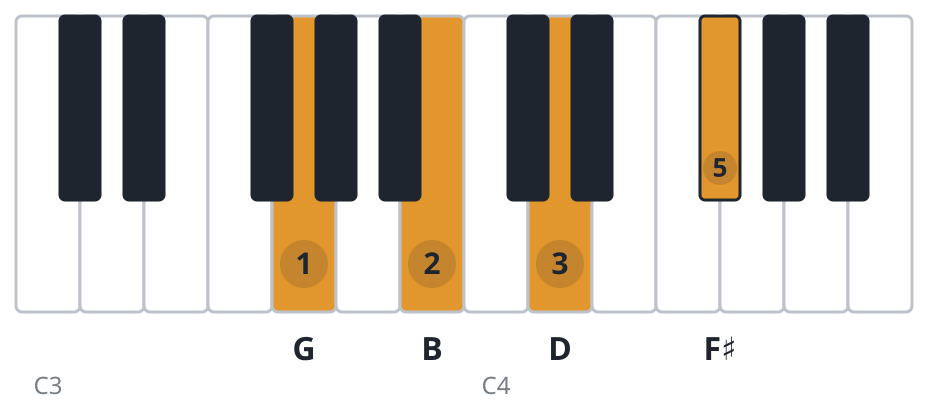
- Gmaj7the other note people add to a major chord
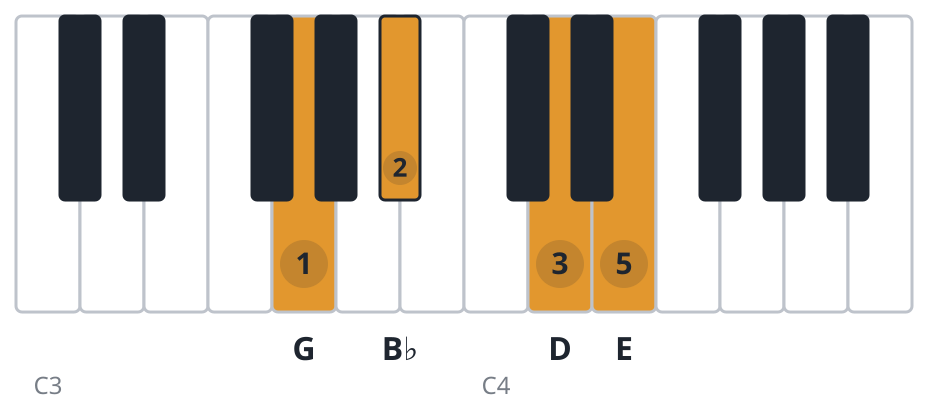
- Gm6the same sixth over a minor chord