Am Guitar Chord
Am is the A minor chord. It has three notes: A, C and E. It is one of the first chords most players learn: the open shape needs three fingers, no barre, and it turns up in thousands of songs.

The open shape almost everyone learns in their first weeks. Three fingers bunched at frets 1 and 2, two open strings around them.
How to play Am, step by step
- Index finger: 1st fret, B string
- Middle finger: 2nd fret, D string
- Ring finger: 2nd fret, G string
- Leave the A and high E strings open. Strum from the A string down, skipping the low E.
The Am fingering is the same pattern as E major moved over by one string. Spotting that link now pays off later: the E family of shapes is the backbone of barre chords.
More ways to play Am
There are 3 common Am shapes in total: the standard one at the top of the page, plus these, easiest first. You only ever need one. Tap any card to hear it.

Bigger and darker than the open shape, with all six strings sounding.

Tighter and more polite, with no low end. Good for fitting between other instruments.
Songs that use the Am chord
- Learn this song(opens a new tab on our partner site)
Come As You Are
Nirvana
All Of Me
John Legend
Capo 1
Learn this song(opens a new tab on our partner site)- Learn this song(opens a new tab on our partner site)
Wish You Were Here
Pink Floyd
- Learn this song(opens a new tab on our partner site)
Stay
Rihanna
- Learn this song(opens a new tab on our partner site)
Hells Bells
AC/DC
- Learn this song(opens a new tab on our partner site)
My Way
Calvin Harris
If something buzzes or goes quiet
- Low E rings out
- Aim the strum at the open A string. If you keep catching the low E, let your fretting thumb creep over the top edge and touch it lightly.
- High E sounds dead
- Your index finger on the B string is leaning into it. Stand the finger up on its tip so the open high E has room to ring.
- Buzz on the D or G string
- Bring the middle and ring fingers right behind the 2nd fret and press with the tips. They share one fret, so keep them side by side, not stacked.
What makes it an Am
A · C · E 1 ♭3 5
Am is a minor triad: the root A, a minor third C, and a fifth E. The C is the note that makes it darker than A major. Am is the relative minor of C major: the two chords share a key signature, so Am appears constantly in songs built around C, F and G. In the key of G it works as the ii chord, and in the key of C it is the vi chord, the two most common jobs a minor chord has in popular music.
Am vs A
One note separates them: Am has a C, A major has a C♯. On the fretboard that is the B string, 1st fret instead of 2nd. The mood flips from bright to sad with that single fret. The two chords are not interchangeable, because the third is the note that decides which chord you are playing; use the one the song asks for.
Am in major keys
Every note of Am sits inside these keys. See how it works alongside the other chords in each one.
Am chord questions
Is Am a good beginner chord?
Yes. It sits in the first set of chords most teachers show: three fingers close together, no barre, and only one skipped string.
What is the difference between Am and A?
One note. Am has a C, A major has a C♯. On guitar you move the B string note from the 2nd fret down to the 1st.
Do you strum all six strings in Am?
The standard voicing skips the low E. That string is actually a chord note (E is the fifth of Am), so it does not sound wrong, but starting from the open A root gives a cleaner bass.
What songs use Am?
Riptide, Jolene, Knockin' on Heaven's Door and Redemption Song all use it, and that list barely scratches the surface.
Why is Am called the relative minor of C?
A minor and C major contain the same seven notes; they just start from different places. Every major key has one of these built in minor partners, and for C it is Am.
Chords to learn next
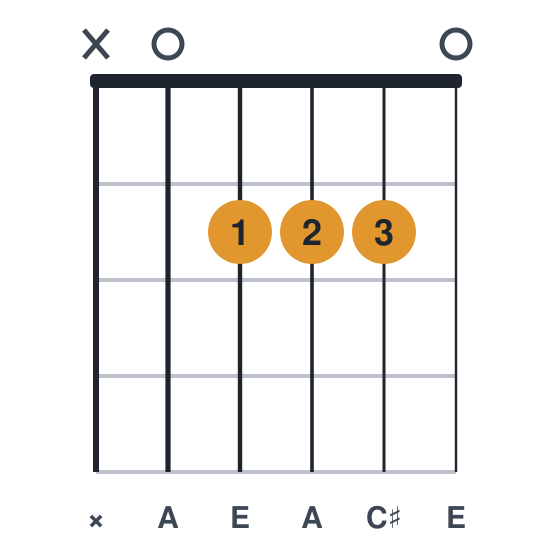
- Athe major version of Am
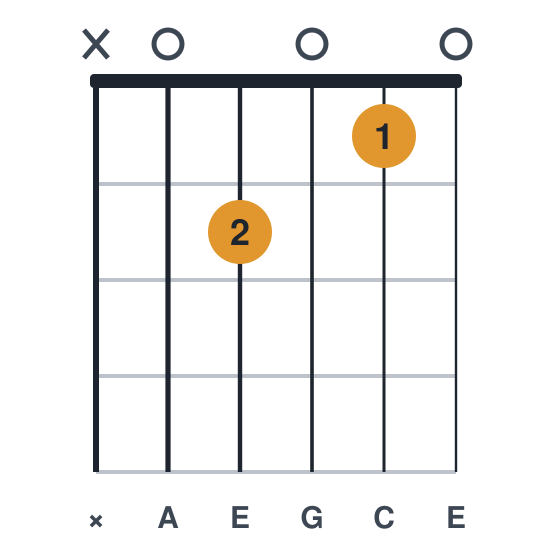
- Am7adds a seventh for a softer Am
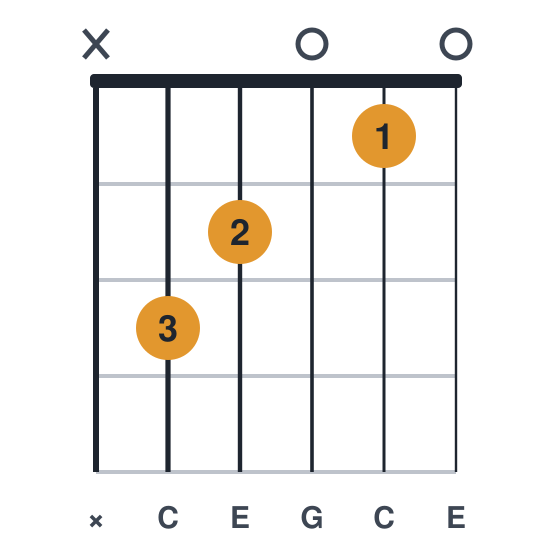
- Cthe relative major of Am
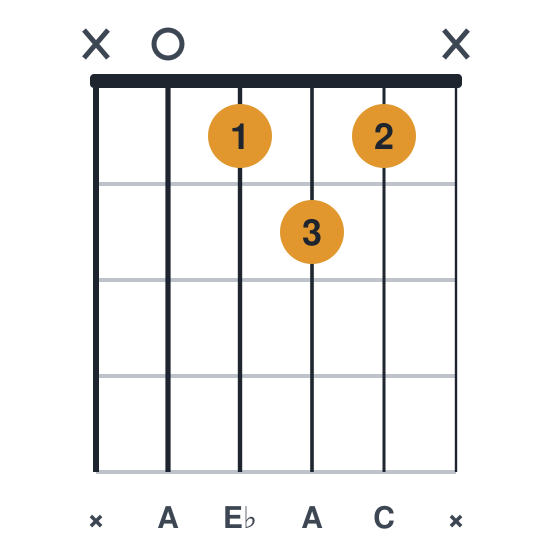
- Adimone note away, tenser and unresolved


Other A chords
Am guitar chord chart (x02210) from melodician.com