A6 Guitar Chord
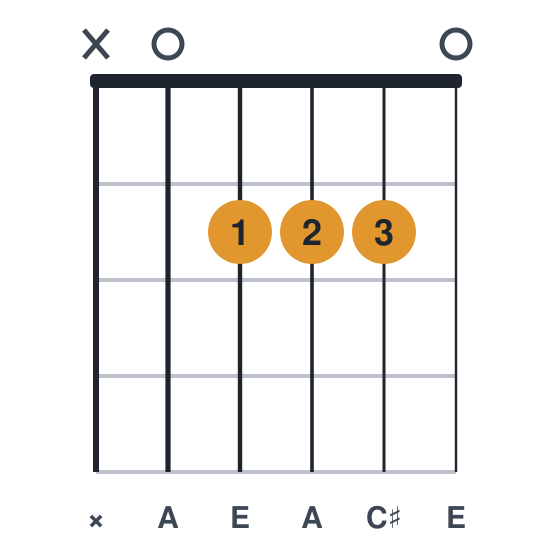
A6 is the A sixth chord. It has four notes: A, C sharp, E and F sharp. The open shape is one of the very few real one finger chords on the guitar: lay the index across four strings at the 2nd fret and leave the A string open.

One finger flat across the D, G, B and high E strings at the 2nd fret, with the A string open underneath. The easiest sixth chord on the guitar.
How to play A6, step by step
- Index finger: press flat across the D to high E strings at fret 2
- Leave the A string open. Strum from the A string down, skipping the low E.
This is the shape a shuffle rhythm lives on. Alternate it with A5 by lifting the finger off the top two strings and you have the boogie pattern behind most blues in A.
More ways to play A6
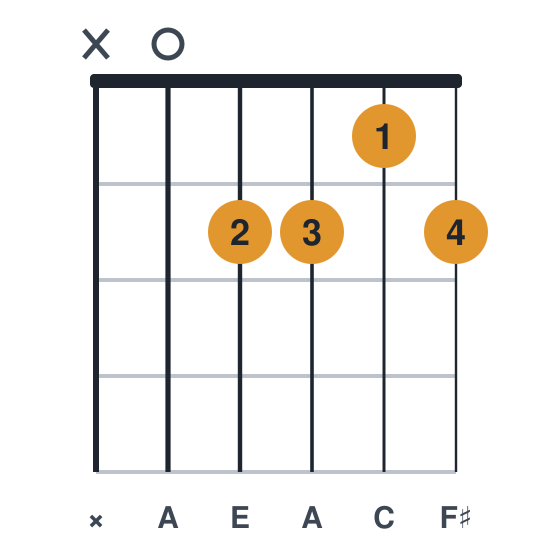
There are 3 common A6 shapes in total: the standard one at the top of the page, plus these, easiest first. You only ever need one. Tap any card to hear it.

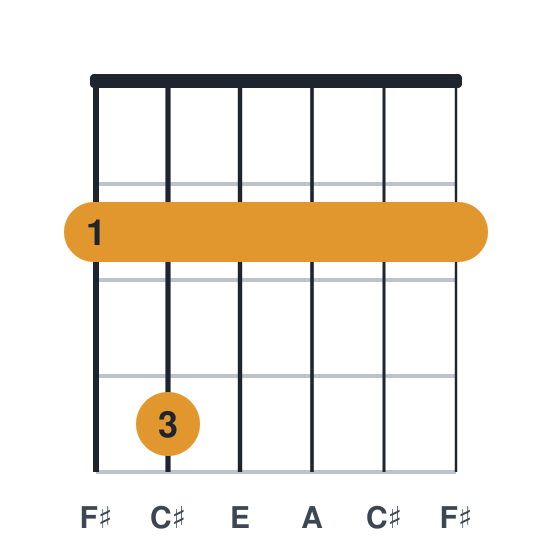
The biggest A6 on the neck. Low root, wide spread, and the sixth ringing on top of all six strings.

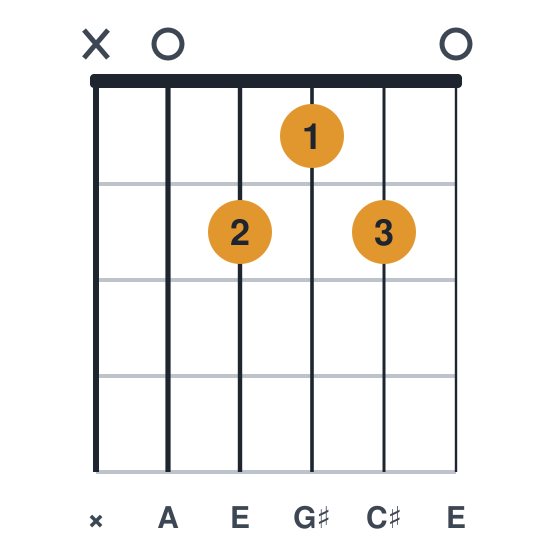
Bright and small, well above the bass. This is the A6 for playing rhythm behind someone else.
If strings buzz under the barre
- One string under the finger is dead
- The finger is probably lying on the frets rather than behind them. Slide it back so the whole length sits just behind the 2nd fret wire.
- The high E is quiet
- The tip of the barring finger is the weakest point. Roll the finger slightly onto its side so the bone, not the soft pad, holds the top string.
- The low E rings
- It is not part of A6. Start the strum from the open A string, or let the barring finger reach up and touch the low E.
What makes it an A6
A · C♯ · E · F♯ 1 3 5 6
A6 is an A major triad (A, C sharp, E) plus an F sharp, the sixth. The triad is untouched, so the chord still functions as A; the sixth simply widens it.
The same four notes counted from F sharp spell F#m7. A6 and F#m7 share every pitch and differ only in which one sits lowest, which is why a chart can call for either and the same grip often works.
A6 vs Amaj7
A6 adds an F sharp to A major, Amaj7 adds a G sharp. The F sharp is a whole step under the root and sounds relaxed. The G sharp is a half step under it and creates that soft rub which makes maj7 chords sound so wistful.
The shapes part company too. A6 is one finger at the 2nd fret. Amaj7 needs two or three fingers and a muted low E, so the sixth is the easier chord by a wide margin.
A6 in major keys
Every note of A6 sits inside these keys. See how it works alongside the other chords in each one.
A6 chord questions
Is A6 really a one finger chord?
Yes. Lay the index flat across the D, G, B and high E strings at the 2nd fret, leave the A string open and skip the low E. That is the whole chord.
Is A6 the same as F#m7?
The notes are identical: A, C sharp, E and F sharp. Whichever note is in the bass decides which name fits. A in the bass sounds like A6, F sharp in the bass sounds like F#m7.
How is A6 used in blues?
A shuffle in A moves between A5 and A6 on the bottom strings, one finger rocking in and out. That two chord movement is the backbone of boogie and jump blues rhythm.
What is the difference between A6 and A7?
A6 adds an F sharp, A7 adds a G. A7 is the blues chord that pushes to D; A6 is the settled chord that ends a phrase.
Do you strum the low E in A6?
No. Strum from the open A string down. The low E is not one of the four notes and it muddies the bottom of the chord.
Chords to learn next
- Athe plain major underneath it
- F#m7the same four notes counted from F#
- Amaj7the other note people add to a major chord
- Am6the same sixth over a minor chord


Other A chords
A6 guitar chord chart (x02222) from melodician.com