C7 Piano Chord
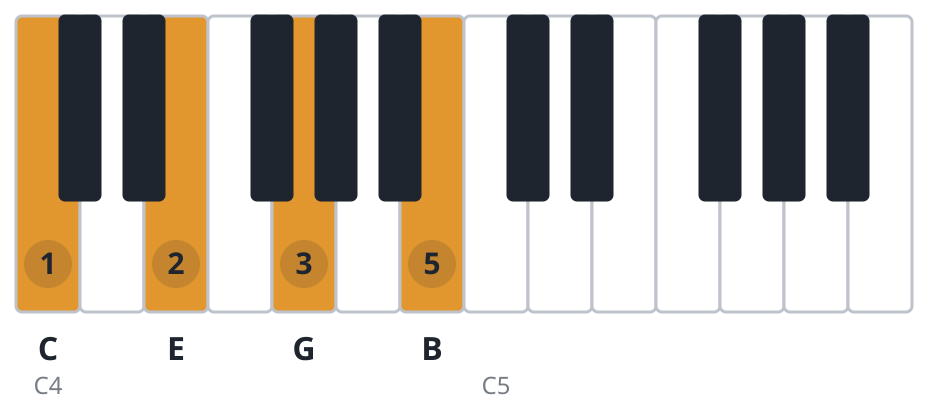
C7 is the C dominant seventh chord. It has four notes: C, E, G and B flat. The first three are the C major chord; the B flat on top is what makes it a seventh.

C at the bottom, then E and G and B♭. Right hand 1-2-3-5, left hand 5-3-2-1. The black key is B♭.
How to play C7 on piano, step by step
- Start on middle C. That is the lowest note of the chord.
- Thumb (1): C
- Index finger (2): E
- Middle finger (3): G
- Little finger (5): B♭
- Press them together with the right hand. The left hand plays the same notes with fingers 5, 3, 2, 1 an octave lower, or just C on its own as a bass note.
The B flat is the note that does all the work. Play C major, then add the little finger on B flat, and listen to a settled chord turn into one that wants to move.
Inversions of C7
The same 4 notes with a different one at the bottom. All of them are C7; which you play depends on what the hand is coming from. Tap any card to hear it.


If it sounds wrong
- The top note is B natural
- That gives Cmaj7, a completely different mood. C7 needs B flat, the black key just to the left of B.
- The little finger cannot reach
- The span from C to B flat is a seventh, wider than a triad. Let the hand open from the knuckles rather than stretching the fingers apart.
- The chord sounds muddy low down
- Four notes close together in the bass blur quickly. Play this chord above middle C, or use an inversion to spread it out.
What makes it a C7
C · E · G · B♭ 1 3 5 ♭7
C7 is a C major triad, C E G, with a B flat added: the flat seventh. That one note turns a chord at rest into one with a pull.
It is the V7 of F, so in the key of F it is the chord that leads home. It is also the I chord of a blues in C, where dominant sevenths are used on every chord rather than just the fifth.
C7 vs C
C7 is C major with a B flat on top. C sounds finished; C7 sounds like a question, and in the key of F the answer is an F chord.
In blues the rule changes: there C7 is the home chord, and the restlessness is the point rather than something to resolve.
C7 in major keys
Every note of C7 sits inside these keys. See how it works alongside the other chords in each one.
Questions about C7
Which notes are in a C7 chord on piano?
C, E, G and B flat. The first three are white keys; B flat is the black key to the left of B.
What fingers do you use for C7?
Right hand: thumb on C, index on E, middle on G, little finger on B flat. Left hand: 5, 3, 2, 1 on the same notes.
What is the difference between C7 and Cmaj7?
One key. C7 has B flat and sounds bluesy and unresolved; Cmaj7 has B natural and sounds soft and settled. Mixing them up is the most common seventh chord mistake.
Where is the C7 chord used?
As the V7 of F, and as the I chord of a blues in C. It also appears in the key of C itself as the chord that leads to F.
Is C7 hard to play?
Slightly wider than a triad, since the hand spans a seventh, but the shape is comfortable and only one note is black.
Chords to learn next
- FC7 resolves here
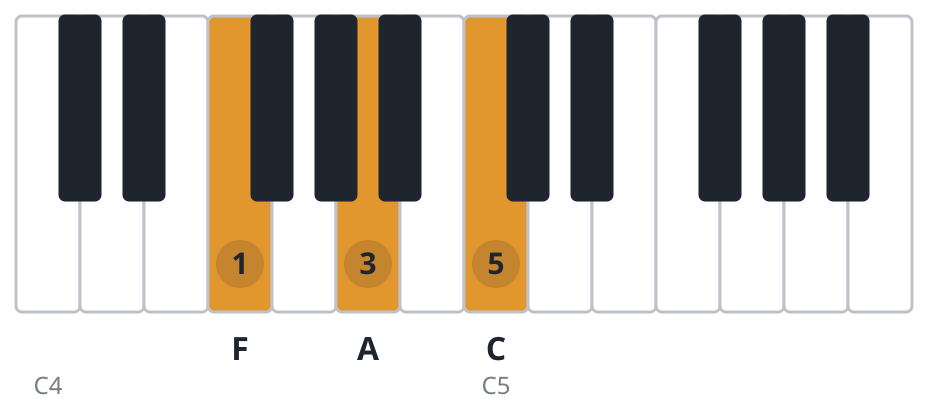
- Cthe plain major underneath it
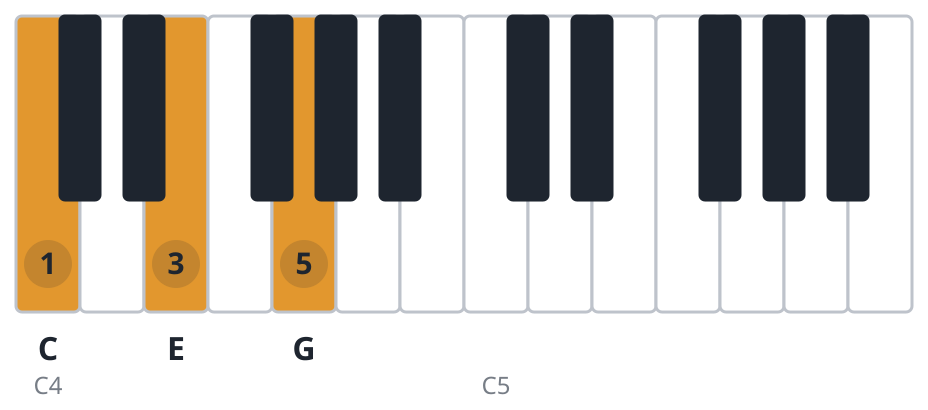
- FmC7 leads to the minor of F too
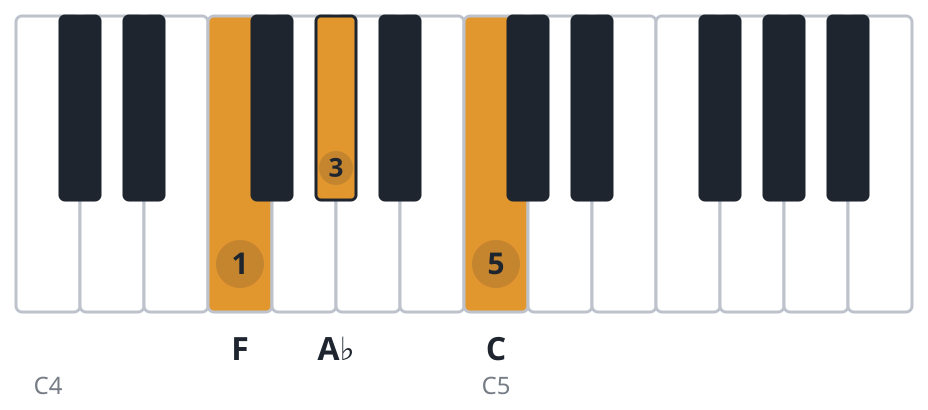
- Cmaj7the other seventh on this root, and a different mood