Cm6 Piano Chord
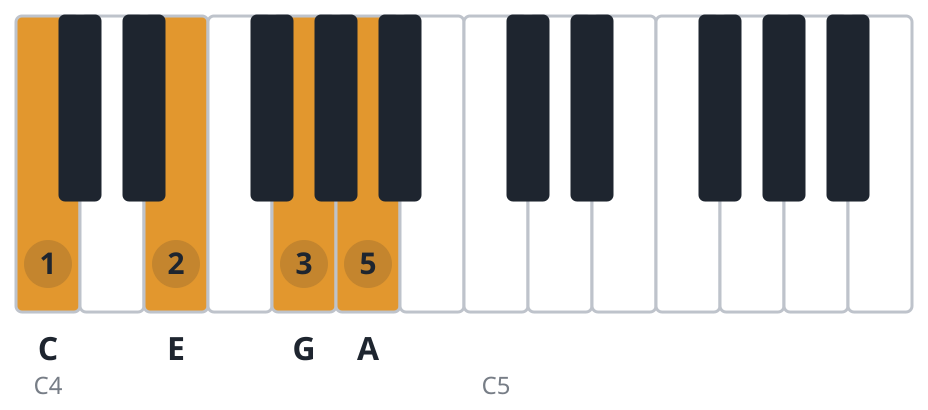
Cm6 is the C minor sixth chord. It has four notes: C, E flat, G and A. It is a C minor chord with an A added on top, and the A stays natural, which is what makes the chord a minor sixth.

C at the bottom, then E♭, G and A. Right hand 1-2-3-5, left hand 5-3-2-1. E♭ is the only black key.
How to play Cm6 on piano, step by step
- Start on middle C. That is the lowest note of the chord.
- Thumb (1): C
- Index finger (2): E♭
- Middle finger (3): G
- Little finger (5): A
- Press them together with the right hand. The left hand plays the same notes with fingers 5, 3, 2, 1 an octave lower, or just C on its own as a bass note.
Play Cm, then Cm6, then Cm again: hold C, E flat and G still and add the little finger on A. The one added white key changes the mood of the whole chord.
Inversions of Cm6
The same 4 notes with a different one at the bottom. All of them are Cm6; which you play depends on what the hand is coming from. Tap any card to hear it.


If it sounds wrong
- It sounds like C minor with a wrong note
- That is close to what a minor sixth is, so check the top note: it is A, not A flat and not B flat. B flat would make it Cm7.
- The index finger misses E flat
- E flat sits between D and E. Keep the finger curved and let it land on the front half of the black key rather than deep between the neighbours.
- The notes do not arrive together
- Drop the whole hand as one shape from just above the keys. A chord is one movement, not four.
What makes it a Cm6
C · E♭ · G · A 1 ♭3 5 6
Cm6 is a C minor triad, C, E flat and G, with an A added: the major sixth, nine half steps above the root. The sixth stays major even though the chord is minor; A flat would turn the chord into something else entirely.
It is the iv chord in G and a standby of jazz and older pop, where it usually walks to G. The same four notes read from A spell Am7b5, the half diminished chord, so the bass note decides which chord the ear hears.
Cm6 vs Cm7
Both add a fourth note to C minor. Cm7 adds B flat and sounds smooth and settled; Cm6 adds A, one key lower, and sounds restless.
Hold C, E flat and G and rock the top finger between B flat and A. The black key relaxes the chord, the white key sharpens it, and that single key is the entire difference.
Cm6 in major keys
Every note of Cm6 sits inside these keys. See how it works alongside the other chords in each one.
Questions about Cm6
Which notes are in a Cm6 chord on piano?
C, E flat, G and A. Only E flat is a black key; the other three are white.
What is the difference between Cm6 and Cm7?
The top note. Cm7 has B flat and settles; Cm6 has A, the white key one below it, and pushes forward.
What fingers do you use for Cm6?
Right hand: thumb on C, index on E flat, middle on G, little finger on A, which is 1, 2, 3 and 5. Left hand plays 5, 3, 2, 1.
Is the sixth in Cm6 major or minor?
Major. The chord flattens the third to E flat but keeps the sixth at A natural, and that mismatch is what makes a minor sixth chord.
Where is Cm6 used?
As the iv chord in G, and all over jazz and older pop, where it often replaces Cm7 when the music needs tension instead of rest.
Chords to learn next
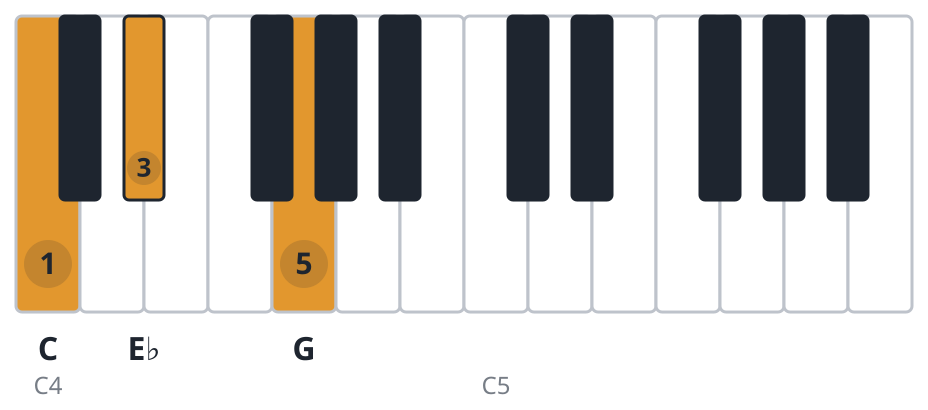
- Cmthe plain minor underneath it
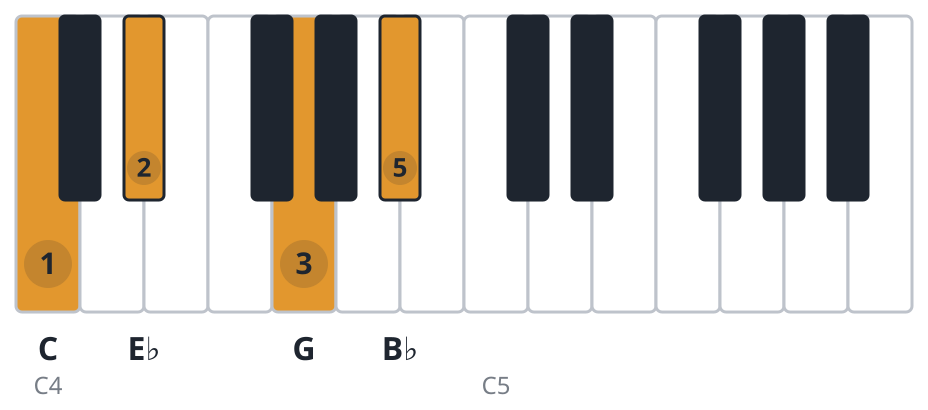
- Cm7a flat seventh instead of the sixth, the softer option
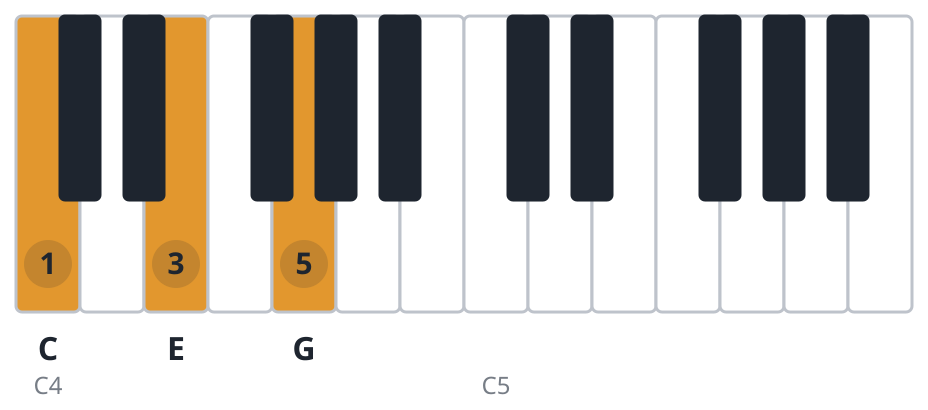
- Cthe major on the same root
- C6the major sixth on the same root