E9 Guitar Chord
E9 is the E dominant ninth chord. It has five notes: E, G sharp, B, D and F sharp. The open shape is an ordinary E7 with the high E string pressed at the 2nd fret, which makes it one of the few ninth chords a beginner can play straight away.

An open E7 with the high E string pressed at the 2nd fret to add the ninth. Three fingers, six strings, and every note of the chord present.
How to play E9, step by step
- Index finger: 1st fret, G string
- Middle finger: 2nd fret, A string
- Ring finger: 2nd fret, high E string
- Strum all six strings.
Play E7, then E9. The only change is the top string, and the chord goes from raw blues to something far smoother. That single note is worth a lot in a rhythm part.
More ways to play E9
There are 2 common E9 shapes in total: the standard one at the top of the page, plus these, easiest first. You only ever need one. Tap any card to hear it.

Tight and percussive, sitting in the middle of the neck. Easy to choke with the palm and hit again, which is why funk rhythm lives on this grip.
If it sounds unclear
- The G string note is weak
- The index holds the 1st fret of the G string, and it is easy to squash flat when the other fingers crowd in. Keep the knuckle bent and the tip upright.
- The high E is muted
- The ring finger reaches for the 2nd fret of the high E. That note is the ninth, so if it is missing you are playing E7. Give it its own check before strumming.
- The chord sounds too heavy
- Six strings with the root doubled at the bottom is a lot of low end. Strum from the A string down if the chord is swamping the song.
What makes it an E9
E · G♯ · B · D · F♯ 1 3 5 ♭7 9
E9 is an E7 chord with a ninth added: E, G sharp, B and D give the seventh chord, and the F sharp on top makes it a ninth. Every note of the full five note chord fits in this shape, which is unusual.
It is the V chord of A and the standard I chord of a blues in E. Ninths keep all the pull of a dominant seventh and add a layer of colour on top, which is why funk, soul and jump blues use them almost by default.
E9 vs E7
E9 is E7 with an F sharp added on the top string. E7 sounds raw and bluesy; E9 sounds smoother and more arranged, closer to a horn line than a growl.
The shapes are one finger apart, so you can switch between them mid song. In a blues in E, using E7 for the verse and E9 for the turnaround is a common way to add movement without changing the progression.
E9 in major keys
Every note of E9 sits inside these keys. See how it works alongside the other chords in each one.
E9 chord questions
Is E9 easy to play?
Yes, unusually so for a ninth chord. It is an open E7 with the high E string pressed at the 2nd fret: three fingers, all in the first two frets.
What is the difference between E9 and Eadd9?
E9 has a D in it, the flat seventh, so it sounds restless and bluesy. Eadd9 has no seventh: it is plain E major with an F sharp added, and it sounds bright and finished.
Is E9 the same as E7?
No. E9 adds the F sharp, the ninth, on top of E7. They do the same job in a progression but sound noticeably different.
Where is E9 used?
As the V chord in A, as the I chord of a blues in E, and throughout funk and soul rhythm playing.
Do you strum all six strings?
You can. Every string in this shape sounds a chord tone. Starting at the A string gives a lighter version if the low root is too heavy.
Chords to learn next
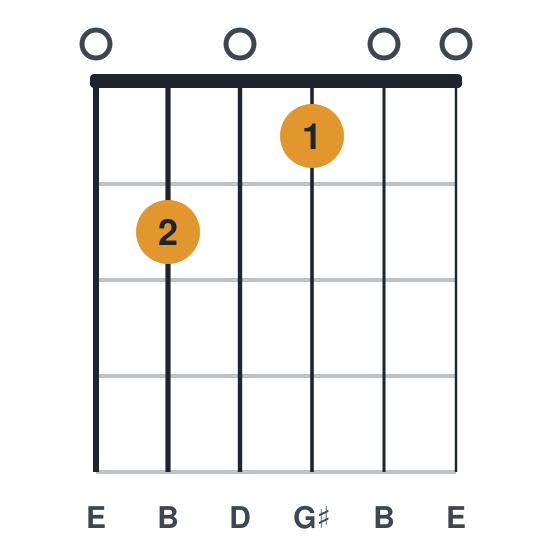
- E7the same chord without the ninth
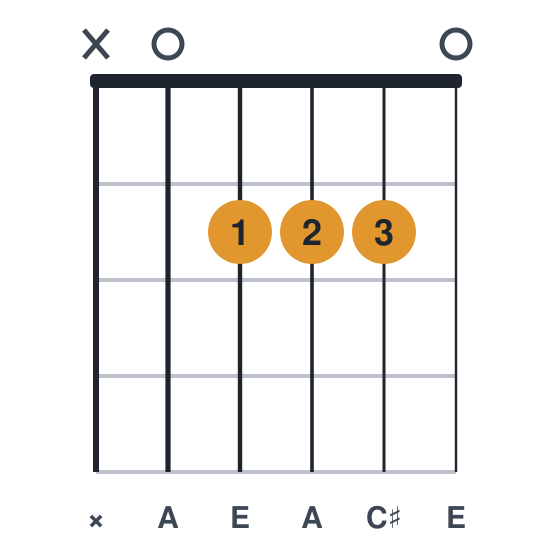
- Awhere E9 wants to resolve
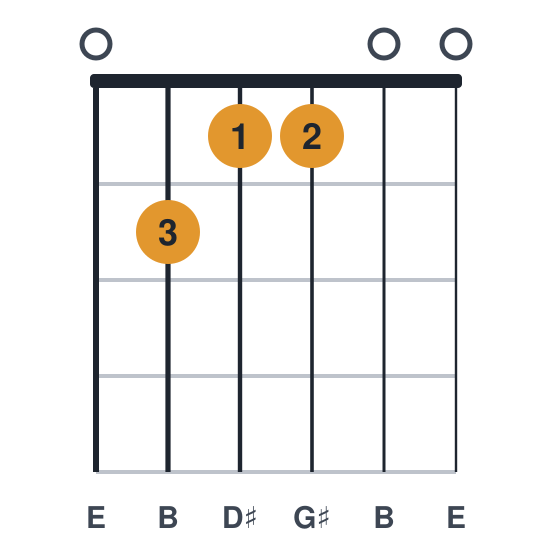
- Emaj7the other seventh built on this root
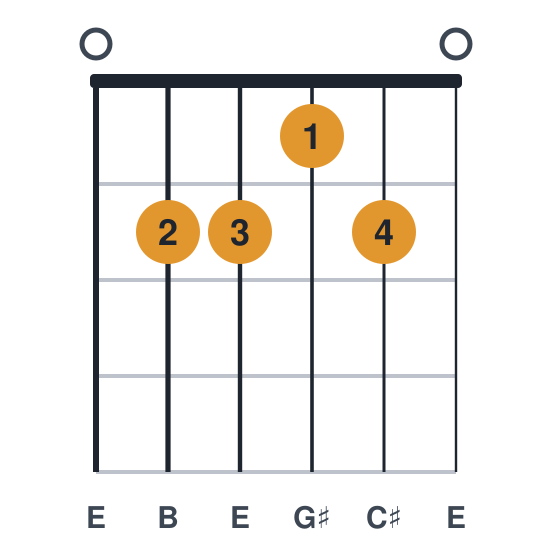
- E6the same root with a sixth instead of a seventh


Other E chords
E9 guitar chord chart (020102) from melodician.com