E6 Guitar Chord
E6 is the E sixth chord. It has four notes: E, G sharp, B and C sharp. The open shape is an ordinary E major with the pinky added on the B string at the 2nd fret.

An open E major with the pinky added at the 2nd fret of the B string. Four fingers, six strings, and the shape blues rhythm is built on.
How to play E6, step by step
- Index finger: 1st fret, G string
- Middle finger: 2nd fret, A string
- Ring finger: 2nd fret, D string
- Pinky finger: 2nd fret, B string
- Strum all six strings.
Rock the pinky on and off the B string while the rest of the shape stays put. That movement between E and E6 is the shuffle rhythm behind most blues in E.
More ways to play E6
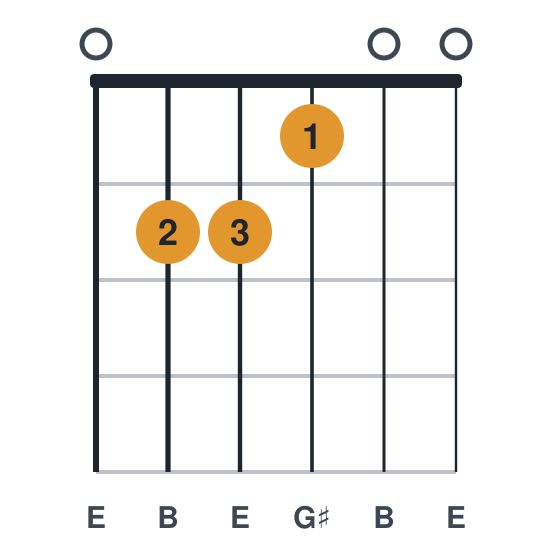
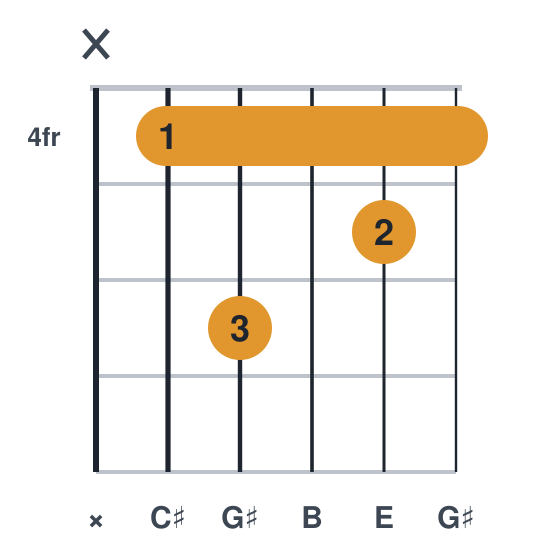
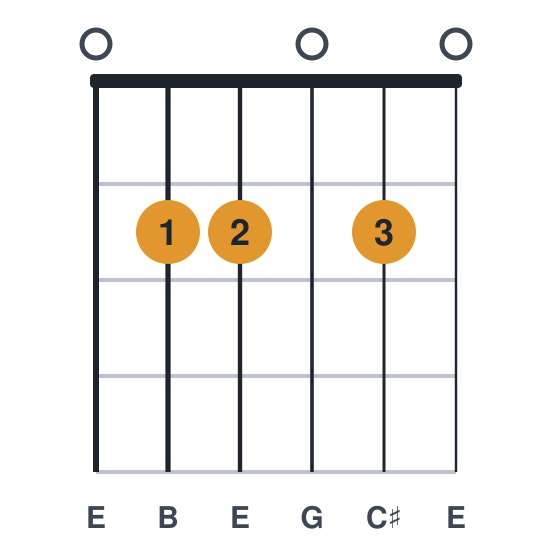
There are 4 common E6 shapes in total: the standard one at the top of the page, plus these, easiest first. You only ever need one. Tap any card to hear it.

Bright and small, well above the bass. This is the E6 for playing rhythm behind someone else.

Even and close packed, the four notes almost touching. Less bass weight than an open shape, which makes it easy to sit under a singer.

The biggest E6 on the neck. Low root, wide spread, and the sixth ringing on top of all six strings.
If it sounds crowded or buzzy
- The B string note is weak
- It is under the pinky, the finger with the least strength. Keep the knuckle bent and press with the very tip right behind the 2nd fret.
- The G string buzzes
- The index at the 1st fret is being crowded by the other fingers. Give it room by arching the hand and keeping the thumb behind the neck rather than over the top.
- It sounds like a mess of notes
- Six strings and four different notes is a lot of information. Play the strings one at a time and check you hear E, B, E, G sharp, C sharp, E.
What makes it an E6
E · G♯ · B · C♯ 1 3 5 6
E6 is an E major triad (E, G sharp, B) with a C sharp added, the sixth degree. The triad stays complete, so the chord keeps its major identity and gains a swing era edge.
Counted from C sharp, the same four notes spell C#m7. E6 and C#m7 are one chord with two names, separated only by which pitch is at the bottom.
E6 vs Emaj7
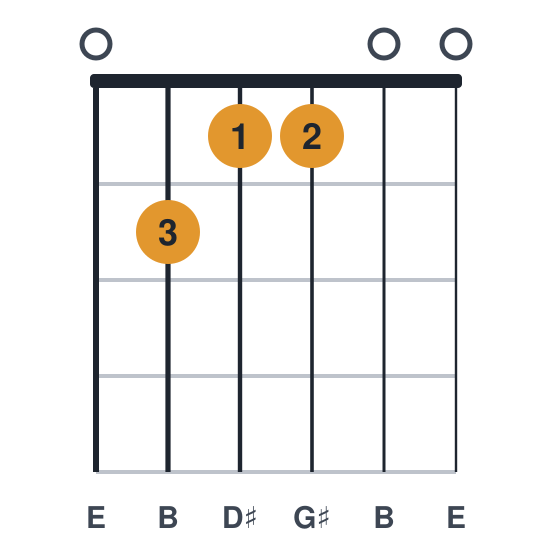
E6 adds a C sharp to E major, Emaj7 adds a D sharp. One is a whole step below the root, the other a half step, and that single fret is the difference between a chord that rests and a chord that hovers.
Both are easy from the open E shape. E6 adds the pinky at the 2nd fret of the B string; Emaj7 lifts the middle finger instead. Learning both from the same starting shape is the quickest way to hear what the sixth actually does.
E6 in major keys
Every note of E6 sits inside these keys. See how it works alongside the other chords in each one.
E6 chord questions
Is E6 the same as C#m7?
The four notes match exactly. The bass note decides the name: E at the bottom gives E6, C sharp at the bottom gives C#m7.
How do I play the blues shuffle with E6?
Hold an open E and add the pinky at the 2nd fret of the B string for the sixth, then take it off again. That alternation between E and E6 is the shuffle pattern, and the same movement works at A and B for the other two chords in a blues in E.
What is the difference between E6 and E7?
E6 adds a C sharp and settles; E7 adds a D and pulls toward A. E7 is the blues chord, E6 is the resting chord.
Is E6 hard to play?
It is a four finger shape but every finger sits in the first two frets, so nothing stretches. If you can play open E and B7 you have the hand shape already.
Do you strum all six strings?
Yes. Every string in the open shape sounds a note of E6, so strum the lot.
Chords to learn next
- Ethe plain major underneath it
- C#m7the same four notes counted from C#
- Emaj7the other note people add to a major chord
- Em6the same sixth over a minor chord


Other E chords
E6 guitar chord chart (022120) from melodician.com