C#m7 Guitar Chord
C#m7 is the C sharp minor seventh chord. It has four notes: C sharp, E, G sharp and B. It has no open shape, so you play it as a barre at the 4th fret, and it repays the effort: C#m7 is the vi chord of E major, one of the most played guitar keys there is.

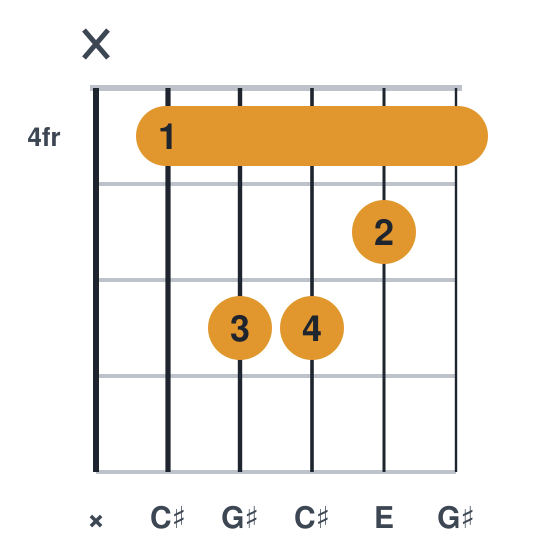
The five string minor seventh barre at fret 4: index across, ring finger on the D string, middle on the B string.
How to play C#m7, step by step
- Index finger: press flat across the A to high E strings at fret 4
- Middle finger: 5th fret, B string
- Ring finger: 6th fret, D string
- Strum from the A string down, skipping the low E.
Once this grip works at fret 4 you own it everywhere: two frets down it is Bm7, one fret up it is Dm7.
More ways to play C#m7
There are 4 common C#m7 shapes in total: the standard one at the top of the page, plus these, easiest first. You only ever need one. Tap any card to hear it.

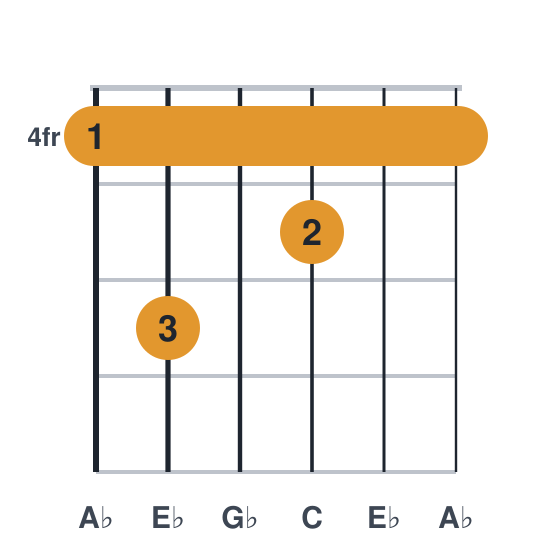
High and glassy, more chime than strum.

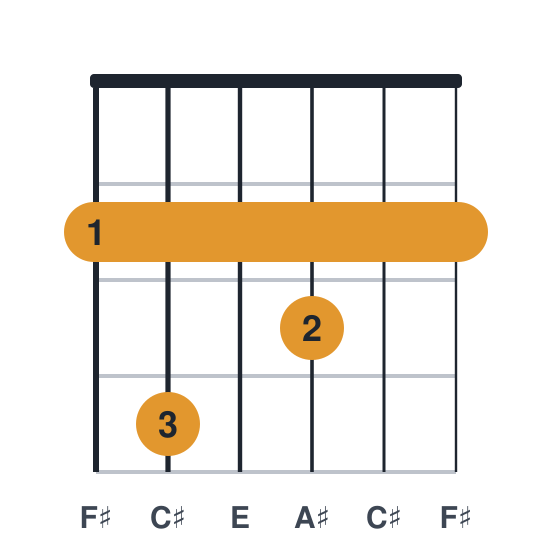
The fullest C#m7 here, six strings deep with the root doubled.

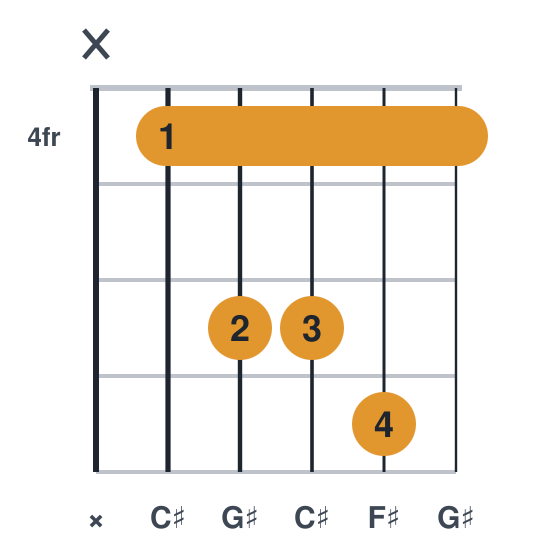
Open and ringing where the barre is dense, because the two open strings on top carry the chord rather than a fretted finger.
When C#m7 will not ring clean
- Dead notes under the barre
- Three of the five strings sound directly under the index finger. Place the middle and ring fingers first, roll the barre a little onto its outer edge, then clamp down and check string by string.
- Ring finger mutes the G string
- It frets the D string at fret 6 and can easily lean over. Arch it so the G string can pass underneath to the barre, which is where its note comes from.
- Low E drones underneath
- Skip it. The root is the C sharp on the A string; brush the low E with the tip of the barre or cover it with the thumb so it cannot ring.
What makes it a C#m7
C♯ · E · G♯ · B 1 ♭3 5 ♭7
C#m7 is a minor seventh chord: a C sharp minor triad (C#, E, G#) plus a minor seventh (B). The seventh mellows the minor triad without changing its character. Its two big jobs are the vi chord in E major and the ii chord in B major, where it heads toward F#7. Since so much pop and rock lives in E, C#m7 is one of the most used barre chords in that key, usually working alongside A and B.
C#m vs C#m7
Both are 4th fret barres. C#m adds the pinky on the G string at fret 6; C#m7 leaves that string to the barre, which sounds the B, the seventh. So the m7 is the version with one finger fewer and a softer voice. In a song in E the two can often swap, but when the melody leans on the B note, C#m7 is the one that matches.
C#m7 in major keys
Every note of C#m7 sits inside these keys. See how it works alongside the other chords in each one.
C#m7 chord questions
Is C#m7 the same as Dbm7?
Yes, one chord with two names. Guitarists nearly always write C#m7 because the chord lives in sharp keys like E and B; the Dbm7 spelling is rare.
How do I play C#m7 without a barre?
Use the four string shape at fret 11 on this page. If that sits too high on your guitar, practice the barre shape by placing the two fretted fingers first and adding the barre last.
What keys use C#m7?
E major, where it is the vi chord, B major, where it is the ii chord, and the key of C# minor itself.
Is C#m7 hard to play?
It is a barre chord, so expect the usual weeks of practice. It is no harder than Bm7 or Cm7 though; the same grip simply sits at fret 4.
What is the difference between C#m and C#m7?
One note: C#m7 adds a B. On the fretboard you lift the pinky off the G string and the barre supplies the note. The chord relaxes audibly.
Chords to learn next
- C#mthe same chord without the seventh
- Ab7the V chord that resolves to C# minor
- F#7partner in the ii V of B major
- C#sus4a different color built on the same root


Other C# chords
C#m7 guitar chord chart (x46454) from melodician.com