C#m6 Guitar Chord
C#m6 is the C sharp minor sixth chord. It has four notes: C sharp, E, G sharp and A sharp. The main shape sits low, at the 2nd fret, with the root on the A string and no full barre to hold.

Root on the A string at the 4th fret under the ring finger, with the index laying across the D and B strings at the 2nd and the pinky adding the fifth on the high E. Five strings, no full barre.
How to play C#m6, step by step
- Index finger: press flat across the D to B strings at fret 2
- Middle finger: 3rd fret, G string
- Ring finger: 4th fret, A string
- Pinky finger: 4th fret, high E string
- Strum from the A string down, skipping the low E.
The shape is movable: the note under the ring finger on the A string names the chord. Slide everything up two frets and it becomes Ebm6.
More ways to play C#m6
There are 2 common C#m6 shapes in total: the standard one at the top of the page, plus these, easiest first. You only ever need one. Tap any card to hear it.

Wide and dark, with the root doubled low down. The sixth sits inside the chord rather than on top, which is what gives it that uneasy, film music colour.
If it sounds cramped
- The G string note disappears
- The middle finger holds the 3rd fret of the G string between the barred strings. Arch it so it clears the index below and presses with the tip.
- The low E rings out
- It is not part of C#m6. Start the strum on the A string, or let the tip of the ring finger brush the low E to keep it quiet.
- The index barre is patchy
- It only has to cover the D and B strings at the 2nd fret, not the whole neck. Keep it low and flat across those two and let the other fingers stand on their tips.
What makes it a C#m6
C♯ · E · G♯ · A♯ 1 ♭3 5 6
C#m6 is a C sharp minor triad (C sharp, E, G sharp) with an A sharp added: the major sixth, nine half steps above the root. Keeping the sixth major against the flat third is the whole trick; it makes the chord sound like an open question.
Read from A sharp, the same four notes spell A#m7b5, the half diminished chord. C#m6 is also an F#9 without its root, which explains why it slips so easily into progressions heading for B.
C#m6 vs C#m7
C#m7 adds a B to C sharp minor and sounds settled. C#m6 adds an A sharp instead, one fret lower, and the calm disappears: the chord leans forward and asks for the next one.
There is a practical difference as well. C#m7 in this key is usually a full barre, while this C#m6 needs only a two string index barre at the 2nd fret, so it can be the easier of the pair to grab.
C#m6 in major keys
Every note of C#m6 sits inside these keys. See how it works alongside the other chords in each one.
C#m6 chord questions
Is C#m6 the same as Dbm6?
Yes. C sharp and D flat name the same pitch, and guitarists nearly always write the minor chords on this root with sharps, so C#m6 is the spelling used here.
What is the difference between C#m6 and C#m7?
One note. C#m7 has a B, C#m6 has an A sharp, one fret lower. The seventh softens the minor; the sixth makes it tense.
Is C#m6 the same as A#m7b5?
The notes are identical: C sharp, E, G sharp and A sharp. C sharp in the bass gives C#m6, A sharp in the bass gives the half diminished chord.
Do you strum all six strings in C#m6?
No. Five, from the A string down. The low E is not part of the chord.
Where is C#m6 used?
As the iv chord in A flat, as a colour chord in C sharp minor, and in jazz and older songwriting, where a minor sixth often replaces the minor seventh.
Chords to learn next
- C#mthe plain minor underneath it
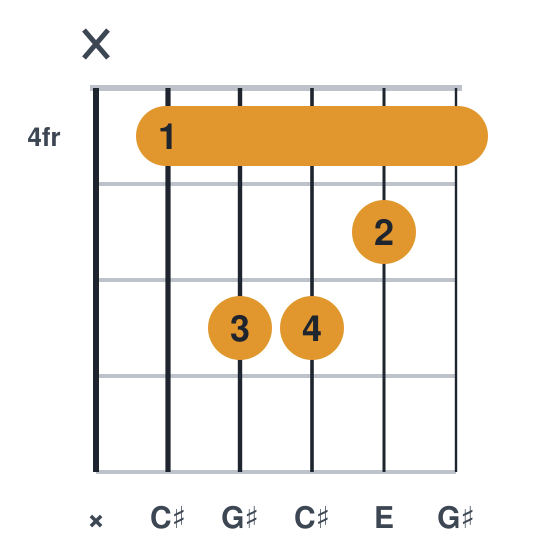
- C#m7a flat seventh instead of the sixth, the softer option
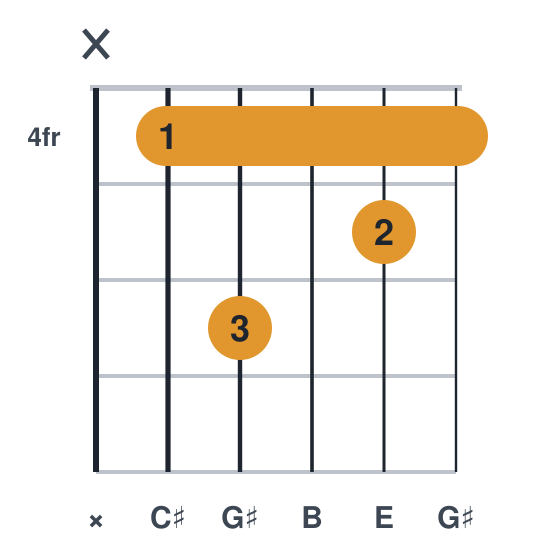
- C#the major on the same root
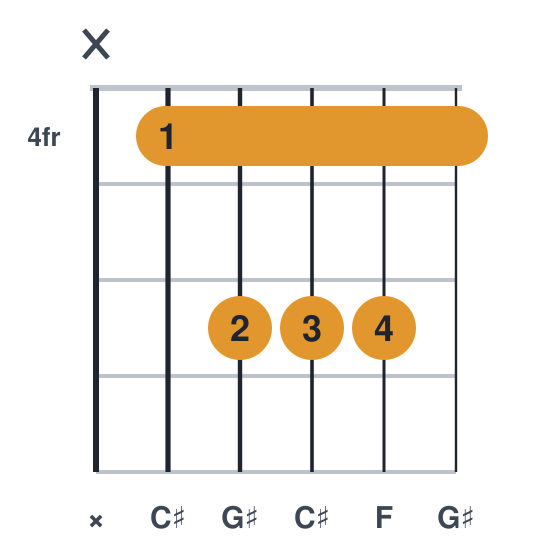
- C#6the major sixth on the same root
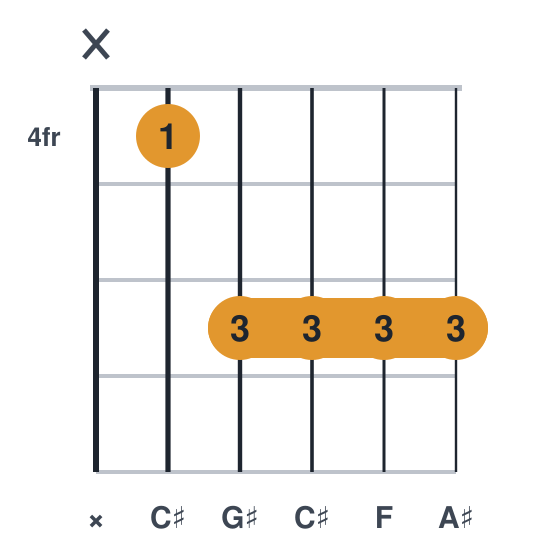


Other C# chords
C#m6 guitar chord chart (x42324) from melodician.com