C#add9 Guitar Chord
C#add9 is the C sharp added ninth chord. It has four notes: C♯, F, G♯ and D♯, with the third written as F rather than E sharp, the way charts print it. The standard shape sits right at the nut, frets 1 to 4 on the middle four strings, with no barre.

The root sits on the A string at the 4th fret and the index reaches back to the 1st fret of the G string, so the grip spans the first four frets of the middle strings.
How to play C#add9, step by step
- Index finger: 1st fret, G string
- Middle finger: 3rd fret, D string
- Ring finger: 4th fret, A string
- Pinky finger: 4th fret, B string
- Strum only the A and D and G and B strings, and stop the downstroke at the B.
The shape has no open strings, so it moves: two frets up the same fingers play Ebadd9, and the second voicing on this page is the same chord with the root on the D string instead.
More ways to play C#add9
There are 2 common C#add9 shapes in total: the standard one at the top of the page, plus these, easiest first. You only ever need one. Tap any card to hear it.

Brighter and thinner than the standard, with the ninth on the high E string. Handy when the song sits high on the neck.
If it buzzes or sounds wrong
- The high E string rings by accident
- It is not part of the shape. Stop the downstroke at the B string, or let the pad of the pinky rest lightly against the high E to keep it quiet.
- The low E rumbles in
- Start the strum at the A string. The tip of the ring finger, which holds the root there, can touch the low E lightly to mute it.
- The index note gets buried
- The index holds the 1st fret of the G string underneath three higher fingers. Keep it curled and pressing straight down, or the fifth of the chord goes missing.
What makes it a C#add9
C♯ · F · G♯ · D♯ 1 3 5 9
C#add9 is a C sharp major triad (C♯, F, G♯) with a D sharp added, the ninth. Strictly the third of C sharp is E sharp, but charts write the same pitch as F and this page does too. With the third present the chord stays major; the ninth just adds air.
It does the jobs plain C sharp does: the I chord in C sharp, the IV chord in G sharp, the V chord in F sharp. Written as Dbadd9 the same chord is the IV of A flat, a common piano and worship key.
C#add9 vs C#sus2
Both chords add a D sharp to C sharp, but C#sus2 removes the third to make room for it, while C#add9 keeps the third and stacks the D sharp on top. One is clearly major with extra shimmer, the other floats and wants to resolve.
The add9 also wins on comfort here: the standard shape needs no barre, while C#sus2 leans on one.
C#add9 in major keys
Every note of C#add9 sits inside these keys. See how it works alongside the other chords in each one.
C#add9 chord questions
Is C#add9 the same as Dbadd9?
Yes, one chord with two names. Sharp key charts write C#add9 and flat key charts write Dbadd9; the shape and sound are identical.
Why does the chart say F instead of E#?
They are the same pitch. Strict spelling calls the third of C sharp E sharp, but almost every chart prints F because that is the name players read fastest. This site teaches shapes, so it follows the charts.
What is the difference between C#add9 and C#9?
C#9 also contains a B, the flat seventh, which makes it a dominant chord. C#add9 adds only the D sharp and stays a bright major chord.
What is the difference between C#add9 and C#sus2?
Both contain a D sharp, but C#sus2 removes the third and floats, while C#add9 keeps the third and still sounds fully major.
Is C#add9 hard to play?
No harder than the other movable add9 grips: four fingers, four strings, no barre. The four fret span at the nut is the only stretch.
Chords to learn next
- C#the plain major
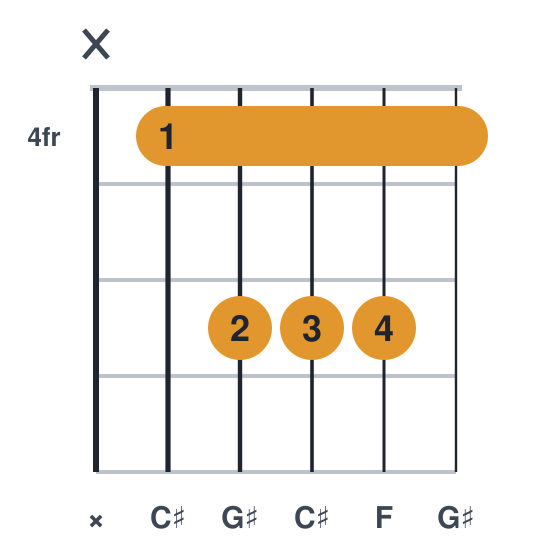
- C#sus2the 9 without the 3
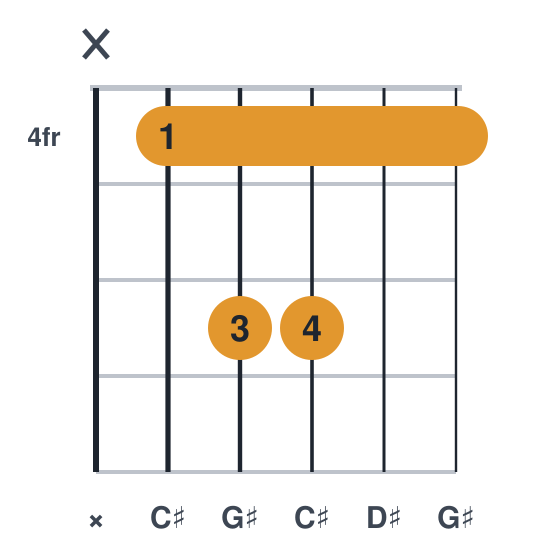
- C#maj7another colour on the same major
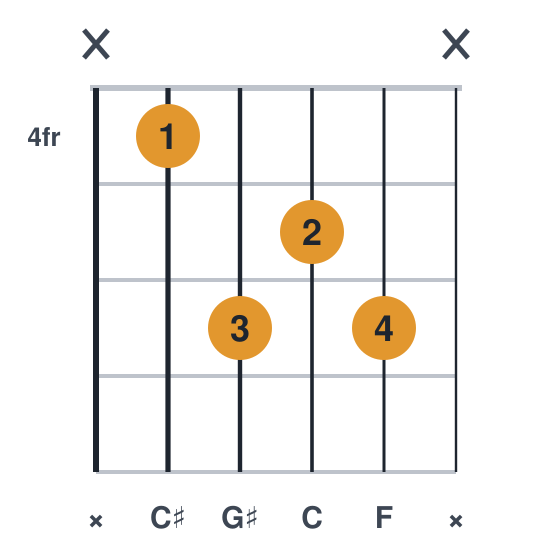
- C#mthe minor chord on the same root, a darker place to go next
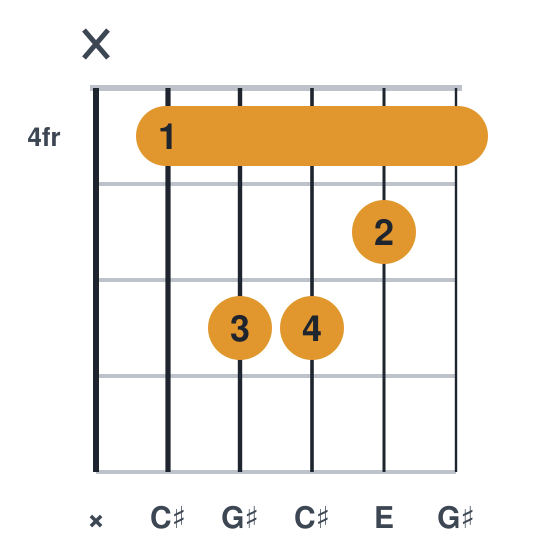


Other C# chords
C#add9 guitar chord chart (x4314x) from melodician.com