C#7 Guitar Chord
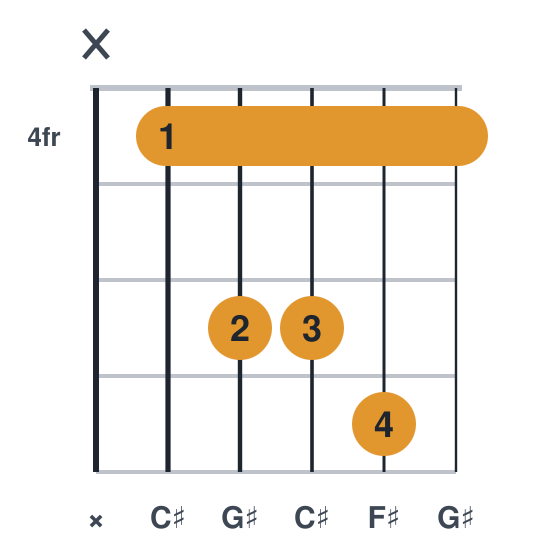
C#7 is the C sharp dominant seventh chord, also written Db7. It has four notes: C♯, F, G♯ and B. There is no open shape, so the standard grip is a five string barre at the 4th fret, with a no barre alternative higher up the neck.

A five string barre at fret 4 in the A7 grip, ring and pinky two frets above. Movable: the root tracks the A string wherever you slide it.
How to play C#7, step by step
- Index finger: press flat across the A to high E strings at fret 4
- Ring finger: 6th fret, D string
- Pinky finger: 6th fret, B string
- Strum from the A string down, skipping the low E.
Fret 4 is a comfortable place to learn this barre: the strings give more easily than at fret 1. Once it works, the identical grip plays every dominant seventh with a root on the A string.
More ways to play C#7
There are 4 common C#7 shapes in total: the standard one at the top of the page, plus these, easiest first. You only ever need one. Tap any card to hear it.

The thinnest and highest C#7 on the page, glassy rather than full.

The biggest voicing here: six strings, root doubled, plenty of weight.

Leaner than the barre. The open B string rings against the shape and sharpens the pull the seventh already has.
Songs that use the C#7 chord
- Learn this song(opens a new tab on our partner site)
Nothing Can Change This Love
Sam Cooke
- Learn this song(opens a new tab on our partner site)
Stand By Your Man
Tammy Wynette
- Learn this song(opens a new tab on our partner site)
All Your Love (I Miss Loving)
Otis Rush
If the shape chokes or buzzes
- G string gets swallowed
- The barre must sound the G string by itself while ring and pinky work either side of it. If either finger flattens out, the G dies. Arch both over it.
- High E buzzes at the barre
- The far end of the index is the weak end. Nudge the whole finger closer to the 4th fret wire and roll it a little toward its outer edge.
- Low E rings when it should not
- The chord starts on the A string. Touch the low E with the overhanging tip of the index, or begin the strum a string lower.
What makes it a C#7
C♯ · F · G♯ · B 1 3 5 ♭7
C#7 is a C sharp major triad plus a minor seventh (B). The third is shown here as F for simplicity; in strict spelling it is E♯, the same key on a piano. That third and the B pull against each other and settle onto an F# chord, which makes C#7 the V7 of F sharp major and F sharp minor. When a song in F# minor needs to build pressure before coming home, C#7 is the chord doing the building.
C# vs C#7
Both chords barre the A through high E strings at fret 4. C sharp major then needs the 6th fret covered on three strings at once, usually with a ring finger mini barre; C#7 covers only two of them, letting the seventh sound on the G string in between. That small gap makes C#7 the easier grip, and it is the one to reach for when the music is moving to F#.
C#7 in major keys
Every note of C#7 sits inside these keys. See how it works alongside the other chords in each one.
C#7 chord questions
Are C#7 and Db7 the same chord?
Yes. Identical notes and fingerings. Songs in sharp keys write C#7, songs in flat keys write Db7.
Can I play C#7 without a barre?
Yes. The compact shape at frets 11 to 13 uses one finger per string on the middle four strings, no barre involved.
What does C#7 resolve to?
F sharp. C#7 is the dominant (V) chord of F# major and F# minor.
Is C#7 a beginner chord?
Not really. Every C#7 shape is fretted, so it usually arrives after your first barre chords are working. The no barre shape is the gentlest entry.
Why is the third of C#7 sometimes written E#?
Chord spelling follows the musical alphabet, and the third letter up from C is E, so theory books write E♯. It is the same pitch as F, which is how this page labels it.
Chords to learn next
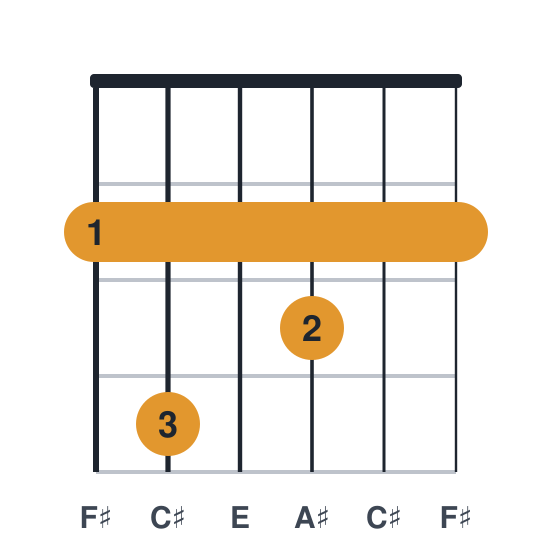
- F#7C#7 resolves to F#
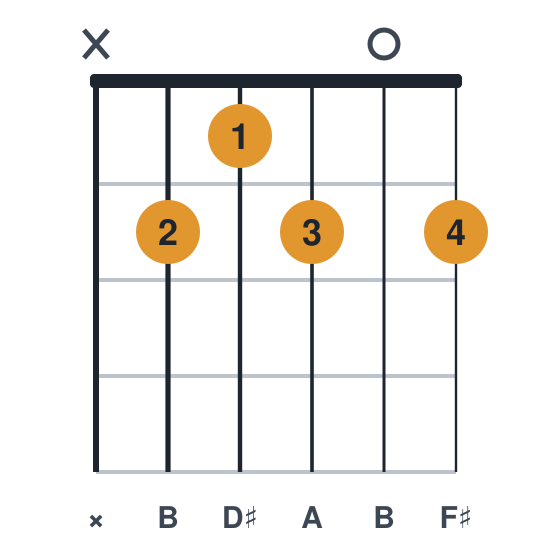
- B7the IV chord next to C#7 in blues in F#
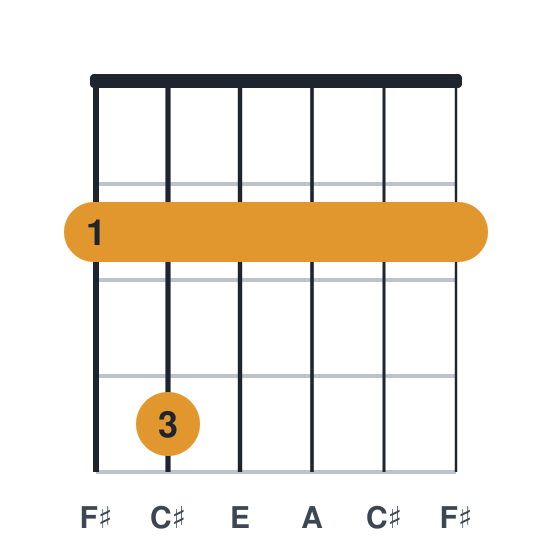
- F#m7C#7 is the V chord of F# minor
- C#sus4the suspended color players hang on before resolving


Other C# chords
C#7 guitar chord chart (x46464) from melodician.com