C#6 Guitar Chord
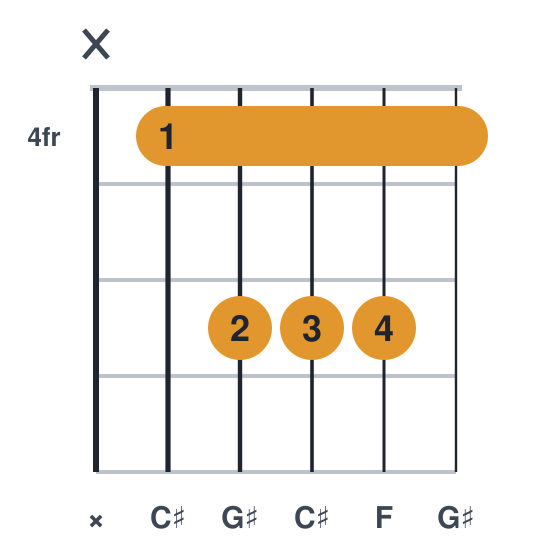
C#6 is the C sharp sixth chord. It has four notes: C sharp, F, G sharp and A sharp. It is played with the root on the A string at the 4th fret and one finger laid across the four strings above it at the 6th.

Root on the A string at the 4th fret with one finger laid flat across the other four at the 6th. Movable: this is the grip most players use for any sixth chord above the open strings.
How to play C#6, step by step
- Index finger: 4th fret, A string
- Ring finger: press flat across the D to high E strings at fret 6
- Strum from the A string down, skipping the low E.
Nothing here depends on the fret you start from. Slide the same two finger shape down four frets for A6, or up one for D6.
More ways to play C#6
There are 2 common C#6 shapes in total: the standard one at the top of the page, plus these, easiest first. You only ever need one. Tap any card to hear it.

The biggest C#6 on the neck. Low root, wide spread, and the sixth ringing on top of all six strings.
If notes drop out
- The laid finger is not holding all four strings
- Press just behind the 6th fret and turn the finger slightly onto its side. Higher up the neck the frets are closer, which helps: this shape is easier here than at the 1st fret.
- The chord sounds detached from the bass
- The index at the 4th fret carries the root. Check it rings clearly on its own before strumming the whole chord.
- The low E sounds
- Skip it. Start the strum on the A string so C sharp is the lowest note you hear.
What makes it a C#6
C♯ · F · G♯ · A♯ 1 3 5 6
C#6 is a C sharp major triad (C sharp, F, G sharp) plus an A sharp, the sixth. Written strictly the third would be E sharp, but chord charts print F and so does this page.
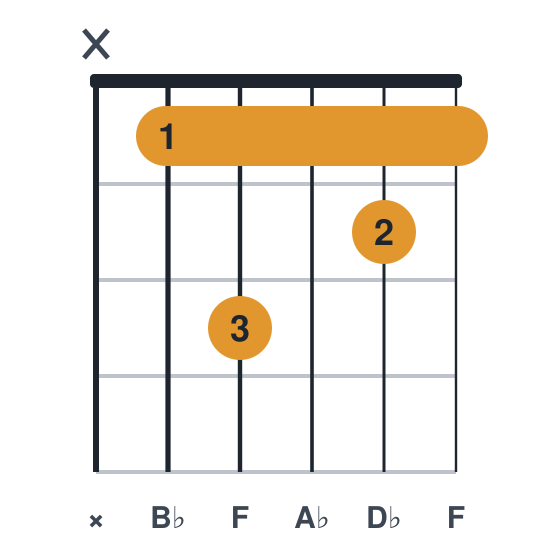
Read from A sharp, the same four notes spell a minor seventh chord, which the flat keys write as Bbm7. C#6 and Bbm7 are the same pitches with different bass notes.
C#6 vs C#maj7
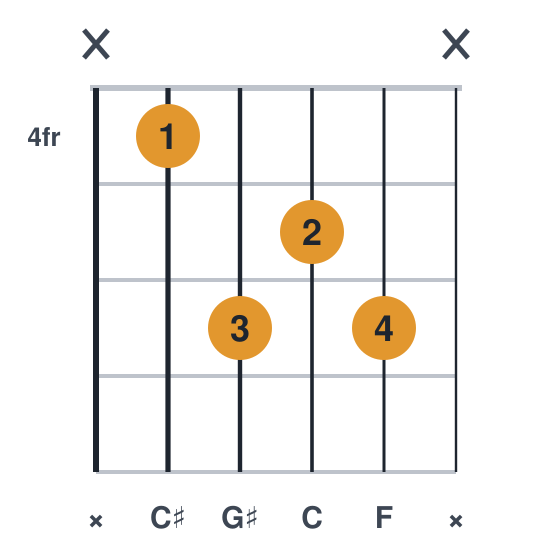
C#6 adds an A sharp to the triad; C#maj7 adds a B sharp, which charts write as C. One is a whole step below the root, the other a half step, and that is the difference between a chord at rest and a chord leaning forward.
Both live in the same part of the neck as barre style shapes. In practice guitarists meet C#6 in jazz and in songs that have modulated up, rather than in first position folk keys.
C#6 in major keys
Every note of C#6 sits inside these keys. See how it works alongside the other chords in each one.
C#6 chord questions
Is C#6 the same as Db6?
Yes, the same chord with a different spelling. Charts in sharp keys write C#6 and charts in flat keys write Db6; guitarists search for C#6 far more often, so that is the name used here.
Why does the chord show an F rather than an E sharp?
Strict notation spells the third of C sharp major as E sharp. Chord charts and guitar teaching write F instead, and this page follows the charts.
Is C#6 hard?
It is a two finger shape, and up at the 4th fret the frets are close together, so it is more comfortable than the same grip near the nut. Nothing about it is a stretch.
What is the difference between C#6 and C#7?
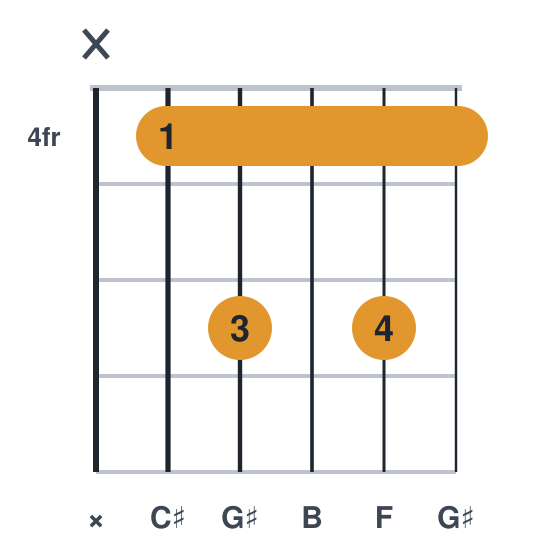
C#6 adds an A sharp and settles. C#7 adds a B and pushes toward F sharp. One is an ending, the other is a push.
Where would I use C#6?
In jazz and swing, where sixth chords replace plain majors, and in any song that sits in C sharp or D flat. It is also the IV chord in G sharp and the V in F sharp.
Chords to learn next
- C#the plain major underneath it
- Bbm7the same four notes counted from Bb
- C#maj7the other note people add to a major chord
- C#7a seventh on the same root instead of a sixth


Other C# chords
C#6 guitar chord chart (x46666) from melodician.com