C#sus2 Guitar Chord
C#sus2 is the C sharp suspended second chord. It has three notes: C♯, D♯ and G♯. You will also see it written as Dbsus2, the same chord spelled in flats. There is no open shape for this root; the standard grip is a barre at the 4th fret.

The movable Asus2 barre shape at the 4th fret: index across five strings, ring and pinky together at the 6th.
How to play C#sus2, step by step
- Index finger: press flat across the A to high E strings at fret 4
- Ring finger: 6th fret, D string
- Pinky finger: 6th fret, G string
- Strum from the A string down, skipping the low E.
This grip is movable: two frets down it plays Bsus2, two frets up it plays Ebsus2. Learn it once and the whole neck opens up.
More ways to play C#sus2
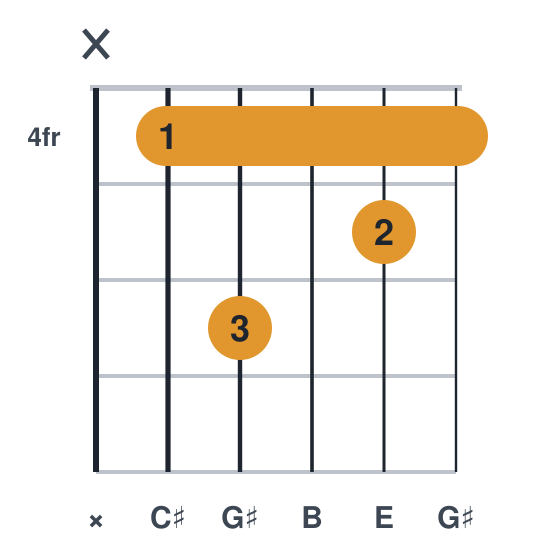
There are 2 common C#sus2 shapes in total: the standard one at the top of the page, plus these, easiest first. You only ever need one. Tap any card to hear it.

High and glassy, the thinnest voicing here, better for accents than heavy strumming.
Common trouble spots
- The D♯ on the B string chokes
- The suspended note lives under the soft middle of the barre. Move the index closer to the 4th fret wire and pull gently back with the arm instead of squeezing harder.
- Buzz at the 6th fret
- Ring and pinky share the fret on neighbouring strings. Place each tip right behind the wire, not stacked on top of the other finger.
- Stray low E noise
- The chord's lowest note is on the A string. Mute the low E with the overhanging tip of the barre finger or skip it with the pick.
What makes it a C#sus2
C♯ · D♯ · G♯ 1 2 5
C#sus2 takes the C♯ major triad and swaps its third for D♯, the note one whole step above the root. That leaves root, second and fifth: nothing major, nothing minor, just suspense. It can settle onto C♯ major, or onto C♯ minor, which is the chord guitarists actually meet far more often because it lives in the popular keys of E and A.
Spelled in flats the same three notes are D♭, E♭ and A♭, and the chord is called Dbsus2. In that spelling it decorates D♭ chords in flat keys like A♭ and D♭. Same sound, different paperwork.
C#sus2 vs C#sus4
C#sus2 holds D♯, a whole step above the root; C#sus4 holds F♯, a fourth above it. Both come from the same 4th fret barre position and both resolve to the same places. The practical difference is the flavour of the wait: the sus4 presses hard to resolve, while the sus2 hovers and can sit much longer. Pick sus4 for a quick push into C♯, sus2 for a calmer, more open color.
C#sus2 in major keys
Every note of C#sus2 sits inside these keys. See how it works alongside the other chords in each one.
C#sus2 chord questions
Is C#sus2 the same as Dbsus2?
Yes. C♯ and D♭ are the same pitch, so the two names describe one chord. Sharp keys use C#sus2, flat keys use Dbsus2.
Is C#sus2 major or minor?
Neither. The third is gone, replaced by D♯, so the chord holds off the decision until it resolves.
How do I play C#sus2 without a barre?
Use the four string shape at the 11th fret. Only the D and high E strings sit under the index there, so there is no five string barre to hold.
What does C#sus2 resolve to?
C♯ major or C♯ minor. On guitar the minor is the more common destination, since C♯m appears in everyday keys like E and A.
Why is C#sus2 rated hard?
Both practical shapes ask something: a five string barre at the 4th fret, or a four string grip high at the 11th. Neither is difficult by barre chord standards, but there is no easy open fallback.
Chords to learn next
- C#where the suspension usually lands
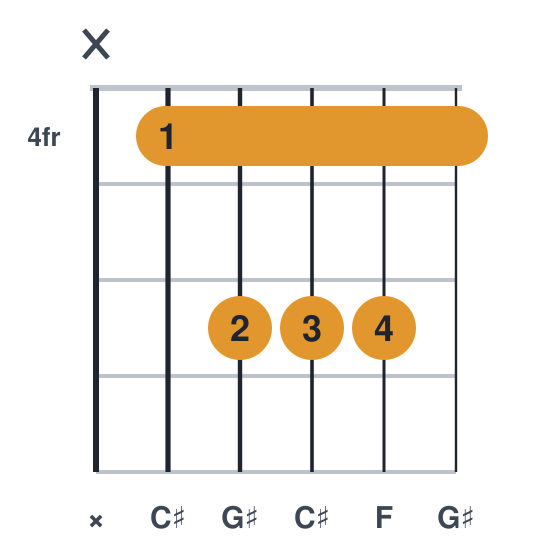
- C#sus4the other suspension
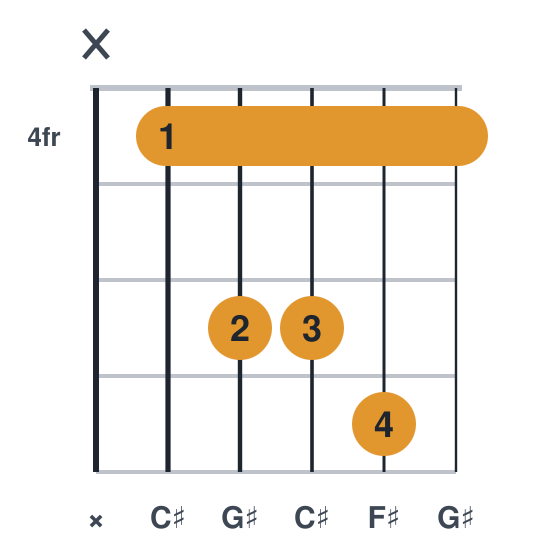
- C#mC#sus2 sits between major and minor
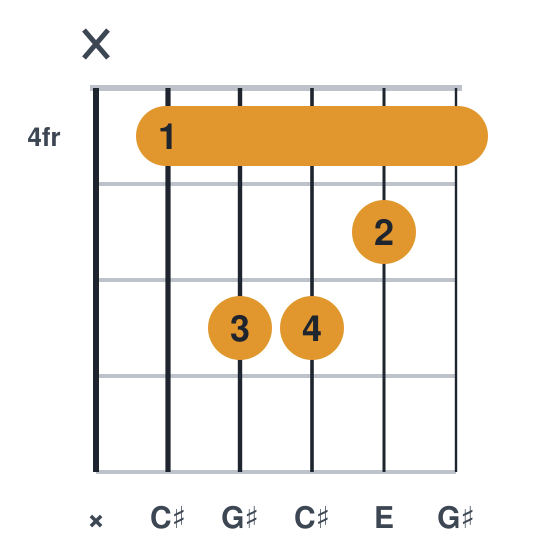
- C#m7the seventh chord on the same root, a softer jazz color


Other C# chords
C#sus2 guitar chord chart (x46644) from melodician.com