C#sus4 Guitar Chord
C♯sus4 is the C sharp suspended fourth chord. It has three notes: C♯, F♯ and G♯. There is no open way to play it: the standard shape is a five string barre at the 4th fret, though barres are noticeably kinder there than at the nut. In flat keys the same chord is written D♭sus4.

An Asus4 shape barred at the 4th fret, the first position where this chord sits comfortably.
How to play C#sus4, step by step
- Index finger: press flat across the A to high E strings at fret 4
- Middle finger: 6th fret, D string
- Ring finger: 6th fret, G string
- Pinky finger: 7th fret, B string
- Strum from the A string down, skipping the low E.
To resolve into C♯ major, the pinky note on the B string drops one fret while everything else holds still.
More ways to play C#sus4
There are 3 common C#sus4 shapes in total: the standard one at the top of the page, plus these, easiest first. You only ever need one. Tap any card to hear it.

High and glassy, a top end voicing with no low strings at all.

The broadest of the three, with real bass under the suspension.
If strings choke or buzz
- The high E under the barre is silent
- The pinky working at the 7th fret often brushes it. Stand the pinky up on its tip and give the barre a slight roll toward the nut.
- Low E drones under the chord
- It is not in this voicing. Reach the tip of the barre finger over just enough to rest against it, or start the strum from the A string.
- The paired 6th fret notes buzz
- Middle and ring sit side by side on the D and G strings. If they lean into each other both notes suffer; keep each tip planted straight behind the fret.
What makes it a C#sus4
C♯ · F♯ · G♯ 1 4 5
A sus4 chord suspends the third and plays the fourth instead. C♯sus4 keeps the root and fifth of C♯ major, C♯ and G♯, and replaces the third, E♯, with F♯. That leaves it neither major nor minor, just expectant: the F♯ presses down onto E♯ and the chord releases into C♯. You will mostly meet it written as D♭sus4 in flat keys like D♭ and A♭, and as C♯sus4 in sharp key songs around F♯ and B, where the C♯ chord is often the V.
C#sus4 vs C#sus2
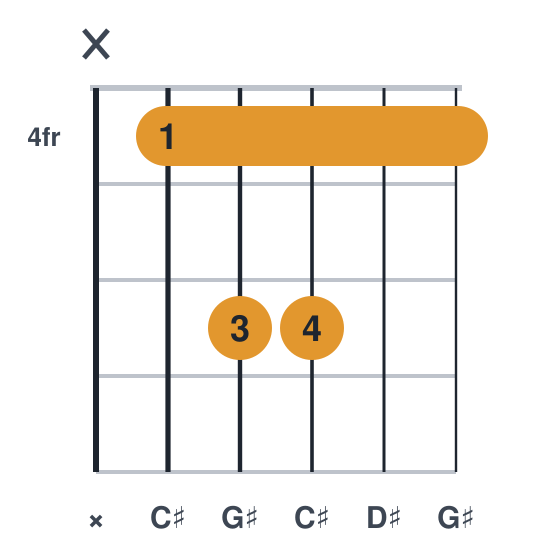
C♯sus4 replaces the third of C♯ with F♯, sitting just above it; C♯sus2 replaces it with D♯, a step below. Sus4 adds pull, sus2 adds space. The barre shapes mirror each other at the 4th fret, one finger apart, but sus4 is the one you will actually be asked for: a chart that says C♯sus means C♯sus4.
C#sus4 in major keys
Every note of C#sus4 sits inside these keys. See how it works alongside the other chords in each one.
C#sus4 chord questions
Is C#sus4 the same as Dbsus4?
Yes. C♯ and D♭ are the same pitch, so the two names describe one chord. The spelling follows the key of the song.
Can I play C#sus4 without a barre?
Yes, with the four string shape starting at the 11th fret: one finger per string, no barre, and every chord note present.
Is C#sus4 a major or minor chord?
Neither. It has no third, which is the note that decides major or minor. That open question is exactly what gives sus4 chords their suspended sound.
What does C#sus4 resolve to?
C♯ major, most often, and C♯ minor works too. The suspended F♯ falls one fret for major or two for minor.
What is the difference between C#sus4 and C#sus2?
The stand in note. Sus4 uses F♯, above the missing third; sus2 uses D♯, below it. Sus4 sounds tighter and more urgent.
Chords to learn next
- C#where the suspension usually lands
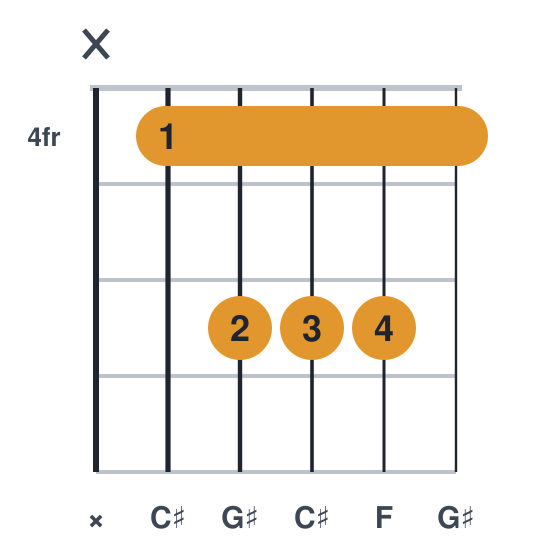
- C#sus2the other suspension
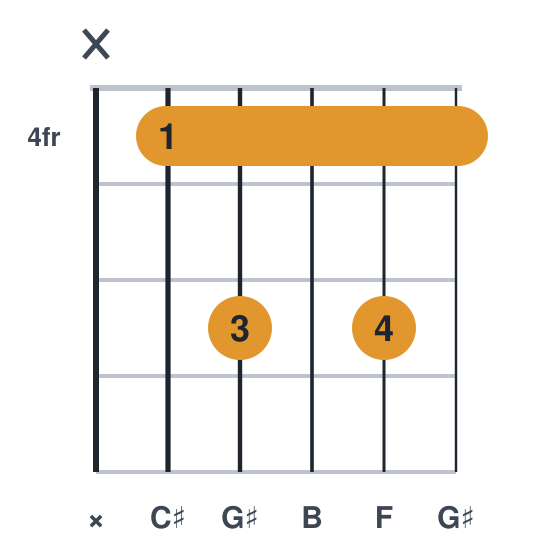
- C#7sus4 loves to decorate the seventh chord
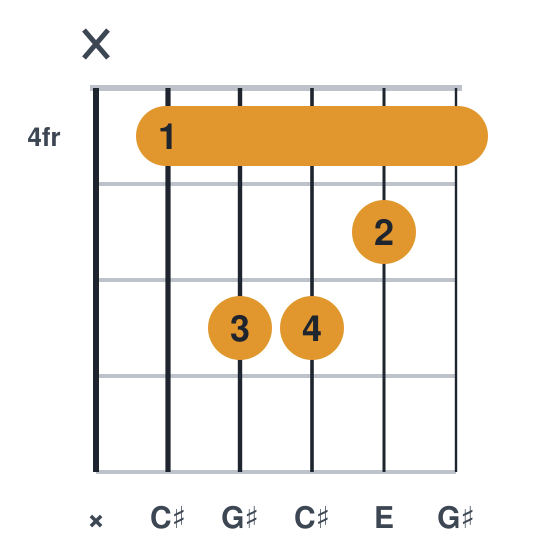
- C#mthe minor triad built on the same root


Other C# chords
C#sus4 guitar chord chart (x46674) from melodician.com