C#m9 Guitar Chord
C#m9 is the C sharp minor ninth chord. It has five notes: C sharp, E, G sharp, B and D sharp. The main shape puts the root on the A string at the 4th fret, with one finger laid across the top three strings and no barre across the neck.

Root on the A string at the 4th fret, index reaching back to the D string, and the ring finger laid across the top three strings. Five strings, no full barre, movable.
How to play C#m9, step by step
- Index finger: 2nd fret, D string
- Middle finger: 4th fret, A string
- Ring finger: press flat across the G to high E strings at fret 4
- Strum from the A string down, skipping the low E.
The middle finger on the A string names the chord. Slide the whole grip up two frets and it is Ebm9; down two and it is Bm9. One shape, every minor ninth.
More ways to play C#m9
There are 2 common C#m9 shapes in total: the standard one at the top of the page, plus these, easiest first. You only ever need one. Tap any card to hear it.

The wide version, root doubled and the D sharp ringing on top. High enough up the neck to sound bright even with all six strings going.
If notes choke
- The ring finger barre is patchy
- It has to cover the G, B and high E strings at the 4th fret. Lay it flat from the knuckle rather than curling it, and let the wrist come forward a little.
- The D string note is weak
- The index sits two frets behind the other fingers at the 2nd fret. It carries the flat third, so give it a firm tip even though the hand is stretched.
- The low E rings
- It is not part of the chord. Start the strum on the A string, or let the middle fingertip lean over to touch the low E quiet.
What makes it a C#m9
C♯ · E · G♯ · B · D♯ 1 ♭3 5 ♭7 9
C#m9 is a C#m7 chord with a ninth added: C sharp, E, G sharp and B make the minor seventh, and the D sharp makes it a ninth. In the main shape that D sharp sits on the B string, tucked inside the chord rather than on top.
It is the ii chord of B and the vi chord of E, so it turns up wherever those guitar friendly keys do. Minor ninths are the standard minor chord of soul and neo soul, because the ninth takes the plainness off a minor seventh without making it sad.
C#m9 vs C#m7
C#m9 is C#m7 with a D sharp added. The minor seventh is calm and finished; the ninth adds a note a whole step above the root an octave up, and the chord starts to float.
C#m7 is usually played as a barre at the 4th fret. This C#m9 sits at the same fret but skips the full barre, so the richer chord is, for once, not the harder one.
C#m9 in major keys
Every note of C#m9 sits inside these keys. See how it works alongside the other chords in each one.
C#m9 chord questions
Is C#m9 the same as Dbm9?
Yes, one chord with two names. C sharp is how the keys this chord lives in spell it, so that is the name used here.
What is the difference between C#m9 and C#m7?
C#m9 has a D sharp, the ninth, added to the four notes of C#m7. It is the same chord with more colour.
Does C#m9 need a barre?
Not a full one. The main shape lays the ring finger across three strings at the 4th fret while the index and middle work alone. The six string barre version at the 9th fret is on this page too.
Where is C#m9 used?
As the ii chord in B, as the vi in E, and as a drop in replacement for C sharp minor in any soul, R and B or jazz setting.
Do you strum all six strings?
No. Start on the A string so the root is the lowest note; the low E stays out of the chord.
Chords to learn next
- C#m7the same chord without the ninth
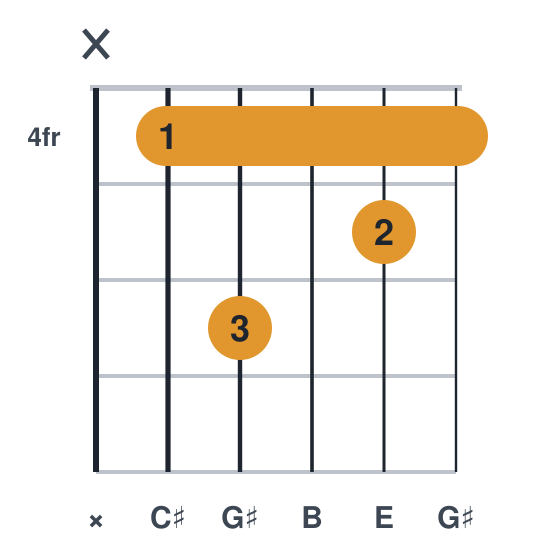
- F#9the V chord C#m9 leans toward
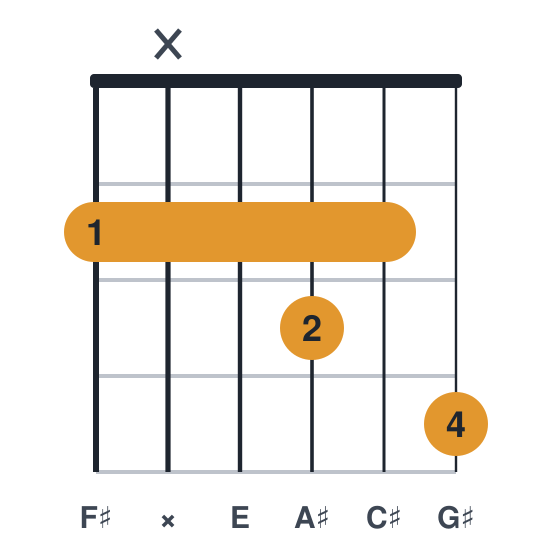
- C#mthe plain minor
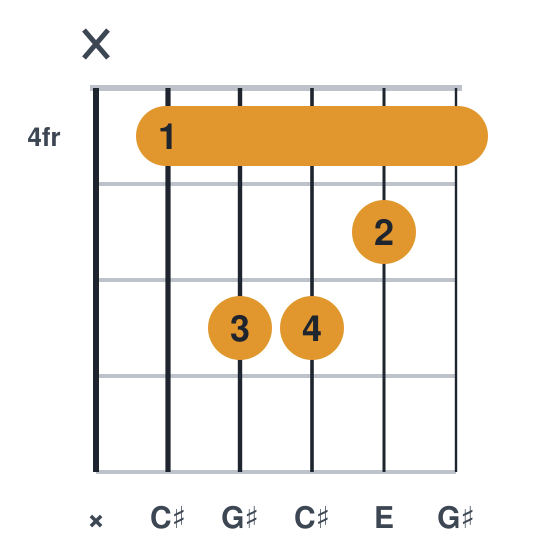
- C#9the same ninth built on a major third
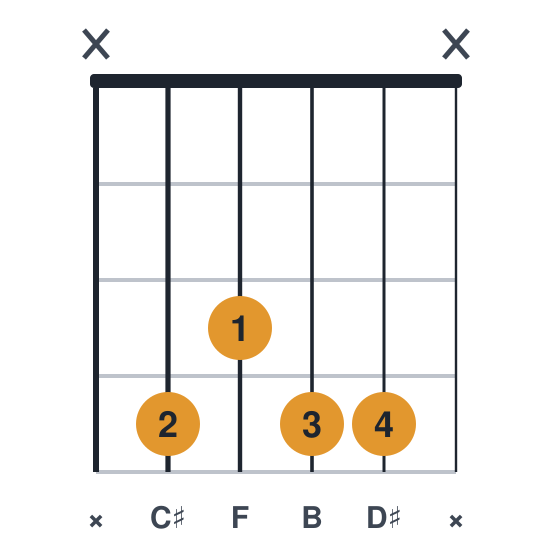


Other C# chords
C#m9 guitar chord chart (x42444) from melodician.com