Dm7 Guitar Chord
Dm7 is the D minor seventh chord. It has four notes: D, F, A and C. The open shape needs only two fingers, one of them laid flat across two strings, and it starts the most famous chord move in music: Dm7, G7, C, the ii V I of C major.

Two fingers: the index lies flat over the B and high E strings while the middle finger takes the G string. The open D string is the root.
How to play Dm7, step by step
- Index finger: lay it flat across the B and high E strings at fret 1
- Middle finger: 2nd fret, G string
- Leave the D string open. Strum from the D string down, skipping the two lowest strings.
The little two string barre here is the seed of every bigger barre chord, so it is worth getting right. When it feels easy, the five string version of the same chord is waiting at fret 5.
More ways to play Dm7
There are 4 common Dm7 shapes in total: the standard one at the top of the page, plus these, easiest first. You only ever need one. Tap any card to hear it.

Rounder and stronger than the open shape, with the root moved down to the A string.

The heaviest Dm7 here, thick with a doubled root.

Like the open shape but tighter and brighter, twelve frets up.
Songs that use the Dm7 chord
- Learn this song(opens a new tab on our partner site)
Dust in the Wind
Kansas
- Learn this song(opens a new tab on our partner site)
Imagine
John Lennon
Ventura Highway
America
Capo 2
Learn this song(opens a new tab on our partner site)- Learn this song(opens a new tab on our partner site)
Right Here Waiting
Richard Marx
- Learn this song(opens a new tab on our partner site)
Still Got the Blues
Gary Moore
- Learn this song(opens a new tab on our partner site)
Crazy
Patsy Cline
If Dm7 sounds thin or buzzy
- One of the two barred strings buzzes
- The mini barre must press the B and high E strings evenly. Use the flat pad of the index finger, keep it right behind the 1st fret, and pick both strings separately to check.
- Open D string does not ring
- The middle finger on the G string is drooping onto it. Raise your knuckles so the finger arrives on its tip; the open D is the root and cannot be lost.
- The chord sounds muddy
- Start the strum exactly on the D string. Catching the open A puts the wrong note in the bass, and catching the low E is worse.
What makes it a Dm7
D · F · A · C 1 ♭3 5 ♭7
Dm7 is a minor seventh chord: a D minor triad (D, F, A) plus a minor seventh (C). The C rounds off the minor sound and makes the chord feel at ease. Dm7's main job is being the ii chord of C major: the progression Dm7, G7, C closes countless jazz standards and pop choruses. It also serves as the vi chord in F major. If you learn one minor seventh chord for playing songs in C, this is it.
Dm vs Dm7
Dm frets the B string at fret 3 with a D note; Dm7 flattens the index finger across fret 1 instead, replacing that D with a C, the seventh. Dm has the wider finger spread, Dm7 the trickier mini barre, so neither is clearly easier. Sound wise Dm is plaintive and direct, Dm7 softer and jazzier. Songs in C major usually accept either.
Dm7 in major keys
Every note of Dm7 sits inside these keys. See how it works alongside the other chords in each one.
Dm7 chord questions
Is Dm7 a beginner chord?
Yes. Two fingers, four strings, no full barre. The only new skill is laying the index finger flat across two strings, which is worth learning early anyway.
What is the difference between Dm and Dm7?
One note. Dm7 replaces the D on the B string with a C, played by flattening the index finger across fret 1. It sounds smoother and less mournful than Dm.
What songs use Dm7?
The Scientist by Coldplay opens on it, Sunday Morning by Maroon 5 loops Dm7, G7, C the whole way through, and Fly Me to the Moon runs it inside the ii V of C.
Why is Dm7 called the ii chord?
Chords take Roman numerals from their position in the key. D is the second note of the C major scale, so Dm7 is the ii chord of C. In that job it almost always moves to G7, then home to C.
Do you strum all six strings in Dm7?
Not in the open shape: play the top four strings only. The barre shapes at frets 5 and 10 bring in the lower strings when you want a bigger chord.
Chords to learn next
- Dmthe same chord without the seventh
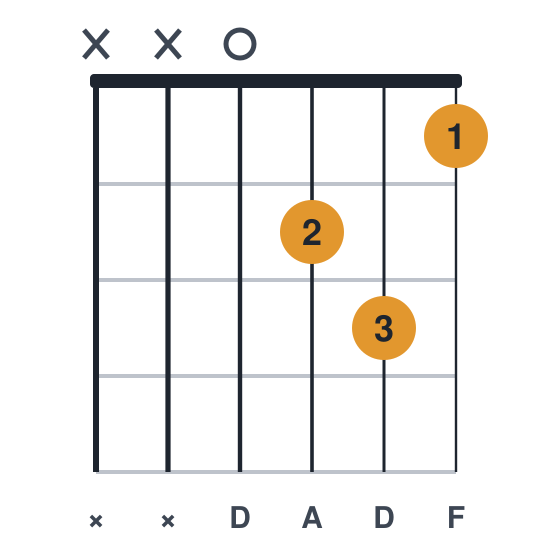
- A7the V chord that resolves to D minor
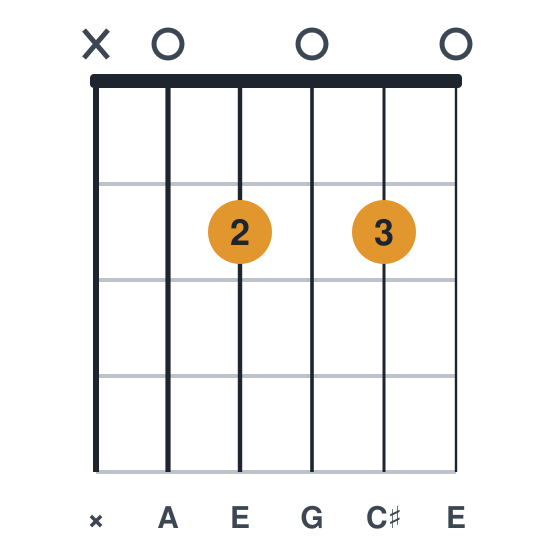
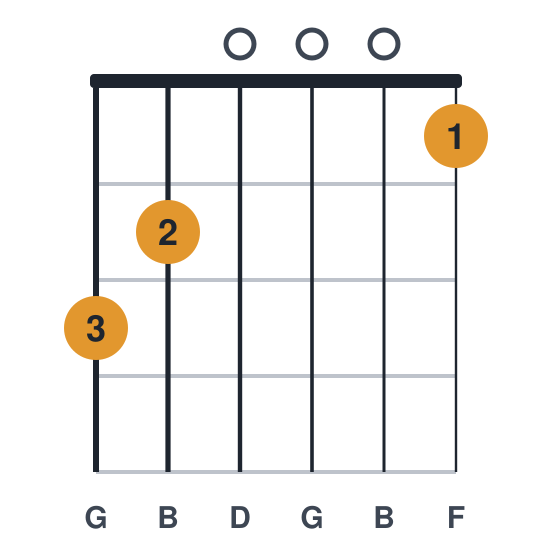
- G7partner in the ii V of C major
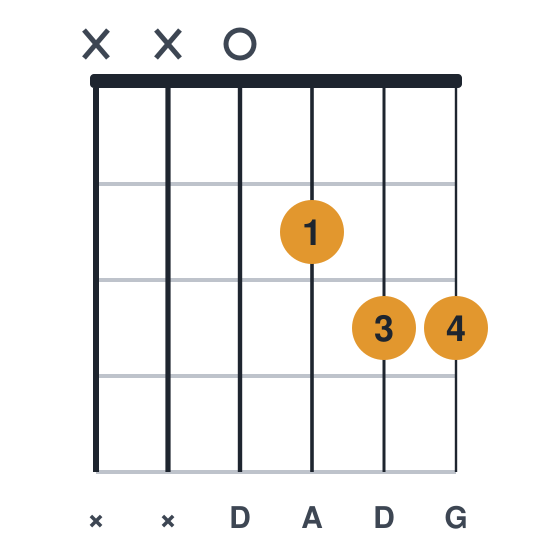
- Dsus4a different color built on the same root


Other D chords
Dm7 guitar chord chart (xx0211) from melodician.com