C7 Guitar Chord
C7 is the C dominant seventh chord. It has four notes: C, E, G and B♭. The standard shape is the familiar open C major grip with the pinky added on the G string, so if you already play C, you are one finger away from C7.

Open C major with the pinky added at the 3rd fret of the G string. Four fingers, no barre.
How to play C7, step by step
- Index finger: 1st fret, B string
- Middle finger: 2nd fret, D string
- Ring finger: 3rd fret, A string
- Pinky finger: 3rd fret, G string
- Leave the high E string open. Strum from the A string down, skipping the low E.
Since the first three fingers are exactly open C, practice dropping the pinky on and lifting it off without moving anything else. That switch is the whole chord.
More ways to play C7
There are 4 common C7 shapes in total: the standard one at the top of the page, plus these, easiest first. You only ever need one. Tap any card to hear it.

Tighter and more uniform than the open shape, with nothing left ringing loose.

The heaviest C7 on the page, with the root doubled at both ends.

Bright and bassless, a cutting little voicing for stabs and fills.
Songs that use the C7 chord
- Learn this song(opens a new tab on our partner site)
Hey Jude
The Beatles
- Learn this song(opens a new tab on our partner site)
How Sweet It Is (To Be Loved By You)
James Taylor
- Learn this song(opens a new tab on our partner site)
Crazy
Patsy Cline
- Learn this song(opens a new tab on our partner site)
Wooly Bully
Sam The Sham & The Pharaohs
- Learn this song(opens a new tab on our partner site)
Big Bad Bill (Is Sweet William Now)
Van Halen
- Learn this song(opens a new tab on our partner site)
The Sky Is Crying
Stevie Ray Vaughan
If notes buzz or vanish
- The pinky note buzzes
- The pinky is the weakest finger and it holds the note that defines the chord. Plant it just behind the 3rd fret and press straight down with the tip.
- Open high E sounds dead
- Either the index on the B string or the pinky above it is grazing the high E. Curl both so the open string has a clear path.
- Low E growls under the chord
- It is not part of C7. Begin the strum on the A string, or let the tip of your ring finger lean back to silence the low E.
What makes it a C7
C · E · G · B♭ 1 3 5 ♭7
C7 is a C major triad (C, E, G) plus a minor seventh (B♭). The B♭ is the note that changes everything: it grinds gently against the E and pushes the chord toward F. In the key of F, C7 is the V7 that brings each phrase home, and it does the same for F minor. In blues in C the same chord drops the tension act and simply is home, holding the first four bars of every chorus.
C vs C7
C major and C7 differ by a single fretted note: the open G string gains a B♭ under your pinky. One note, but it turns a settled chord into one that leans hard toward F. Stay on plain C when the chord is a destination. Switch to C7 in the bar before an F chord, or anywhere you want a rougher, bluesier C.
C7 in major keys
Every note of C7 sits inside these keys. See how it works alongside the other chords in each one.
C7 chord questions
Is C7 harder than C?
Slightly. It is the same shape plus a pinky on the G string. If open C is comfortable, C7 usually takes a few days of practice.
Can I play C7 without the pinky?
Not in open position: the pinky holds the B♭ that makes it a seventh chord. Without it you are playing plain C. The compact shape at fret 10 avoids the pinky stretch differently, one finger per string.
What does C7 resolve to?
F. C7 is the dominant (V) chord of F major and F minor, and the home chord of blues in C.
Do you strum all six strings in C7?
No. Skip the low E and strum five strings, letting the open high E ring on top.
What songs use C7?
Something by The Beatles walks through C7 on its opening line, What a Wonderful World uses it to turn back to F, and Route 66 and Mustang Sally ride it through blues changes.
Chords to learn next
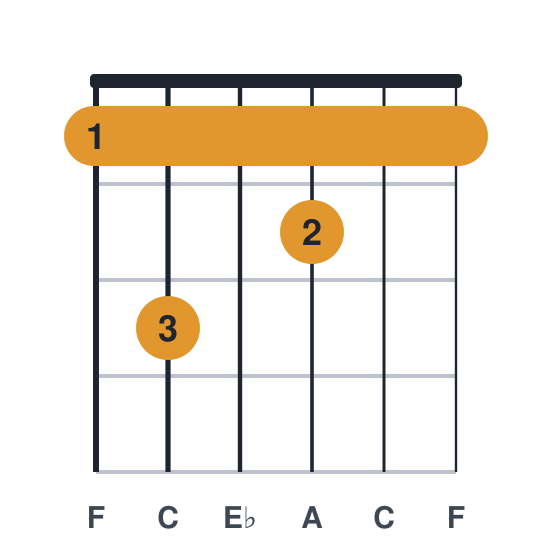
- F7C7 resolves to F
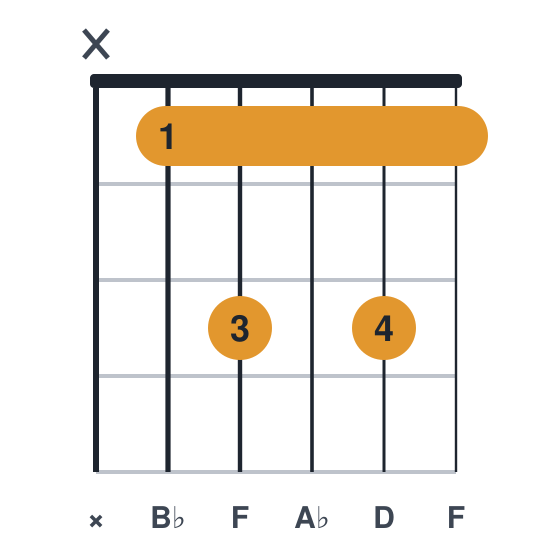
- Bb7the IV chord next to C7 in blues in F
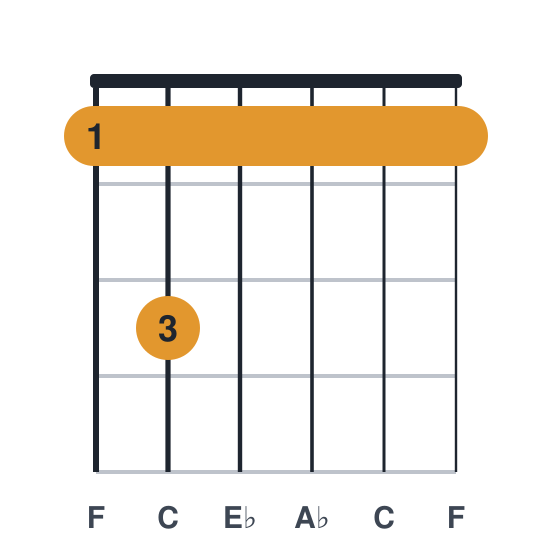
- Fm7C7 is the V chord of F minor
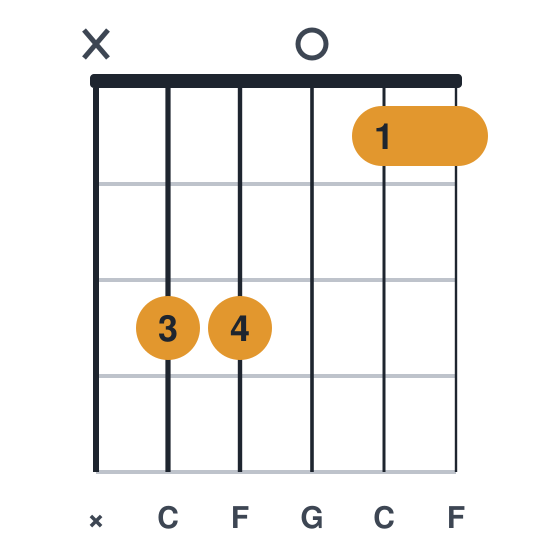
- Csus4the suspended color players hang on before resolving


Other C chords
C7 guitar chord chart (x32310) from melodician.com