Cmaj9 Guitar Chord
Cmaj9 is the C major ninth chord. It has five notes: C, E, G, B and D. The open shape needs one finger: hold the A string at the 3rd fret, let four strings ring open, and all five notes are sounding.

One finger. The A string at the 3rd fret gives the root, and the four open strings above it supply the ninth, the fifth, the seventh and the third.
How to play Cmaj9, step by step
- Index finger: 3rd fret, A string
- Let the D, G, B and high E strings ring open.
- Strum from the A string down, skipping the low E.
One finger and four open strings, and every note of the chord is there. If the open strings sound dull, check the index finger is upright on its tip and not leaning against the D string.
More ways to play Cmaj9
There are 3 common Cmaj9 shapes in total: the standard one at the top of the page, plus these, easiest first. You only ever need one. Tap any card to hear it.

Tighter and higher than the six string shape, and easier to keep clean. The notes sit close together, so the chord speaks quickly.

Full and glassy. Every note of the chord is present, which is rare for a five note chord on six strings.
If notes are missing
- The two strings under the ring finger are uneven
- It covers the B and high E at the 3rd fret. Lay it flat rather than pressing with the tip, and check both strings ring.
- The pinky note is weak
- The pinky takes the G string at the 4th fret, which is the major seventh. Keep it curled and press behind the fret.
- The low E rings
- It is not in the chord. Mute it with the fretting thumb or start the strum on the A string.
What makes it a Cmaj9
C · E · G · B · D 1 3 5 7 9
Cmaj9 is a Cmaj7 chord with a ninth added: C, E, G and B make Cmaj7, and the D on top makes it a ninth. All five notes are in this shape, which is why it needs four fingers.
It is the I chord of C major at its softest, and the landing chord of the most common progression in jazz: Dm9 to G9 to Cmaj9. Because the major seventh and the ninth both sit near the top of the chord, it sounds open and unhurried rather than final.
Cmaj9 vs Cmaj7
Cmaj9 is Cmaj7 with a D added. Cmaj7 already sounds soft; the ninth widens it further and takes away the last of the plainness.
The shapes are not close. Cmaj7 is an easy open chord with two fingers, while Cmaj9 needs four and sits at the 2nd to 4th frets. In a slow song the extra work is audible in a good way.
Cmaj9 in major keys
Every note of Cmaj9 sits inside these keys. See how it works alongside the other chords in each one.
Cmaj9 chord questions
What is the difference between Cmaj9 and Cadd9?
Cmaj9 contains the B, the major seventh, as well as the D. Cadd9 has no seventh at all: it is plain C major with a D added. Cadd9 sounds bright and strummed, Cmaj9 sounds soft and jazzy.
What is the difference between Cmaj9 and C9?
C9 has a B flat, the flat seventh, and wants to resolve to F. Cmaj9 has a B natural and sits perfectly still. One is a blues chord, the other is a resting chord.
Is Cmaj9 hard to play?
It is a four finger shape with one finger covering two strings, so it takes practice, but there is no full barre and everything sits within three frets.
Where is Cmaj9 used?
As the I chord of C major in jazz, bossa nova and soul, and as the final chord of a ii V I in C. It also works anywhere Cmaj7 is written.
Which strings do I strum?
Five, from the A string down, keeping the low E quiet.
Chords to learn next
- Cmaj7the same chord without the ninth
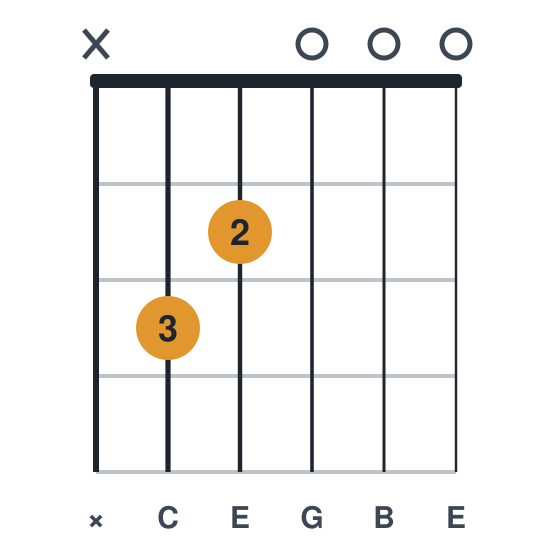
- Cadd9the ninth without the seventh
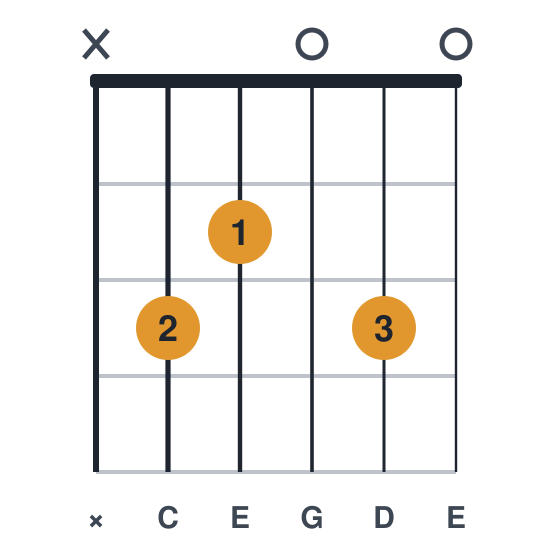
- Cthe plain major
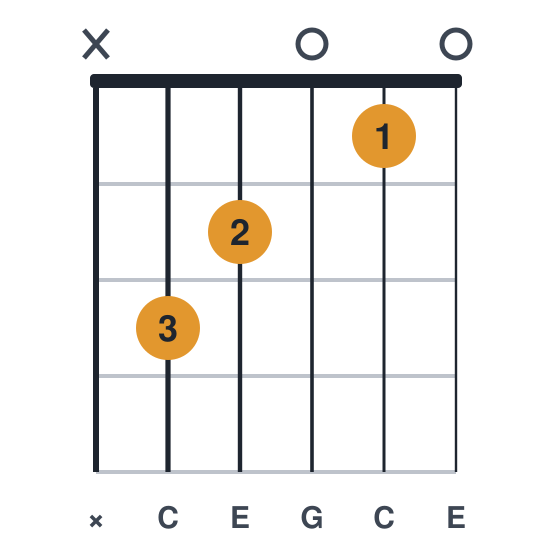
- C6the other soft colour on the same major
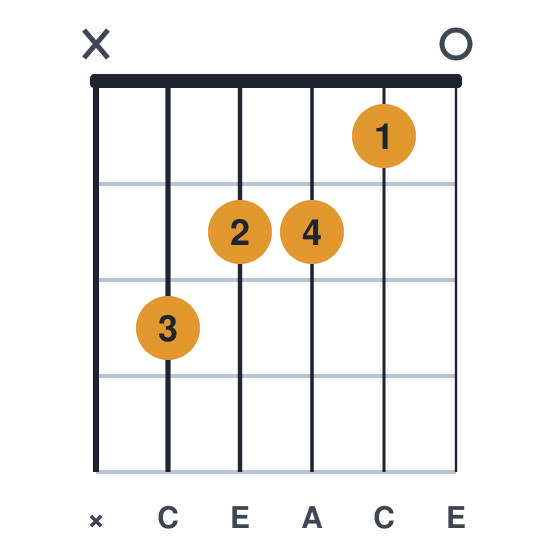


Other C chords
Cmaj9 guitar chord chart (x30000) from melodician.com