Cdim Guitar Chord
Cdim is the C diminished chord, a diminished triad. It has three notes: C, E♭ and G♭. There is no open string version; the standard shape lives at the 3rd fret, one finger per string, no barre. Learn this grip once and you can slide it anywhere, because every note in it is fretted.

The A string rooted diamond at fret 3: index on the root, then middle, pinky and ring fan out one per string. Fully movable.
How to play Cdim, step by step
- Index finger: 3rd fret, A string
- Middle finger: 4th fret, D string
- Ring finger: 4th fret, B string
- Pinky finger: 5th fret, G string
- Strum from the A string down, skipping the low E. The high E string stays muted; let the nearest fretting finger touch it lightly.
More ways to play Cdim
There are 2 common Cdim shapes in total: the standard one at the top of the page, plus these, easiest first. You only ever need one. Tap any card to hear it.

High and glassy, with no bass at all; more a color than a full chord.
When strings buzz or die
- The B string disappears
- Your pinky crosses over the B string to reach the G string, and its underside is the usual culprit. Raise the pinky knuckle and land on the fingertip only.
- An E string sneaks into the chord
- Only the middle four strings play. Lean the index tip against the low E and let the ring finger touch the high E, then strum with a narrower swing.
- The root on the A string buzzes
- The index carries the root alone and often ends up too far from the 3rd fret. Slide it up until it sits just behind the fret wire and press with the tip.
What makes it a Cdim
C · E♭ · G♭ 1 ♭3 ♭5
Cdim is built from two stacked minor thirds: C to E♭, then E♭ to G♭. Take C minor and pull its fifth down one fret and you have it. That flattened fifth is the old "devil's interval", and it gives the chord its restless, unresolved character.
The chord points one half step up: C wants to move to D♭ (the same note as C♯), so Cdim mostly shows up passing between chords in flat keys, or wherever a writer wants one beat of suspense before the next stable chord. Its three notes also live inside A♭7, so it can stand in for that dominant sound when a lighter voicing is needed.
Cdim vs Cm
Cm is C, E♭, G. Cdim keeps the first two notes and lowers the G to G♭. That single fret turns a sad but stable chord into an unstable one. The grips reflect the relationship: the usual Cm barre at the 3rd fret puts G at the 5th fret of the D string, and moving that note back one fret while dropping the barre produces the Cdim shape. Reach for Cm when the music needs a resting minor chord; reach for Cdim only when the chart names it, usually for a short connecting moment.
Cdim in major keys
Every note of Cdim sits inside these keys. See how it works alongside the other chords in each one.
Cdim chord questions
Is Cdim hard to play?
Moderate. No barre, but four fingers land in a tight cluster across three frets. If you can play Bdim or any A string rooted dim shape, this is the same grip one fret higher.
What is the difference between Cdim and Cdim7?
Cdim is three notes: C, E♭, G♭. Cdim7 stacks one more minor third on top, adding a fourth note. A chart that writes Cdim or C° is asking for the triad shown here; dim7 is its bigger four note cousin.
What does Cdim resolve to?
Up one fret, to D♭ major or C♯ minor. Diminished triads sit a half step below their target and climb into it.
Is there an open position Cdim?
No standard one. All three notes need fretting, so the common shapes are the movable grips at the 3rd and 10th frets shown on this page.
Can I leave Cdim out and just play the next chord?
Often yes, since it is usually a passing chord. But the half step climb is the flavor the writer wanted, so keep it when you can; it only lasts a beat or two.
Chords to learn next
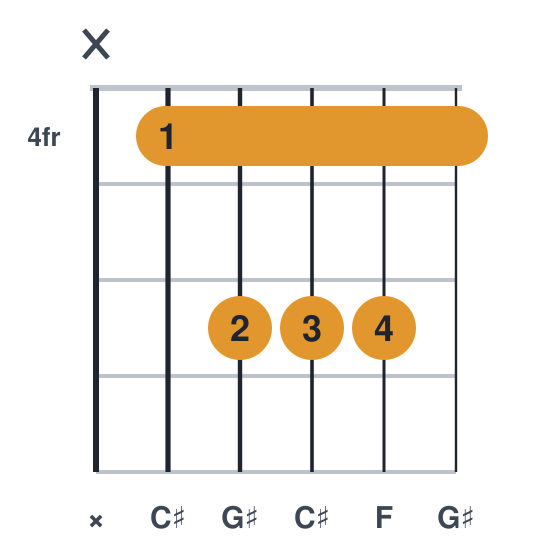
- C#Cdim pulls up a half step to C#
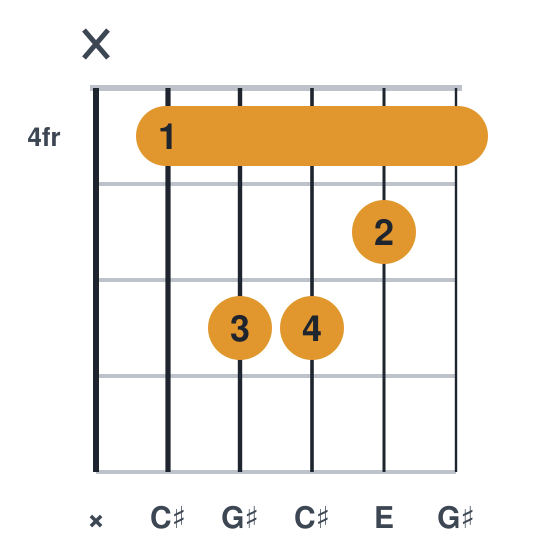
- C#mthe minor resolution one fret up
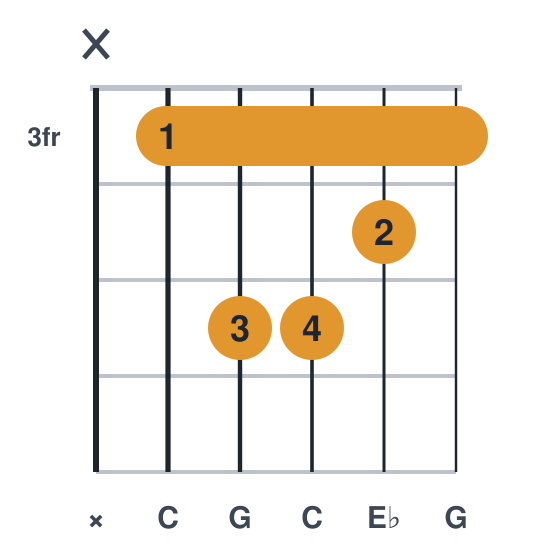
- Cmone note away from C minor
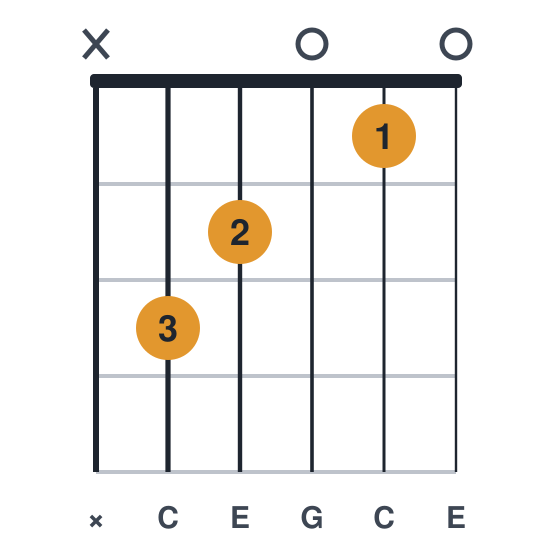
- Cthe plain major chord on the same root


Other C chords
Cdim guitar chord chart (x3454x) from melodician.com