Cm6 Guitar Chord
Cm6 is the C minor sixth chord. It has four notes: C, E flat, G and A. It is a C minor chord with an A added, and the shape on this page puts the root on the A string at the 3rd fret.

Root on the A string at the 3rd fret, with the index covering the D and B strings at the 1st and two fingers above it. Five strings, movable.
How to play Cm6, step by step
- Index finger: press flat across the D to B strings at fret 1
- Middle finger: 2nd fret, G string
- Ring finger: 3rd fret, A string
- Pinky finger: 3rd fret, high E string
- Strum from the A string down, skipping the low E.
The index covers two strings at the 1st fret while the other fingers work above it. Get the index right first, then add the rest.
More ways to play Cm6
There are 2 common Cm6 shapes in total: the standard one at the top of the page, plus these, easiest first. You only ever need one. Tap any card to hear it.

Wide and dark, with the root doubled low down. The sixth sits inside the chord rather than on top, which is what gives it that uneasy, film music colour.
If notes are missing
- One of the index strings is dead
- The index has to cover the D and B strings at the 1st fret with the G string pressed higher in between. Lay it flat and let the G string sit under the joint rather than under the pad.
- Buzzing at the 1st fret
- The 1st fret is the stiffest part of the neck. Press harder here than you would higher up and stay right behind the fret wire.
- The low E sounds
- Not part of the chord. Strum from the A string so the root C stays lowest.
What makes it a Cm6
C · E♭ · G · A 1 ♭3 5 6
Cm6 is a C minor triad (C, E flat, G) with an A added, the major sixth. The flat third and the natural sixth sitting in the same chord is what gives every minor sixth its unresolved feeling.
The same four notes read from A spell Am7b5. Cm6 is also an F9 without its root, which is why it works as the chord just before a B flat.
Cm6 vs Cm7
Cm7 adds a B flat to C minor and settles. Cm6 adds an A, one fret lower, and the chord starts leaning somewhere else.
Cm7 is the workhorse of pop and soul in the key of E flat or B flat. Cm6 is the jazz option: a tonic minor with more colour, or a iv chord in G that pulls the ear forward.
Cm6 in major keys
Every note of Cm6 sits inside these keys. See how it works alongside the other chords in each one.
Cm6 chord questions
What is the difference between Cm6 and Cm7?
Cm7 has a B flat, Cm6 has an A. They are one fret apart. Cm7 relaxes and Cm6 creates tension.
Is the sixth in Cm6 flat or natural?
Natural. The sixth of C is A, and a minor sixth chord keeps it natural while flattening the third. Flattening both would give you something else entirely.
Is Cm6 the same as Am7b5?
Same four notes: C, E flat, G and A. With C lowest you hear Cm6; with A lowest you hear the half diminished chord Am7b5.
Is Cm6 hard to play?
It is a four finger shape but everything sits within three frets and there is no full barre. The hard part is the index covering two strings at the 1st fret.
Where is Cm6 used?
As the iv chord in G, as a tonic minor in jazz, and in older songwriting, where a minor sixth often replaces a plain minor chord at the end of a line.
Chords to learn next
- Cmthe plain minor underneath it
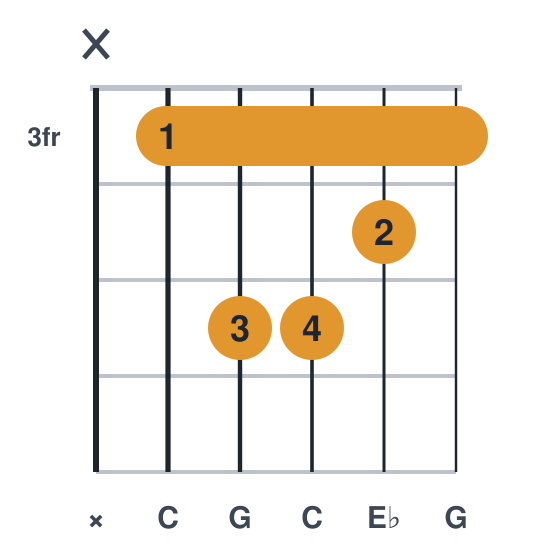
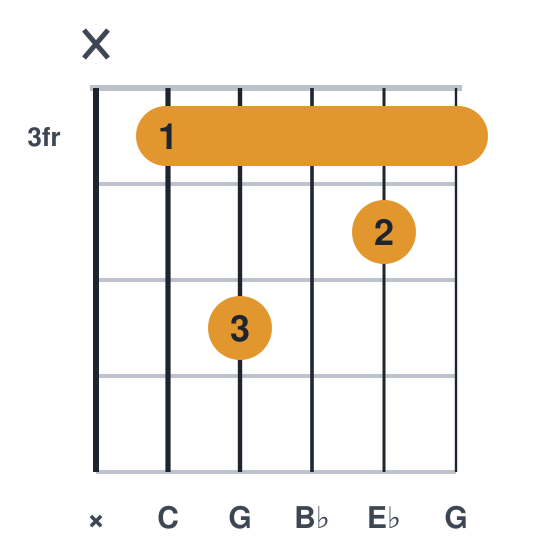
- Cm7a flat seventh instead of the sixth, the softer option
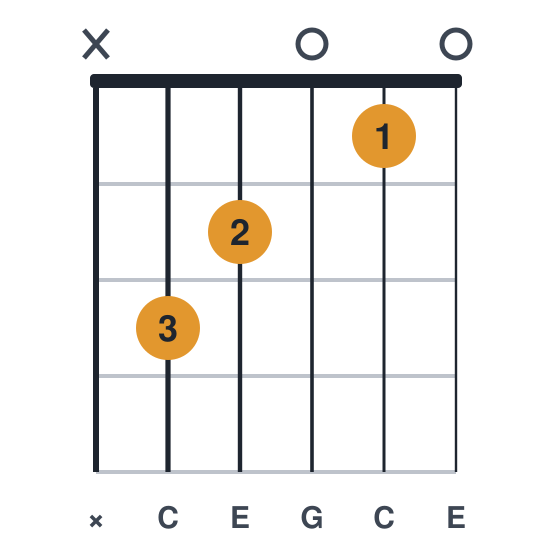
- Cthe major on the same root
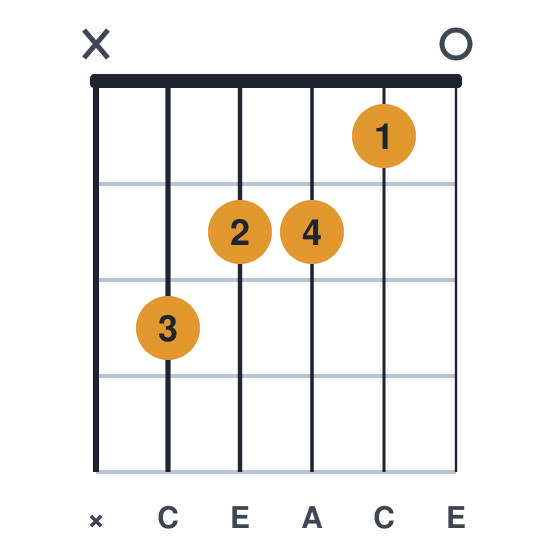
- C6the major sixth on the same root


Other C chords
Cm6 guitar chord chart (x31213) from melodician.com