Dadd9 Guitar Chord
Dadd9 is the D added ninth chord. It has four notes: D, F♯, A and E. Unlike most add9 chords it does not sit in the first two frets: the standard shape reaches the 5th fret, and the easiest way in is the compact 4 string version that uses the open high E as the ninth.

A four finger shape spanning frets 2 to 5, with the pinky taking the root on the A string and the open high E supplying the ninth. Set the index first, then stack the others.
How to play Dadd9, step by step
- Index finger: 2nd fret, G string
- Middle finger: 3rd fret, B string
- Ring finger: 4th fret, D string
- Pinky finger: 5th fret, A string
- Leave the high E string open. Strum from the A string down, skipping the low E.
If the full shape is too much at first, start with the compact version below. It is the same chord without the bass note on the A string, so the pinky has nothing to reach for.
More ways to play Dadd9
There are 2 common Dadd9 shapes in total: the standard one at the top of the page, plus these, easiest first. You only ever need one. Tap any card to hear it.

Lighter and more of a chime than a strum, since the lowest note is the F♯ rather than a deep D.
If it sounds choked or buzzy
- Open high E does not ring
- The middle finger on the B string is leaning over. Curl it so the open E, the ninth of the chord, comes through; without it this is just a D chord.
- The bass note on the A string is dull
- The pinky at the 5th fret has the hardest job in the shape. Press with the very tip, right behind the fret, and check that your thumb sits low on the back of the neck.
- Low E rumbles underneath
- The low E is not part of the chord. Start the strum from the A string, or let the tip of the pinky lean back just enough to keep the low E quiet.
What makes it a Dadd9
D · F♯ · A · E 1 3 5 9
Dadd9 is a D major triad (D, F♯, A) with an E added, the ninth. The E is the second note of the D scale played an octave up, and the third (F♯) stays in place, so the chord reads as major with extra light on top.
It covers the same ground as plain D: the I chord in the key of D, the IV chord in A, the V chord in G. Writers pick it when a phrase ends on D and a plain triad would land too bluntly.
Dadd9 vs Dsus2
Dsus2 also has an E in it, but it gets there by removing the third, F♯. That leaves Dsus2 hollow and floating, while Dadd9 holds both F♯ and E and stays clearly major. On guitar the trade is stark: Dsus2 is one of the easiest chords there is, and Dadd9 takes real fingering work. Many players use Dsus2 as a stand in, and the cost is that the chord no longer sounds finished.
Dadd9 in major keys
Every note of Dadd9 sits inside these keys. See how it works alongside the other chords in each one.
Dadd9 chord questions
Why is Dadd9 played up at the 5th fret?
To keep the third (F♯) and the ninth (E) ringing at the same time, the middle strings have to be fretted, and the closest place they all line up is around frets 2 to 5 with the open high E as the ninth. Down at the nut you can have one of those notes, not both.
Is there an easier Dadd9?
Yes, the compact 4 string version on this page. It drops the bass note on the A string, so the whole shape fits between the 2nd and 4th frets with the high E open.
What is the difference between Dadd9 and D9?
D9 also contains a C, the flat seventh, which makes it a dominant chord that pulls toward G. Dadd9 has no seventh and stays a bright major chord.
What is the difference between Dadd9 and Dsus2?
Both contain an E, but Dsus2 drops the third (F♯) and sounds open and unresolved, while Dadd9 keeps the F♯ and still sounds major.
Can I play Dsus2 instead of Dadd9?
In a pinch, often yes: they share three notes and Dsus2 is far easier. You lose the major third, so the chord sounds emptier. If the song leans on the major sound, learn the real shape.
Chords to learn next
- Dthe plain major
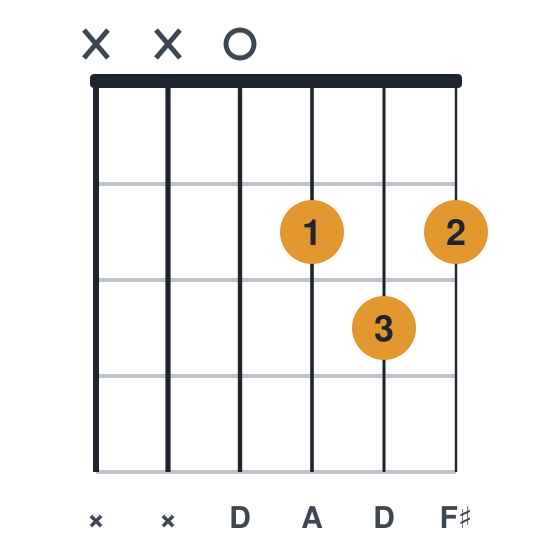
- Dsus2the 9 without the 3
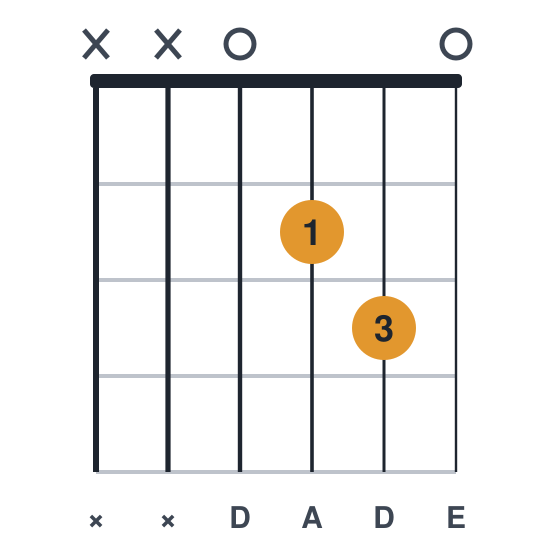
- Dmaj7another colour on the same major
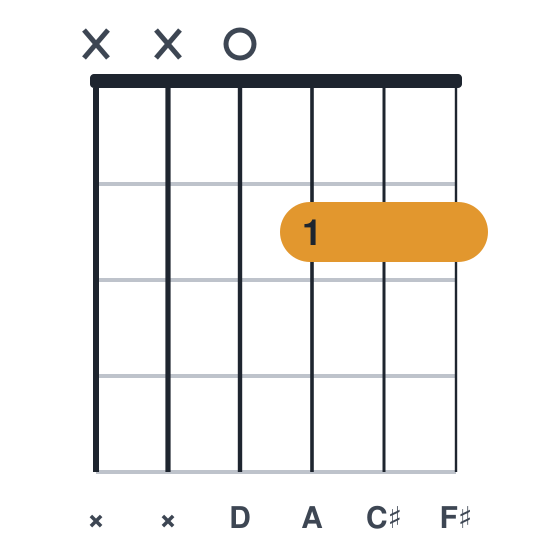
- Dmthe minor chord on the same root, a darker place to go next
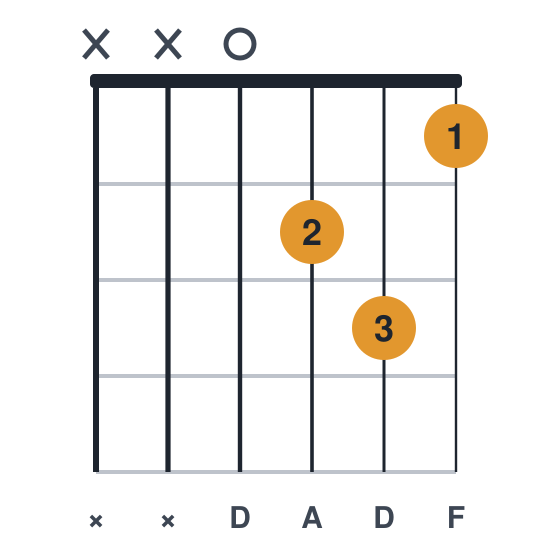


Other D chords
Dadd9 guitar chord chart (x54230) from melodician.com