D6 Guitar Chord
D6 is the D sixth chord. It has four notes: D, F sharp, A and B. The usual shape uses just the top four strings and two fingers, which makes it one of the easiest four note chords on the guitar.

Top four strings only: open D, open B, and two fingers at the 2nd fret on the G and high E. The smallest common sixth shape.
How to play D6, step by step
- Index finger: 2nd fret, G string
- Middle finger: 2nd fret, high E string
- Leave the D and B strings open. Strum from the D string down, skipping the two lowest strings.
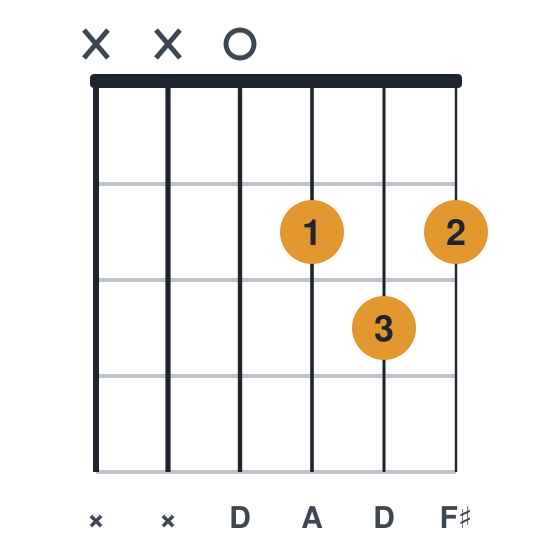
Compare it with plain D: same four strings, same two fingers, and the only change is the B string, which is left open instead of held at the 3rd fret.
More ways to play D6
There are 3 common D6 shapes in total: the standard one at the top of the page, plus these, easiest first. You only ever need one. Tap any card to hear it.

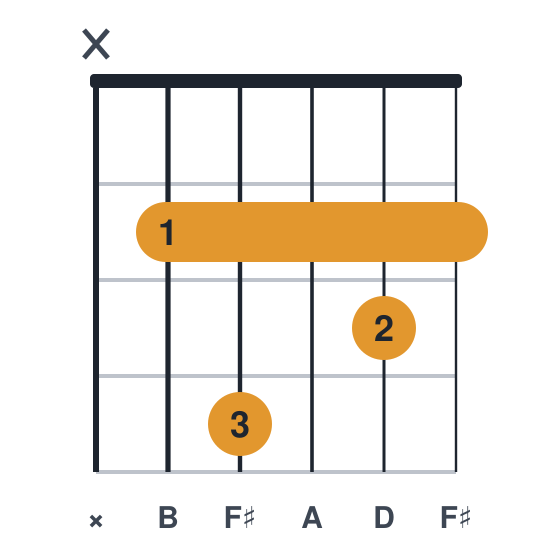
Even and close packed, the four notes almost touching. Less bass weight than an open shape, which makes it easy to sit under a singer.

The biggest D6 on the neck. Low root, wide spread, and the sixth ringing on top of all six strings.
If it sounds unclear
- The two lowest strings are ringing
- D6 starts on the D string. Rest the side of the strumming hand near the bridge or let the fretting thumb lean against the low E so neither of the bottom two strings sounds.
- The open B string dominates
- It is the sixth, so it should be audible, but if it swamps the chord angle the strum slightly toward the D string so the root comes through.
- One of the fretted notes buzzes
- Both are at the 2nd fret, on the G and high E strings. Press with the fingertips and keep the fingers upright so they do not lean on the open B between them.
What makes it a D6
D · F♯ · A · B 1 3 5 6
D6 is a D major triad (D, F sharp, A) with a B added, the sixth. Nothing is removed, so it still works anywhere D works.
The same four notes read from B spell Bm7. D6 and Bm7 are the same collection with a different lowest note, which is why the two chords often swap places in folk and country arrangements.
D6 vs Dmaj7
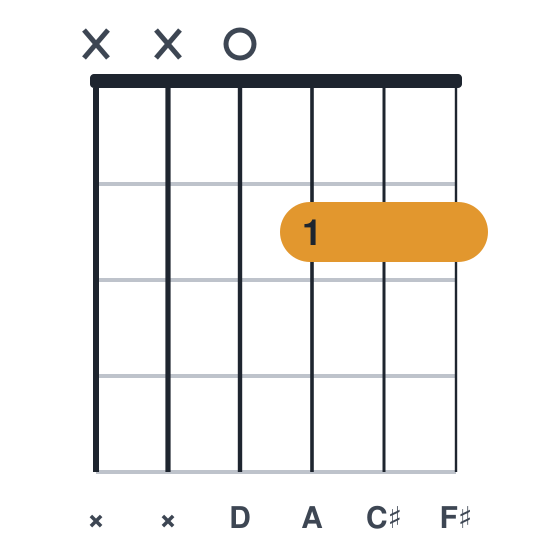
D6 adds a B to D major, Dmaj7 adds a C sharp. The B is a whole step below the root and sounds calm; the C sharp is a half step below and leans against the D, which is the tension that gives maj7 its dreamy quality.
On the top four strings they are one finger apart from plain D. D6 opens the B string, Dmaj7 drops the B string to the 2nd fret. Play the three chords in a row and the difference is unmistakable.
D6 in major keys
Every note of D6 sits inside these keys. See how it works alongside the other chords in each one.
D6 chord questions
Is D6 the same as Bm7?
Both contain D, F sharp, A and B. With D in the bass the ear hears D6; with B in the bass it hears Bm7. On guitar you can often use one for the other.
Is D6 easy for a beginner?
Yes. Two fingers, both at the 2nd fret, on four strings. It is easier than plain D and a good first four note chord.
What is the difference between D6 and D7?
D6 adds a B and sits still. D7 adds a C and pulls toward G. Both are four note chords built on D and they do opposite jobs.
Where is D6 used?
As a lighter D at the end of a phrase, as the IV chord in A, and constantly in surf, rockabilly and swing, where sixth chords are the default way to voice a major chord.
Which strings do I strum?
The top four, from the D string down. The low E and A strings are not part of this shape.
Chords to learn next
- Dthe plain major underneath it
- Bm7the same four notes counted from B
- Dmaj7the other note people add to a major chord
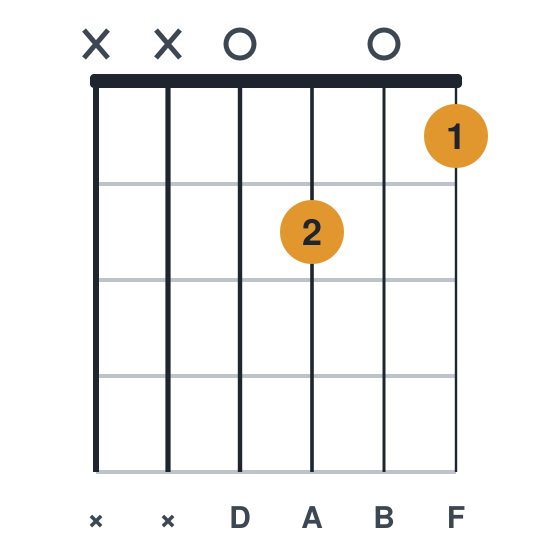
- Dm6the same sixth over a minor chord


Other D chords
D6 guitar chord chart (xx0202) from melodician.com