C#m9 Ukulele Chord
C#m9 is the C sharp minor ninth chord. It has five notes: C sharp, E, G sharp, B and D sharp. Four strings can hold four of them, so every shape drops the fifth. The standard shape uses three fingers with the open E string ringing as the flat third.

Three fingers around the open E string, which rings as the flat third. The root sits on the A string at the 4th fret, on top of the chord. No fifth, as in every ninth shape.
How to play C#m9 on ukulele, step by step
- Index finger: 3rd fret, C string
- Middle finger: 4th fret, G string
- Ring finger: 4th fret, A string
- Leave the E string open. Strum all four strings.
The open E string is the flat third, the note that makes the chord minor. In this shape the root C sharp rings on the A string, at the top of the chord rather than the bottom.
More ways to play C#m9
There are 2 common C#m9 shapes: the standard one at the top of the page, plus these further up the neck. You only ever need one. Tap any card to hear it.

Close voiced and controlled, all four notes fretted. The tidier, jazzier version of the chord.
If it sounds unclear
- The open E string is muffled
- The fingers on the C and A strings sit either side of it. Stand both on their tips so the E, the flat third, rings freely in the middle.
- The chord sounds like it has a wrong note
- The D sharp on the C string is the ninth and sits one whole step above the root next door. That rub is the chord, not a mistake; check both notes ring evenly and it turns from clash into colour.
- The g string note is weak
- The middle finger holds the flat seventh, B, at the 4th fret of the g string. It is the reachiest note in the shape, so let the wrist come forward until the finger lands on its tip.
What makes it a C#m9
C♯ · E · G♯ · B · D♯ 1 ♭3 5 ♭7 9
C#m9 is a C#m7 chord with a ninth added: C sharp, E, G sharp and B make the minor seventh, and the D sharp makes it a ninth. The shapes here keep the root, flat third, flat seventh and ninth and drop the fifth, the one note a ninth chord can spare.
It is the ii chord of B and the vi of E, both guitar friendly keys that ukulele players borrow constantly, so C#m9 earns a place in the hands early. Minor ninths are the everyday minor of soul and jazz, where a plain minor seventh can sound bare.
C#m9 vs C#m7
C#m9 adds a D sharp, the ninth, to the four notes of C#m7. The ninth floats a whole step above the root an octave up and keeps the chord from settling into plain sadness.
The two shapes are cousins: both lean on the open E string for the flat third. C#m7 needs only two fretted notes, C#m9 needs three, and the extra finger buys the note that changes the mood.
C#m9 chord questions
Is C#m9 the same as Dbm9?
Yes, one chord with two names. C sharp suits the sharp keys this chord lives in, so it is the spelling used here.
What is the difference between C#m9 and C#m7?
C#m9 has a D sharp, the ninth, added to the four notes of C#m7. Same chord, more colour on top.
Why is there no G sharp in the shape?
Four strings sound and the chord has five notes, so one has to go. The fifth adds weight but no character, which is why ninth chords always drop it.
Which note is the root here?
The C sharp at the 4th fret of the A string, the highest string on the diagram. Ukulele shapes often put the root on top; the ear still hears the chord as C sharp minor.
Where is C#m9 used?
As the ii chord in B and the vi in E, and anywhere a C sharp minor wants more colour, which is most of soul, R and B and jazz.
Chords to learn next
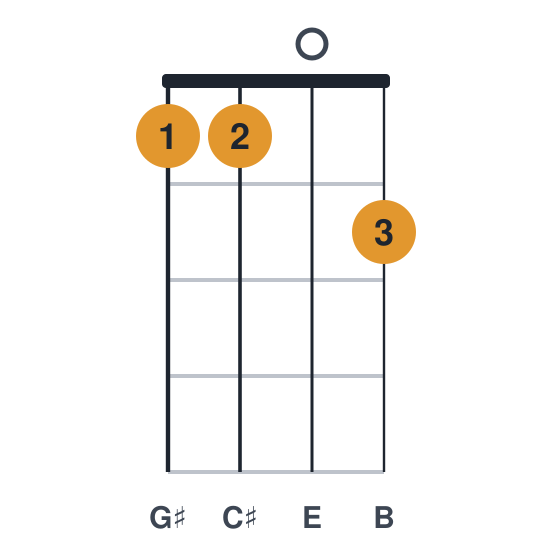
- C#m7the same chord without the ninth
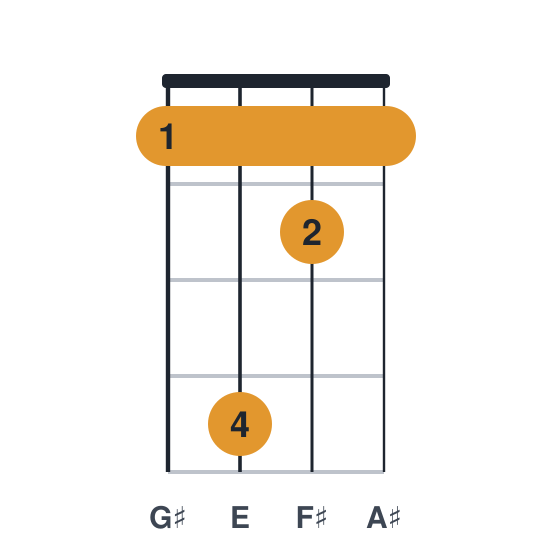
- F#9the V chord C#m9 leans toward
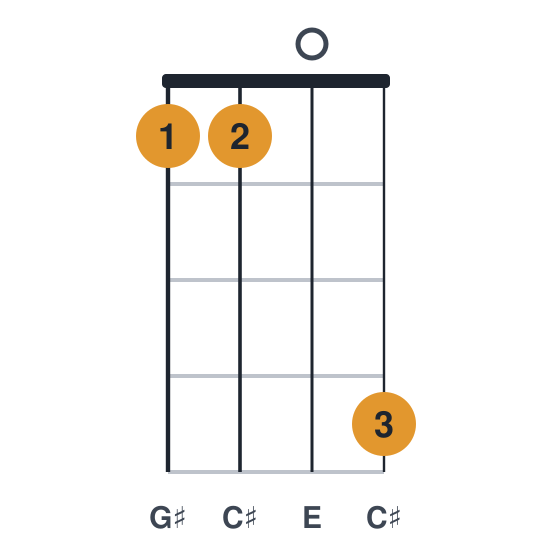
- C#mthe plain minor
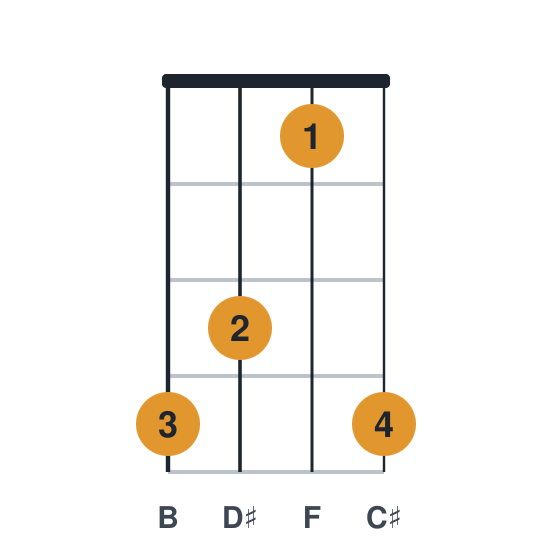
- C#9the same ninth built on a major third


Other C# chords
C#m9 ukulele chord chart (4304) from melodician.com