C#sus2 Ukulele Chord
C#sus2 is the C sharp suspended second chord on ukulele. It has three notes: C♯, D♯ and G♯. The standard shape uses all four fingers, one per string, inside the first four frets; the same chord is written Dbsus2 in flat keys.

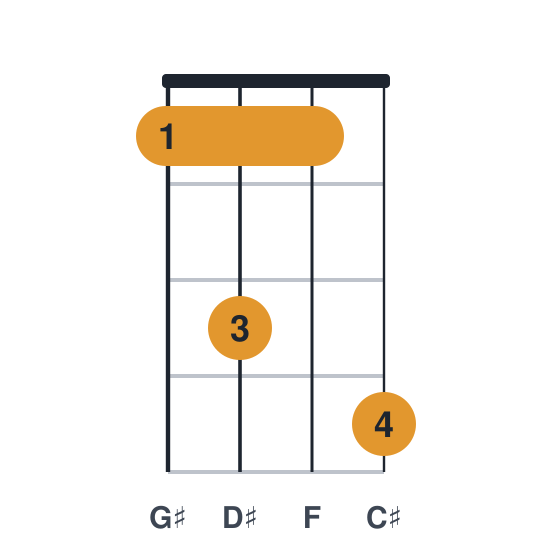
One finger per string: index at the 1st fret of the G, middle at the 3rd on the C, ring and pinky at the 4th on the E and A.
How to play C#sus2 on ukulele, step by step
- Index finger: 1st fret, G string
- Middle finger: 3rd fret, C string
- Ring finger: 4th fret, E string
- Pinky finger: 4th fret, A string
- Strum all four strings.
Nothing in the shape rings open, so it slides: two frets up, the same finger pattern is Ebsus2. Four finger shapes feel like work at first, but movable ones repay it across the whole neck.
More ways to play C#sus2
There are 3 common C#sus2 shapes: the standard one at the top of the page, plus these further up the neck. You only ever need one. Tap any card to hear it.

Slightly darker than the standard shape, with both C♯s framing the hanging D♯.

Full and ringing, the barre version to reach for when the song sits high.
If the shape is not clean
- The 4th fret pair buzzes
- Ring and pinky sit side by side at the 4th fret on the E and A strings. Keep both curled and on their tips so neither drags the other flat.
- The index note disappears
- It holds the 1st fret of the G string, the farthest reach from the rest of the hand. Keep it planted while the other fingers set, then strum.
- The chord sounds sour
- A finger one fret off turns this chord into something else entirely. Pick string by string against the diagram before strumming.
What makes it a C#sus2
C♯ · D♯ · G♯ 1 2 5
C#sus2 replaces the third of the C sharp chord, E♯ (written F on charts), with D♯. That leaves a root, a whole step and a fifth: no major or minor identity, just a hang that resolves when the D♯ moves.
The same three notes read from G♯ spell Absus4, the sus4 twin every sus2 has a fifth up. C♯ and its flat spelling D♭ live in piano and vocal keys, so on ukulele this chord mostly appears when a song is kept in its original key instead of being moved to C or D.
C#sus2 vs C#sus4
C#sus2 hangs D♯ a whole step below the missing third; C#sus4 hangs F♯ a half step above it. Same root and fifth, different suspended note, opposite direction of approach.
The sus4 makes a short tense lead-in that wants C♯ back straight away; the sus2 is the airy version that can hold a bar. Choose by how quickly you want the resolution to land.
C#sus2 chord questions
Is Dbsus2 the same as C#sus2?
Yes, one chord with two names. C♯ is used here to match how the rest of this site spells the root; flat key charts write D♭.
Is C#sus2 major or minor?
Neither. The third has been swapped for D♯, so the chord floats until a third returns.
Why does the theory mention an F?
Strict spelling calls the third of C♯ E♯, which is the same key as F. Chord charts, this site included, print the plain name.
What is the difference between C#sus2 and C#sus4?
C#sus2 suspends D♯, a whole step over the root; C#sus4 suspends F♯, a fourth over it. The sus4 is tenser, the sus2 more open.
What does C#sus2 resolve to?
C♯ major when the D♯ climbs back to the third, or C♯ minor when it falls to E. The chord itself does not choose.
Chords to learn next
- C#where the suspension usually lands
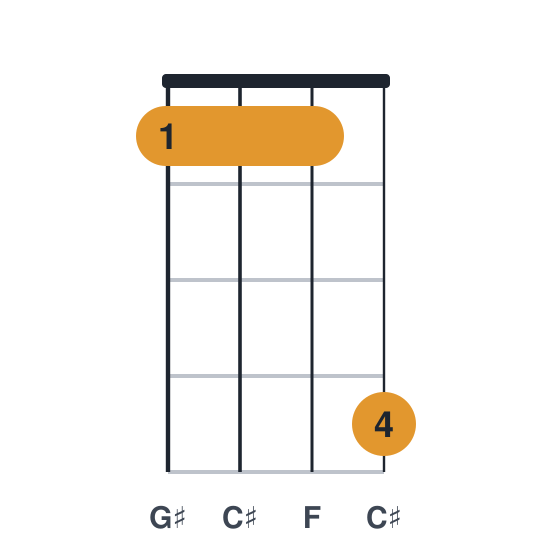
- C#sus4the other suspension
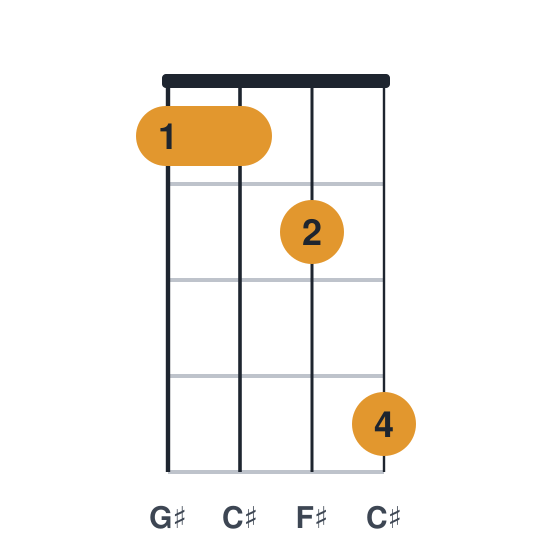
- C#mC#sus2 sits between major and minor
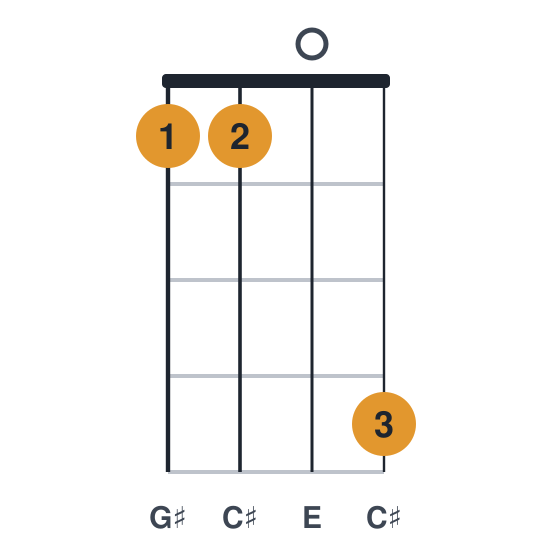
- C#add9the same colour with the third kept in


Other C# chords
C#sus2 ukulele chord chart (1344) from melodician.com