C#m7 Ukulele Chord
C#m7 is the C sharp minor seventh chord. It has four notes: C sharp, E, G sharp and B. The standard shape needs three fingers inside the first two frets with the E string open, one of the easiest minor sevenths on the ukulele.

Index and middle side by side at the 1st fret on the G and C strings, ring at the 2nd fret on the A string, E string open.
How to play C#m7 on ukulele, step by step
- Index finger: 1st fret, G string
- Middle finger: 1st fret, C string
- Ring finger: 2nd fret, A string
- Leave the E string open. Strum all four strings.
Charts in sharp keys write this chord as C#m7; charts in flat keys write Dbm7. It is the same chord and the same grip, spelled two ways.
More ways to play C#m7
There are 3 common C#m7 shapes: the standard one at the top of the page, plus these further up the neck. You only ever need one. Tap any card to hear it.

Compact and mid-heavy. Fully fretted, so it damps cleanly for rhythm chops.

The top of the neck version: thin, bright and best as a colour high in an arrangement.
If it sounds wrong
- The open E string goes quiet
- The middle finger on the C string is usually the one leaning into it. Curl both 1st fret fingers up onto their tips so the open string has room to ring.
- The A string buzzes
- The ring finger at the 2nd fret needs to sit just behind the fret wire. Too far back and it buzzes; on top of the wire and it goes dull.
- The two 1st fret fingers crowd each other
- Index and middle share one fret on neighbouring strings, so stagger them: index nearer the nut edge of the fret, middle tucked just behind it.
What makes it a C#m7
C♯ · E · G♯ · B 1 ♭3 5 ♭7
C#m7 is a minor seventh chord: a C sharp minor triad (C sharp, E, G sharp) plus a minor seventh (B). The seventh softens the minor into the relaxed sound pop ballads run on.
C#m7 is the ii chord of B and the vi chord of E, and E is one of the great singalong keys, so C#m7 appears in far more songs than its name suggests. The open E string in the standard shape is the chord's flat third ringing free.
C#m7 vs C#m
The A string decides. C#m puts it at the 4th fret, doubling the root; C#m7 drops it to the 2nd, where it sounds B, the seventh. The two 1st fret fingers and the open E stay exactly where they were.
That one drop softens the chord and shortens the reach: the m7 version sits entirely inside two frets. Where a change to C#m keeps arriving late, C#m7 usually rescues it.
C#m7 chord questions
Is C#m7 the same as Dbm7?
Yes. C sharp and D flat are the same pitch, so the chords are identical. Sharp key charts write C#m7; flat key charts write Dbm7.
Is C#m7 hard on the ukulele?
No. Three fingers inside the first two frets with an open string, no barre and no stretch. It is easier than C#m, which needs a reach to the 4th fret.
What is the difference between C#m and C#m7?
C#m7 moves the A string from the 4th fret down to the 2nd, trading a doubled root for B, the minor seventh. The chord turns softer and easier at the same time.
What keys use C#m7?
B major, where it is the ii chord, E major, where it is the vi, and C sharp minor itself.
Chords to learn next
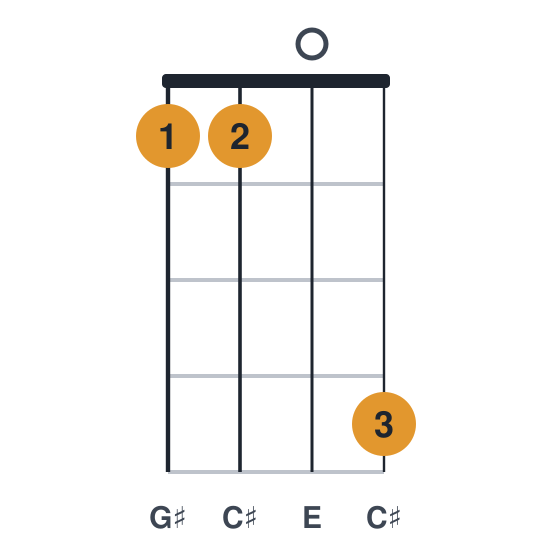
- C#mthe same chord without the seventh
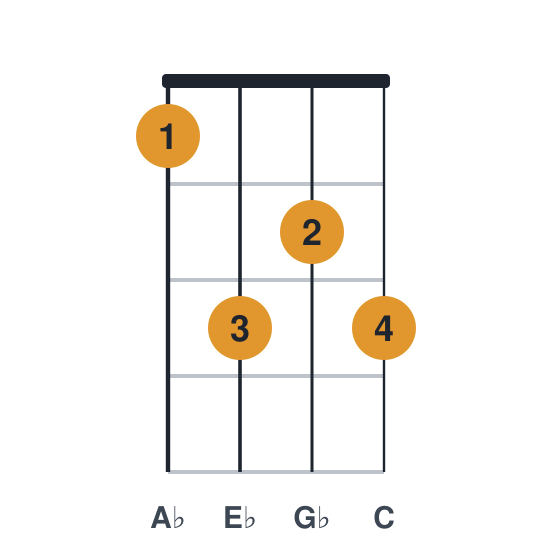
- Ab7the V chord that resolves to C# minor
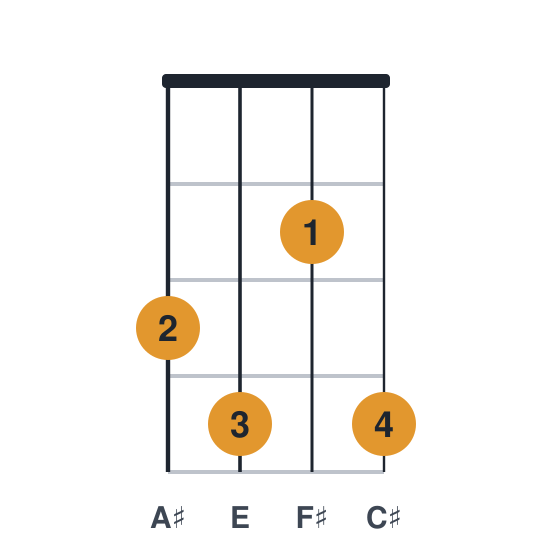
- F#7partner in the ii V of B major
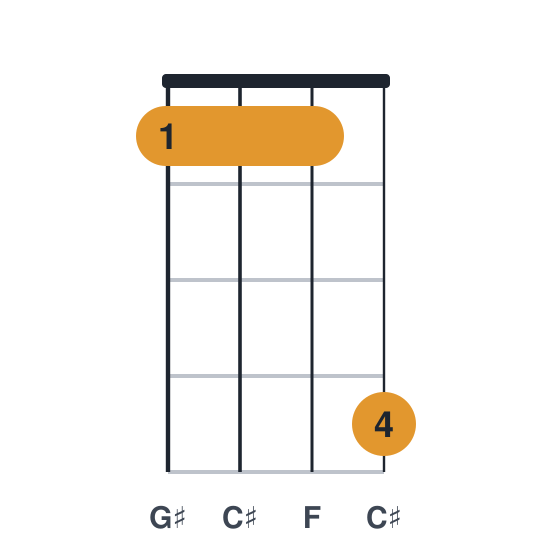
- C#the major on the same root


Other C# chords
C#m7 ukulele chord chart (1102) from melodician.com