C#m Ukulele Chord
C#m is the C sharp minor chord. It has three notes: C sharp, E and G sharp. The standard shape frets the G and C strings at the 1st fret and the A string at the 4th, with the open E string carrying the minor third.

Index and middle side by side at the 1st fret of the G and C strings, ring finger out at the 4th fret of the A string, E string open in the middle.
How to play C#m on ukulele, step by step
- Index finger: 1st fret, G string
- Middle finger: 1st fret, C string
- Ring finger: 4th fret, A string
- Leave the E string open. Strum all four strings.
The reach from the 1st fret pair to the 4th fret is the whole difficulty. Bring the ring finger in first, then drop the index and middle behind it; the shape lands more reliably built back to front.
More ways to play C#m
There are 3 common C#m shapes: the standard one at the top of the page, plus these further up the neck. You only ever need one. Tap any card to hear it.

Fuller and darker than the open shape, with the root at both ends.

Ringing and unusual: the open E and the fretted E an octave above it chime against each other.
If it sounds wrong
- The stretch to the 4th fret pulls the other fingers off
- Keep the wrist low and let the hand pivot from the thumb. The index and middle share the 1st fret and can afford to lean back slightly.
- The open E string is muffled
- The middle finger on the C string is the usual culprit. Arch it so the E string underneath stays clear; it is the note that makes the chord minor.
- The chord sounds thin
- All four strings belong in it. Let the strum carry through to the A string, where the second root lives.
What makes it a C#m
C♯ · E · G♯ 1 ♭3 5
C#m is a minor triad: C sharp, a minor third E, and a fifth G sharp. The ukulele hands you the third for free: the open E string sits in the middle of the shape, which is why a chord from a four sharp key still needs only three fingers.
C#m is the relative minor of E major and works as the ii of B and the vi of E. Those are big keys for pop and rock, so C#m turns up on the ukulele far more often than its spelling suggests.
C#m vs C#
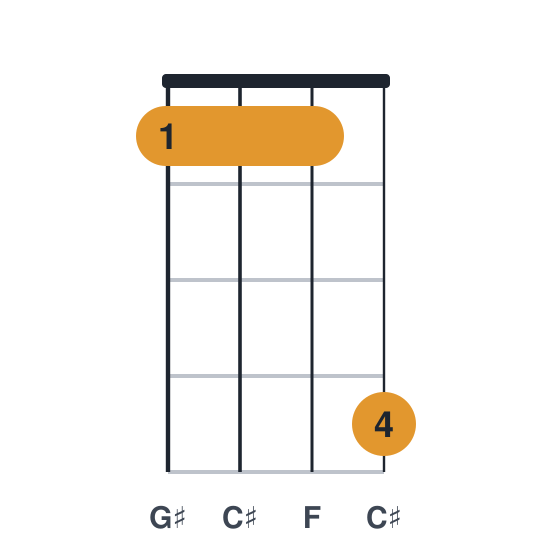
C# major (1114) barres the G, C and E strings at the 1st fret, so its E string sounds an F, which is how sharp keys spell E sharp, the major third. C#m simply lifts that note: the open E is the minor third. It is one of the few pairs where the minor is plainly easier than the major.
Moving between them, only the E string changes: fretted at 1 for major, open for minor. The 1st fret pair and the 4th fret note stay planted.
C#m chord questions
Is C#m the same as Dbm?
Yes, the same pitches under two names. Sharp keys write C#m, flat keys write Dbm. On the fretboard nothing changes.
Is C#m easy on the ukulele?
Easier than most sharp key chords: three fingers, no barre, one open string. The reach from the 1st fret to the 4th is the only work.
What is the difference between C#m and C#?
One string. C# major frets the E string at the 1st fret; C#m lets it ring open. Everything else is shared.
Which finger takes the 4th fret?
The ring finger, on the A string. Some hands prefer the pinky; either works as long as the two 1st fret fingers stay put.
What keys use C#m?
It is the ii chord of B major, the vi chord of E major, and the home chord of C sharp minor.
Chords to learn next
- C#the major version of C#m
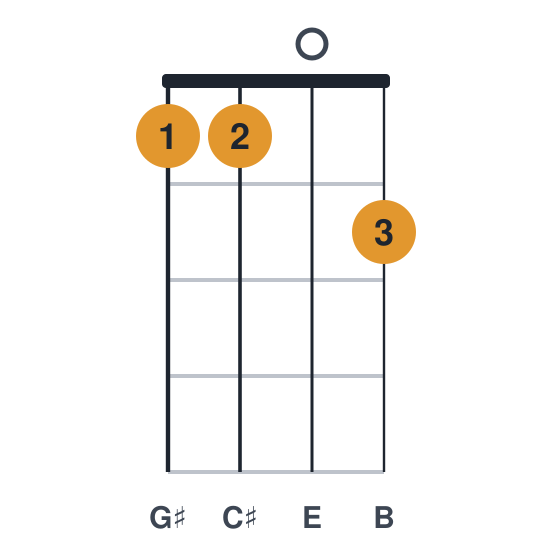
- C#m7adds a seventh for a softer C#m
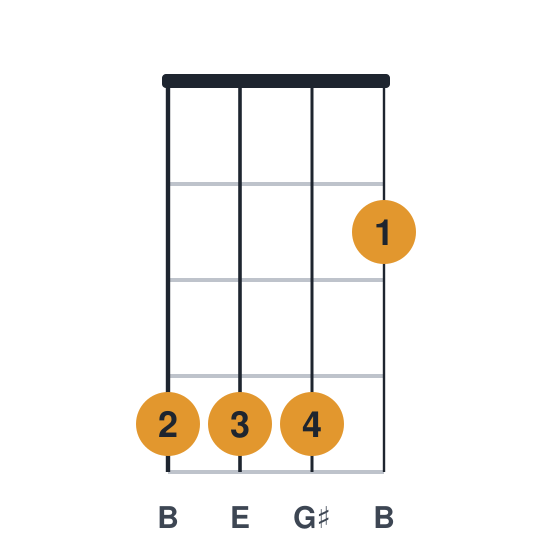
- Ethe relative major of C#m
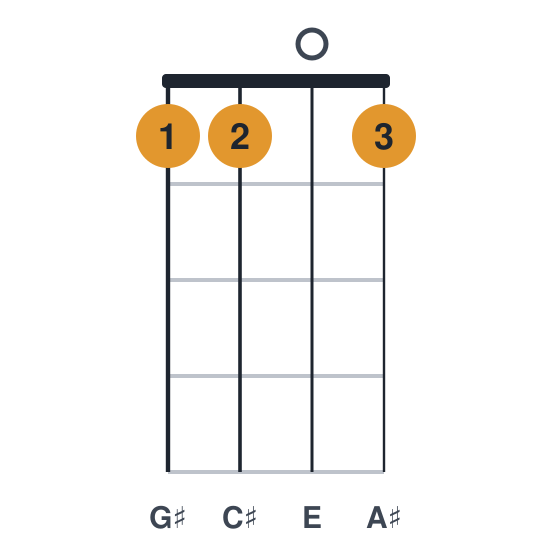
- C#m6the same minor with an old-fashioned sixth


Other C# chords
C#m ukulele chord chart (1104) from melodician.com