C#9 Ukulele Chord
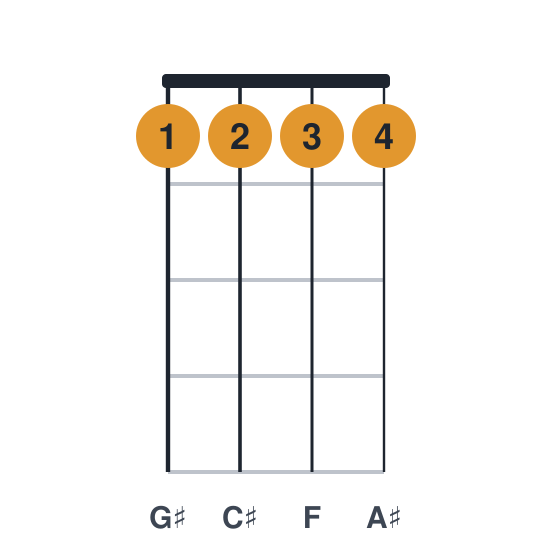
C#9 is the C sharp dominant ninth chord. On ukulele it keeps four of its five notes: C sharp, F, B and D sharp, with the fifth left out. The standard shape uses all four fingers inside the first four frets.

All four fingers inside the first four frets: third on the E string at the 1st fret, ninth on the C, seventh on the G, root on the A at the 4th.
How to play C#9 on ukulele, step by step
- Index finger: 1st fret, E string
- Middle finger: 3rd fret, C string
- Ring finger: 4th fret, G string
- Pinky finger: 4th fret, A string
- Strum all four strings.
The same grip slides: every string is fretted, so one fret lower it is C9 with a different fingering feel, and up the neck it names whatever root lands on the A string.
More ways to play C#9
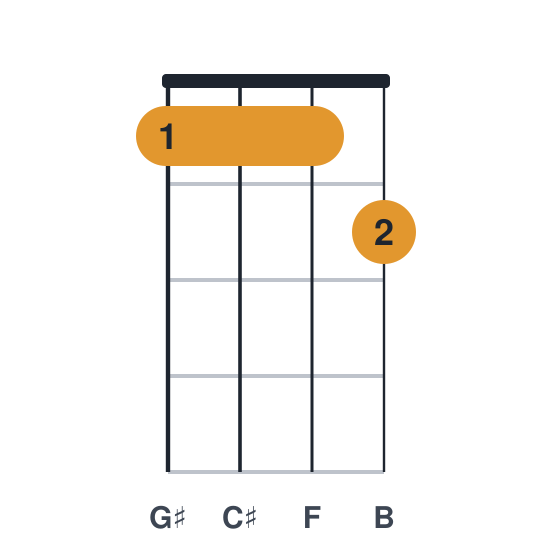
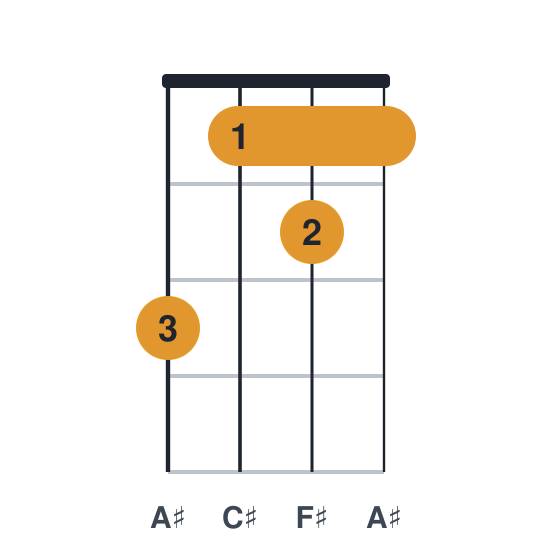
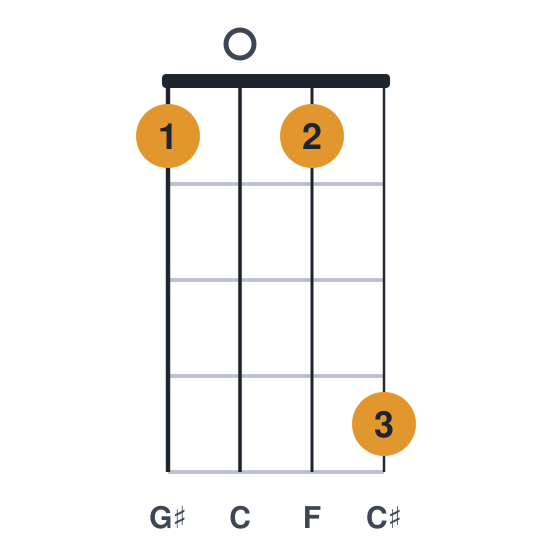
There are 3 common C#9 shapes: the standard one at the top of the page, plus these further up the neck. You only ever need one. Tap any card to hear it.

A little rounder than the nut position shape, with the ninth ringing highest. Comfortable on concert and tenor necks.

Bright and cutting, a stab voice more than a strumming one. The barre keeps it solid at a fret where fingers run out of room.
If the shape is not clean
- The index note disappears
- The index holds the E string at the 1st fret, the lightest press in the shape and the chord's third. Keep it on its very tip while the bigger fingers work above it.
- Four fingers feel knotted
- Set the index first at the 1st fret, then place middle, ring and pinky in that order. The shape untangles the moment the index stops moving.
- The chord will not ring when moved
- Nothing is open, so the grip slides whole. Ease the pressure, move, press again; each finger must land just behind its new fret.
What makes it a C#9
C♯ · F · G♯ · B · D♯ 1 3 5 ♭7 9
C#9 is a C#7 chord with a ninth added: C sharp, F and B carry the seventh chord and the D sharp is the ninth. A ukulele has four strings for those five notes, so the fifth, G sharp, is left out, the same note guitar ninth grips drop.
It is the V chord of F sharp. Charts in flat keys write the same chord as Db9, and horn players meet it constantly; on ukulele it appears where jazz and soul tunes pass through F sharp or G flat.
C#9 vs C#7
C#9 adds a D sharp on top of C#7. Both resolve toward F sharp, and the ninth is the smoother way there.
C#7 is a small barre on ukulele; C#9 spreads into four separate fingers. The seventh chord bites, the ninth glides, and arrangements pick by mood.
C#9 chord questions
Is C#9 the same as Db9?
Yes, one chord with two names. Guitar and ukulele charts usually write C sharp, piano and horn charts D flat; this site follows the fretted habit.
Why does the chord chart show an F instead of E sharp?
Strict spelling calls the third of C sharp E sharp, which is the same key as F. Chord charts print the plain name, and so does this page.
Why is there no G sharp in these shapes?
A ukulele has four strings and C#9 has five notes. The fifth adds the least to a ninth chord, so it is the note left out.
Is C#9 hard to play?
It needs all four fingers, but they sit in a compact block with no barre. Most players find it no harder than A9, which is the same grip lower down.
Where is C#9 used?
As the V chord in F sharp, in jazz and soul charts written in D flat, and in blues that sit a fret above the key of C.
Chords to learn next
- C#7the same chord without the ninth
- F#where C#9 wants to resolve
- C#maj7the other seventh built on this root
- C#6the same root with a sixth instead of a seventh


Other C# chords
C#9 ukulele chord chart (4314) from melodician.com