C#6 Ukulele Chord
C#6 is the C sharp sixth chord. It has four notes: C sharp, F, G sharp and A sharp. The main shape is the straightest line on the neck: every string at the 1st fret, four fingers or one flattened index.

Every string at the 1st fret: four staggered fingertips, or one finger laid flat. The straight line sixth at its lowest position.
How to play C#6 on ukulele, step by step
- Index finger: 1st fret, G string
- Middle finger: 1st fret, C string
- Ring finger: 1st fret, E string
- Pinky finger: 1st fret, A string
- Strum all four strings.
The chart prints four fingers, but every note sits at the 1st fret, so many players simply lay the index flat across all four strings. That flat finger version is also D6 one fret lower: the straight line sixth slides.
More ways to play C#6
There are 3 common C#6 shapes: the standard one at the top of the page, plus these further up the neck. You only ever need one. Tap any card to hear it.

A little rounder than the straight line, with the root tucked inside the shape.

Firm and even in the middle of the neck. The C#6 to slide into from other sixth chords.
If it sounds muddy or buzzy
- Four fingers will not fit at one fret
- Stagger them diagonally so each tip takes its own string, or switch to one finger laid flat across all four. Both are correct; use whichever sounds cleaner.
- The flat finger buzzes
- The 1st fret is the stiffest place for a barre. Keep the finger right behind the fret wire, roll it slightly onto its edge, and squeeze from the thumb behind the neck.
- The outer strings are quiet
- The g and A strings sit under the weakest parts of a flat finger. Strum slowly and listen for all four notes before playing in time.
What makes it a C#6
C♯ · F · G♯ · A♯ 1 3 5 6
C#6 is a C sharp major triad (C sharp, F, G sharp) with a sixth added: the A sharp, nine half steps above the root. The third of C sharp is strictly E sharp, which is the same key as F, and chord charts write F because that is the name players read fastest.
The same four notes read from A sharp spell Bbm7. A ukulele has no bass string to choose between the names, so the chords around it choose instead.
C#6 vs C#maj7
C#6 adds an A sharp to the C sharp triad; C#maj7 adds a C, sitting a half step under the root. The sixth rests where the major seventh hovers.
C sharp is usually met as D flat in horn and piano charts. Either spelling, the sixth is the version that closes a phrase without pushing anywhere.
C#6 chord questions
Is C#6 the same as Db6?
Yes, one chord with two spellings. Guitar and ukulele players tend to write C#, horn and piano charts write Db. Same four keys, same grip.
Why does the chord contain an F and not an E#?
Strict spelling calls the third of C sharp E sharp, which is the same pitch as F. Charts print F because it reads instantly, and this site follows the charts.
Can I play C#6 with one finger?
Yes. All four notes sit at the 1st fret, so a single flattened finger plays the chord. The four finger version keeps each note a little cleaner.
Is C#6 the same as Bbm7?
The four notes are the same: C sharp, F, G sharp and A sharp. With no bass note, the surrounding music decides which chord your ear hears.
Chords to learn next
- C#the plain major underneath it
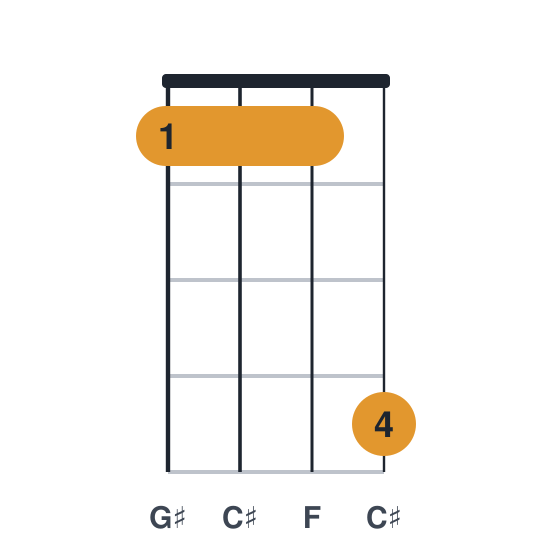
- Bbm7the same four notes counted from Bb
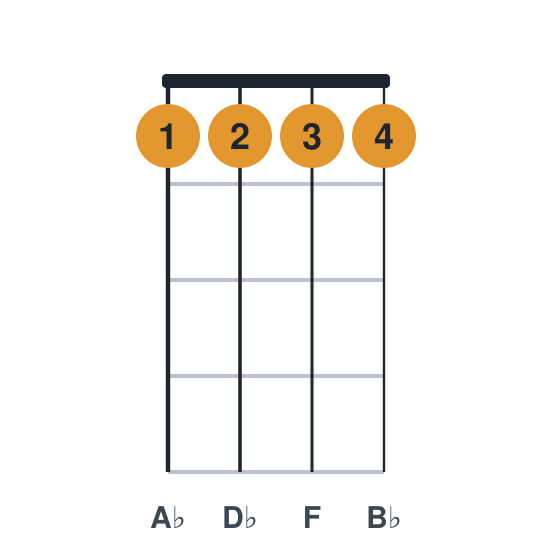
- C#maj7the other note people add to a major chord
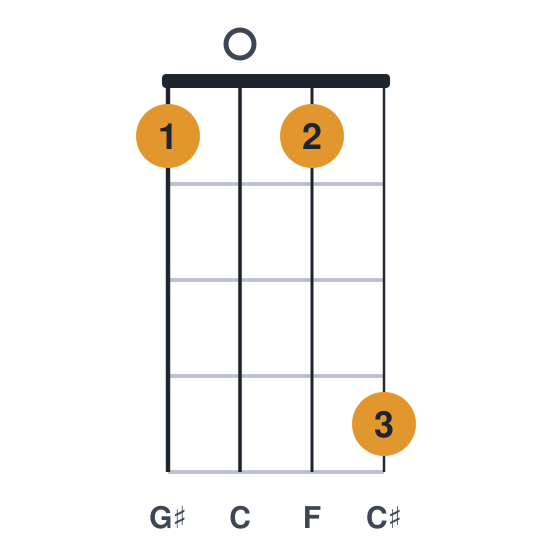
- C#m6the same sixth over a minor chord
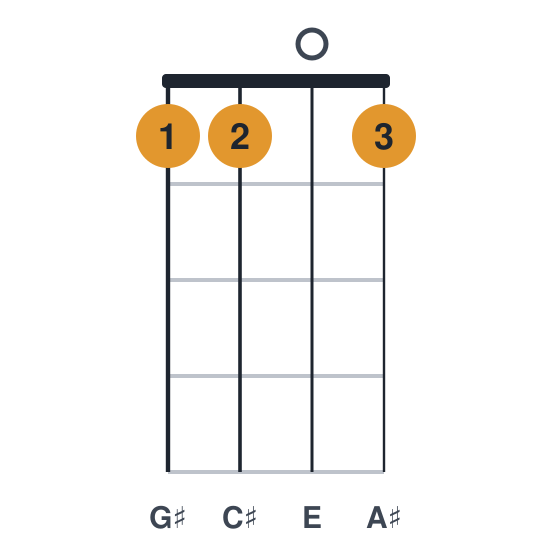


Other C# chords
C#6 ukulele chord chart (1111) from melodician.com