C#sus4 Ukulele Chord
C♯sus4 is the C sharp suspended fourth chord. It has three notes: C♯, F♯ and G♯. The standard shape is the C♯ chord with one note raised: the index still barres the G and C strings at the 1st fret, and the E string note climbs from F to F♯. Flat key charts write the same chord D♭sus4.

The C♯ grip with one change: index barre across the G and C strings at the 1st fret, middle at the 2nd on the E, pinky at the 4th on the A.
How to play C#sus4 on ukulele, step by step
- Index finger: press flat across the G to C strings at fret 1
- Middle finger: 2nd fret, E string
- Pinky finger: 4th fret, A string
- Strum all four strings.
From a held C♯, push the E string note up one fret and you are here; pull it back and the suspension resolves. One finger carries the whole move.
More ways to play C#sus4
There are 3 common C#sus4 shapes: the standard one at the top of the page, plus these further up the neck. You only ever need one. Tap any card to hear it.

Rounder and stronger, the full chord under one hand in the middle of the neck.

Big and ringing for something this high; every note fretted, nothing open.
If it sounds wrong
- The small barre buzzes
- The index covers just the G and C strings at the 1st fret, where the strings are stiffest. Keep it close to the fret and roll it slightly onto its edge.
- The pinky reach feels long
- From the 1st fret to the 4th is the widest gap in the shape. Drop the thumb behind the neck and let the pinky arrive from above.
- It sounds identical to C#
- Then the E string is still at the 1st fret. The F♯ at the 2nd fret is the suspension; check it moved.
What makes it a C#sus4
C♯ · F♯ · G♯ 1 4 5
Sus4 means the third is suspended: replaced by the fourth. C♯sus4 keeps the root and fifth of C♯ (C♯ and G♯) but plays F♯ where the third, F, would be, F being how ukulele charts spell E♯. The F♯ hangs one half step above the third and falls back onto it, resolving the chord to C♯.
Expect it in the keys of C♯, F♯ and G♯, which most charts write as D♭, G♭ and A♭. Wherever the spelling lands, the move is the same: one finger up, one beat of lean, one finger back.
C#sus4 vs C#sus2
The two suspensions replace the third of C♯ in opposite directions. C♯sus4 pushes it up to F♯ and leans back toward C♯. C♯sus2 drops it to D♯ and floats instead.
Both stay inside the same barre position, so the pair can decorate a C♯ bar without the hand travelling anywhere.
C#sus4 chord questions
Are C#sus4 and Dbsus4 the same?
Yes, the same chord under two names. C♯ and D♭ are one pitch; flat keys prefer the D♭ spelling.
Is C#sus4 hard to play?
Moderately. A two string index barre at the 1st fret, a fretted note at the 2nd and a pinky reach to the 4th. It is the same effort as C♯ itself.
What does C#sus4 resolve to?
C♯ major, almost always, as the F♯ falls one half step onto the third.
Is C#sus4 major or minor?
Neither. The third is replaced by the fourth; the chord stays undecided until it resolves.
Do you strum all four strings?
Yes. Every shape on this page uses all four strings.
Chords to learn next
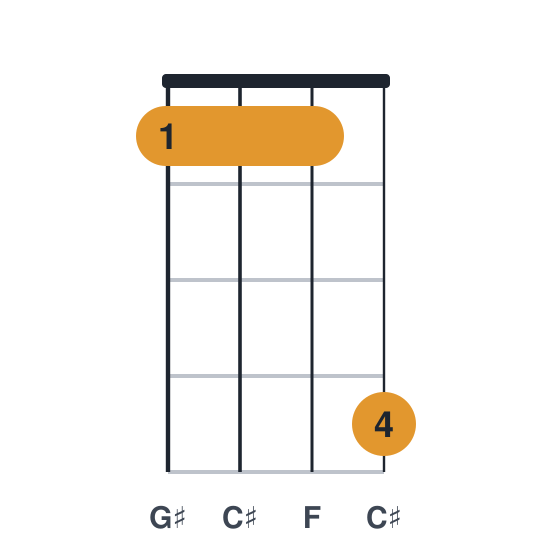
- C#where the suspension usually lands
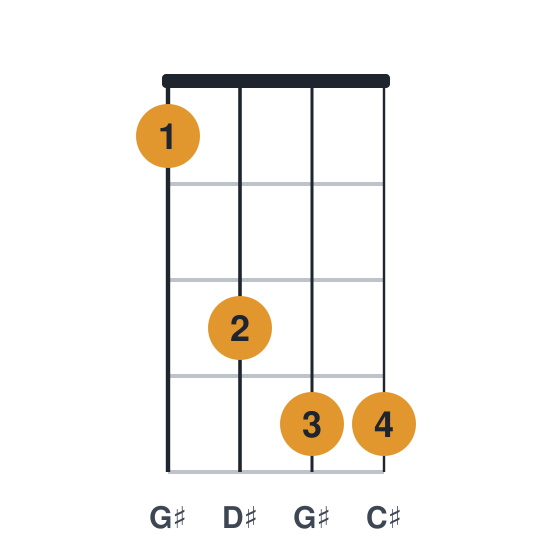
- C#sus2the other suspension
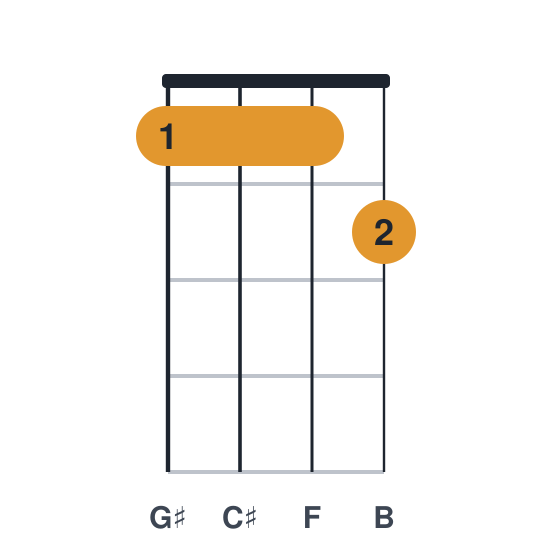
- C#7sus4 loves to decorate the seventh chord
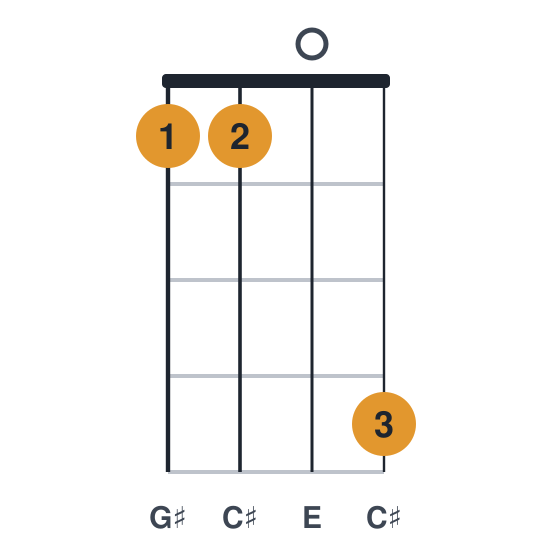
- C#mthe minor on the same root


Other C# chords
C#sus4 ukulele chord chart (1124) from melodician.com