Gmaj7 Ukulele Chord
Gmaj7 is the G major seventh chord. It has four notes: G, B, D and F sharp. The standard shape puts three fingers in a row across the 2nd fret of the C, E and A strings, with the G string ringing open as the root.

Three fingers in a row across the 2nd fret of the C, E and A strings, with the open G string as the root.
How to play Gmaj7 on ukulele, step by step
- Index finger: 2nd fret, C string
- Middle finger: 2nd fret, E string
- Ring finger: 2nd fret, A string
- Leave the G string open. Strum all four strings.
It is the open G chord with the E string note pulled back from the 3rd fret to the 2nd. Some players lay one finger flat across all three strings instead of using three; both grips are correct.
More ways to play Gmaj7
There are 3 common Gmaj7 shapes: the standard one at the top of the page, plus these further up the neck. You only ever need one. Tap any card to hear it.

All fretted and even, with no open ring to spill over a chord change.

Wide and sparkling, the open root glowing under the high voices.
If the row will not ring
- Three fingers crowd the 2nd fret
- Stack them in a diagonal, index closest to the nut, so each tip owns its string. If that stays cramped, barre the three strings with one finger.
- The open G string goes dull
- The index on the C string is tilting over. Curl it upright; the open string is the root and the chord is hollow without it.
- It sounds like plain G
- The E string finger has drifted back to the 3rd fret. The major seventh lives at the 2nd; one fret changes the whole mood.
What makes it a Gmaj7
G · B · D · F♯ 1 3 5 7
Gmaj7 is a major seventh chord: a G major triad (G, B, D) plus a major seventh (F sharp). The F sharp sits one half step below the root, and that gentle lean is the maj7 signature.
Gmaj7 is the I chord of G major and the IV chord of D major, so it lives in two of the most sung-in keys there are. Wherever a song in G can afford a softer home chord, this is the substitution.
G vs Gmaj7
G major is 0232 and Gmaj7 is 0222: one finger moves one fret on the E string, and the doubled root becomes an F sharp. The chord keeps its open root underneath and trades its firmness for a glow.
Walk the E string to map the family: 1st fret is G7, 2nd is Gmaj7, 3rd is plain G. Three chords that differ by a single fret, covering push, float and rest.
Gmaj7 chord questions
Can I barre Gmaj7?
Yes. All three fretted notes sit at the 2nd fret, so one finger laid across the C, E and A strings plays the chord. Handy when changes need to be fast.
What is the difference between Gmaj7 and G7?
One fret on the E string. G7 has an F natural at the 1st fret and pulls toward C; Gmaj7 has an F sharp at the 2nd and rests in place.
Do you strum all four strings in Gmaj7?
Yes. The open G is the root and the three fretted notes supply the fifth, seventh and third.
Is Gmaj7 a beginner chord?
Yes. Three fingers at one fret, or a single small barre, next to an open string: it is no harder than plain G and often cleaner.
What keys use Gmaj7?
It is the I chord of G major and the IV chord of D major, two keys a ukulele capos and sings in constantly.
Chords to learn next
- Gthe plain major
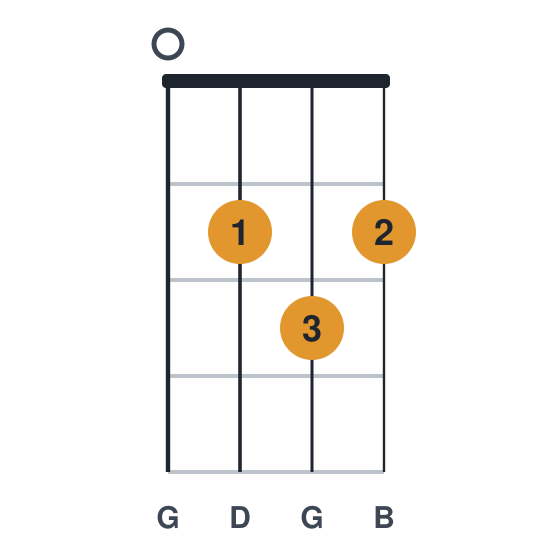
- Am7the ii chord beside Gmaj7 in the key of G
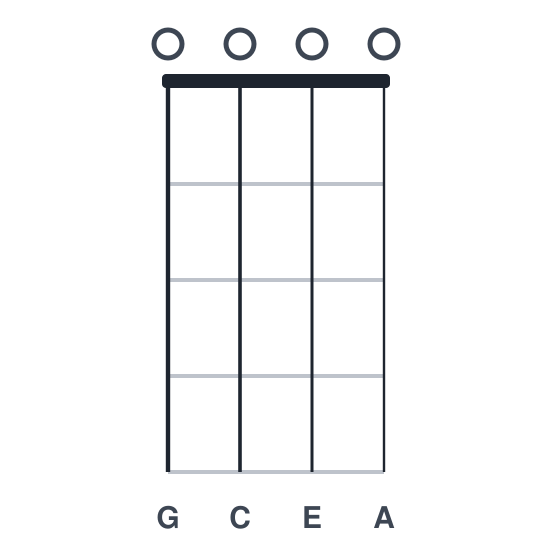
- D7the V chord of G
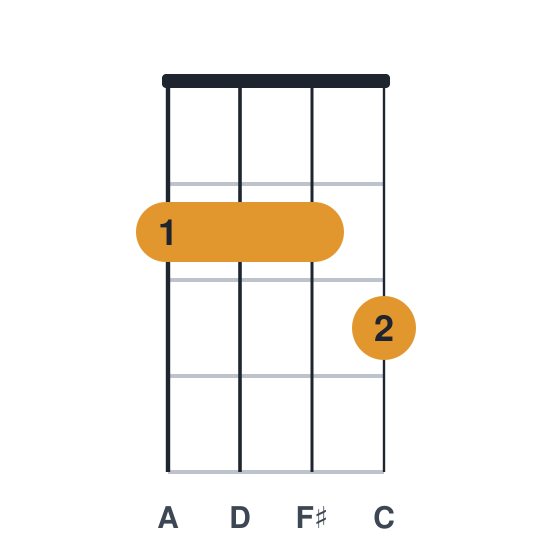
- G6the other soft colour on the same major
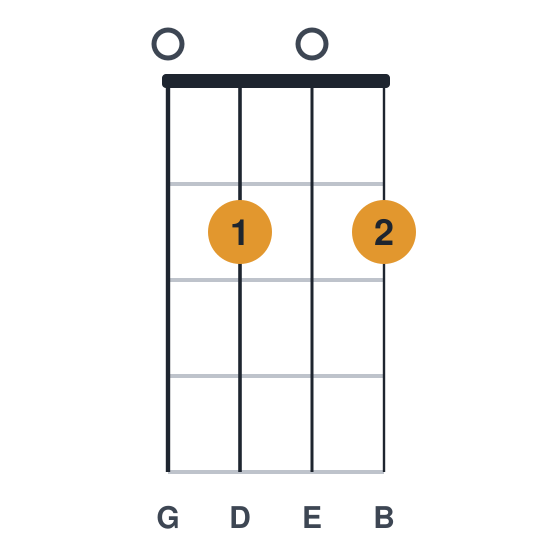


Other G chords
Gmaj7 ukulele chord chart (0222) from melodician.com