Gm9 Ukulele Chord
Gm9 is the G minor ninth chord. It has five notes: G, B flat, D, F and A. Four strings can hold four of them, so every shape drops the fifth. The standard shape is three fingers around the 3rd and 5th frets with the open A string ringing as the ninth.

Three fingers around the 3rd and 5th frets with the open A string ringing as the ninth. The fifth is left out, as in every ninth chord shape.
How to play Gm9 on ukulele, step by step
- Index finger: 3rd fret, G string
- Middle finger: 3rd fret, E string
- Ring finger: 5th fret, C string
- Leave the A string open. Strum all four strings.
The open A string is the ninth, the note the chord is named for. The root G sits fretted on the E string, so the whole chord hangs between two middle strings and two edges.
More ways to play Gm9
There are 2 common Gm9 shapes: the standard one at the top of the page, plus these further up the neck. You only ever need one. Tap any card to hear it.

Light and ringing, half the chord open. The easiest Gm9 on the page, with the re-entrant g giving the root its high shimmer.
If it sounds unclear
- The open A string is muffled
- The middle finger on the E string sits right beside it. Keep the finger vertical so the open A, the ninth, rings on: without it the chord collapses into plain G minor territory.
- The ring finger reach to the 5th fret fails
- Index and middle hold the 3rd fret while the ring stretches to the C string at the 5th. Point the ring finger along the string rather than across, and let the wrist float forward.
- The two 3rd fret notes are uneven
- Index on the g string and middle on the E string share the fret. Place them one at a time, each just behind the wire, and pick both strings slowly to check they match.
What makes it a Gm9
G · B♭ · D · F · A 1 ♭3 5 ♭7 9
Gm9 is a Gm7 chord with a ninth added: G, B flat, D and F make the minor seventh, and the A makes it a ninth. The shapes here keep the root, flat third, flat seventh and ninth and drop the fifth, the one note a ninth chord can spare.
It is the ii chord of F, a singer friendly key that ukulele arrangements land in constantly, and a soul staple everywhere else. Where a chart says Gm7, the ninth is often the sound the record actually makes.
Gm9 vs Gm7
Gm9 adds an A, the ninth, to the four notes of Gm7. The ninth sits a whole step above the root an octave up and turns the plain minor seventh into something that hovers.
Gm7 on a ukulele is an easy open shape in the first two frets; Gm9 asks for a wider hand and gives back a chord with air in it. Two fingers of difference, one note of colour.
Gm9 chord questions
What is the difference between Gm9 and Gm7?
Gm9 has an A, the ninth, added to the four notes of Gm7. Same chord, more colour on top.
Why is there no D in the shape?
Four strings sound and the chord has five notes, so one has to go. The fifth adds weight but no character, which is why ninth chords always drop it.
Is there an easier Gm9?
Yes: press the C string at the 5th fret and the E string at the 6th and leave the g and A strings open. Two fingers, with the open strings carrying the root and the ninth.
Where is Gm9 used?
As the ii chord in F, a bar before C9 in countless progressions, and all through soul, R and B and jazz.
Which note is the root?
The G at the 3rd fret of the E string, in the upper middle of the voicing. The open g string does not carry it here; that string is fretted up to B flat, the flat third.
Chords to learn next
- Gm7the same chord without the ninth
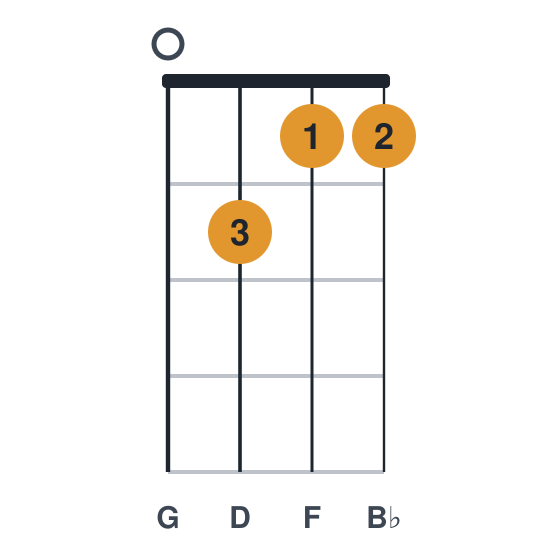
- C9the V chord Gm9 leans toward
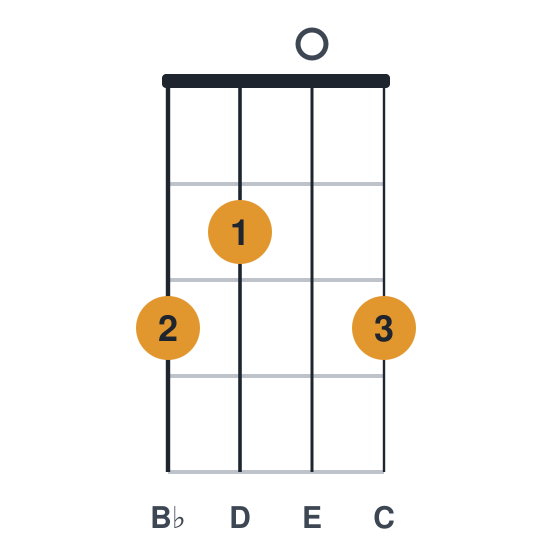
- Gmthe plain minor
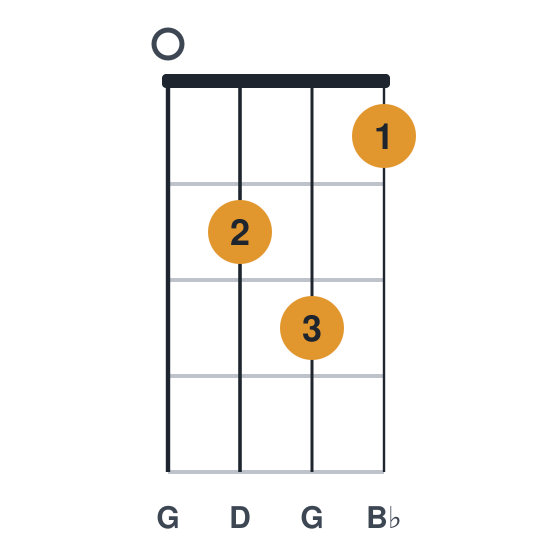
- G9the same ninth built on a major third
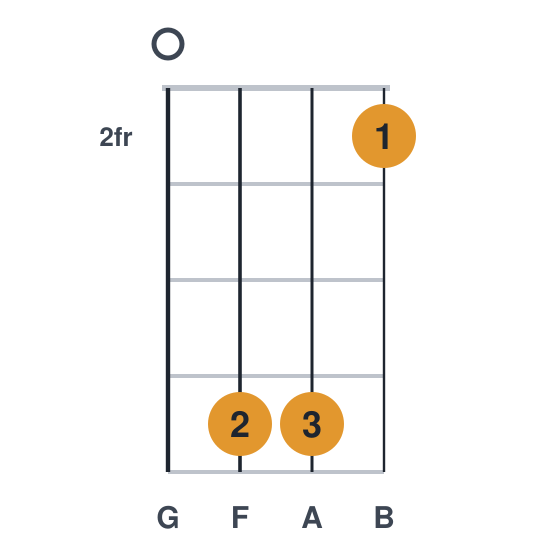


Other G chords
Gm9 ukulele chord chart (3530) from melodician.com