Gdim Ukulele Chord
Gdim is the G diminished chord, a diminished triad. It has three notes: G, B♭ and D♭. The open g string is the root itself, so the standard shape is three fingers inside the first three frets. And because that g string is tuned high, the root rings above the chord rather than under it, which is very much a ukulele sound.

Three fingers in the first three frets with the open g string sounding the root, doubled by a fretted G on the E string. The high open root is the shape's signature.
How to play Gdim on ukulele, step by step
- Index finger: 1st fret, C string
- Middle finger: 1st fret, A string
- Ring finger: 3rd fret, E string
- Leave the G string open. Strum all four strings.
The open g pins this shape in place. For the same chord anywhere on the neck, the closed shape at the 9th fret slides to every root.
More ways to play Gdim
There are 3 common Gdim shapes: the standard one at the top of the page, plus these further up the neck. You only ever need one. Tap any card to hear it.

Fuller than the open shape, fretted weight under the same high open root. A good middle option.

Tight and glassy at the top of the fretboard, stopping dead on release. The strict passing chord voicing.
If it buzzes or sounds dead
- The open g goes quiet
- The index on the C string is leaning back onto the g string. Stand it upright; the open root has to ring or the chord loses its name.
- The two 1st fret notes rattle
- Index and middle finger sit side by side at the 1st fret, where shallow placement buzzes most. Put each tip right behind the fret wire.
- The E string note is dull
- The ring finger reaches the 3rd fret between two fretted neighbours. Arch it over them and press straight down.
What makes it a Gdim
G · B♭ · D♭ 1 ♭3 ♭5
Gdim is two minor thirds stacked: G up to B♭, then B♭ up to D♭. G minor would reach up to D; the diminished chord stops one fret short, and that flat fifth is what makes it sound like it is leaning forward.
Gdim is the leading tone chord of A♭: it sits one fret below and climbs in. G, B♭ and D♭ are also three of the four notes of E♭7, so Gdim pushes toward A♭ the same way E♭7 does, just leaner.
Gdim vs Gm
Both start with G and B♭. G minor finishes with D and sounds grounded; Gdim finishes with D♭, one fret lower, and refuses to settle.
Gm is a chord you can sit on. Gdim is a climb: a beat or two, then up a fret. The two grips even feel related under the fingers, which makes the swap easy to practise, one note sliding down while the rest hold.
Gdim chord questions
Is Gdim easy to play?
Yes, by diminished standards: three fingers inside the first three frets with the open g string carrying the root. No barre, no stretch.
What is the difference between Gdim and Gdim7?
Gdim is the three note triad: G, B♭, D♭. Gdim7 adds a diminished seventh, E, for four notes; the popular two finger 0101 grip in songbooks is that four note chord, not this triad.
What does Gdim resolve to?
A♭, one half step up, or A♭'s minor neighbours. The upward pull is the point of the chord.
Why does the root sound so high?
The g string on a standard ukulele is re-entrant: it is tuned an octave up, above the C and E strings. The open g root therefore rings on top of this chord rather than underneath it.
What does G° mean?
The small circle is the standard symbol for diminished. G°, Gdim and G diminished all name the same three notes.
Chords to learn next
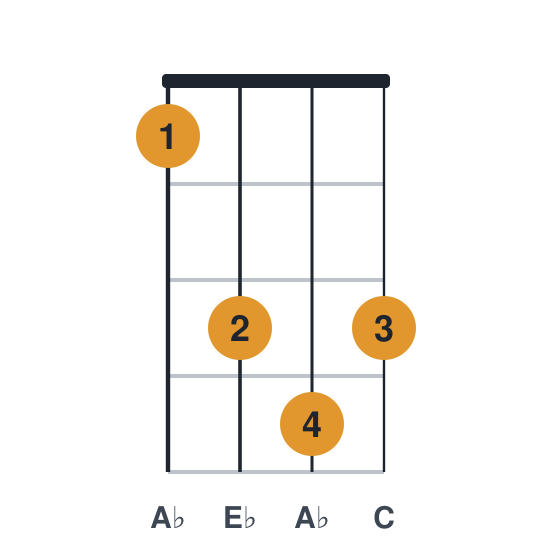
- AbGdim pulls up a half step to Ab
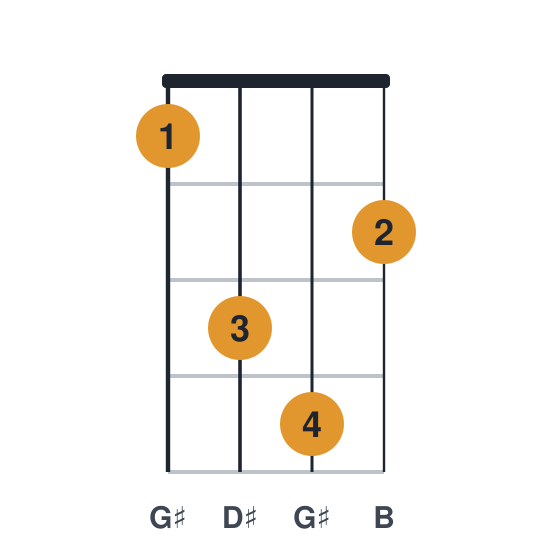
- G#mthe minor resolution one fret up
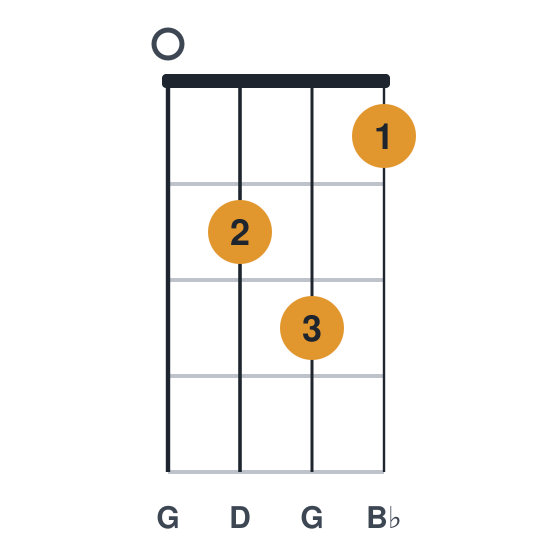
- Gmone note away from G minor
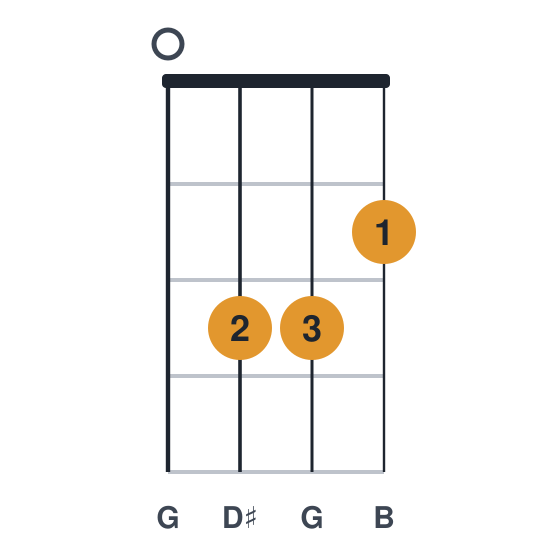
- Gaugthe other chord built out of equal intervals


Other G chords
Gdim ukulele chord chart (0131) from melodician.com