G7 Ukulele Chord
G7 is the G dominant seventh chord. It has four notes: G, B, D and F. The shape is three fingers inside the first two frets: index on the 1st fret of the E string, middle and ring on the 2nd fret of the C and A strings, with the g string open.

Index on the 1st fret of the E string, middle and ring on the 2nd fret of the C and A strings, g string open. The three fingers form a small triangle pointing at the nut.
How to play G7 on ukulele, step by step
- Index finger: 1st fret, E string
- Middle finger: 2nd fret, C string
- Ring finger: 2nd fret, A string
- Leave the G string open. Strum all four strings.
G7 is plain G with one finger moved. G frets the E string at the 3rd fret; slide that finger down to the 1st fret and the doubled root becomes F, the seventh. The other two fingers never move.
More ways to play G7
There are 3 common G7 shapes: the standard one at the top of the page, plus these further up the neck. You only ever need one. Tap any card to hear it.

Fuller and darker than the open shape, with no open strings to ring over it. Useful when the song already has your hand at the 5th fret.

A wide voicing with the seventh tucked in the middle and the open root droning underneath. More colour than the standard shape, and a little harder to keep clean.
If it sounds wrong
- The E string buzzes
- The index sits in the middle of the triangle and gets crowded. Curl it so the tip lands just behind the 1st fret, under the arch of the other two fingers.
- The open g string dies
- The middle finger on the C string is leaning back and touching it. Stand the fingers up on their tips and the open string comes back.
- It sounds like plain G
- Check the E string: on the 3rd fret you are playing G, on the 1st fret you are playing G7. The two shapes differ by that one dot.
What makes it a G7
G · B · D · F 1 3 5 ♭7
G7 is a dominant seventh: a G major triad (G, B, D) plus a minor seventh, F. The added F is the tension note: G7 is the V7 of C, and it pulls toward C major and C minor more strongly than any other chord does.
G7 to C is probably the most played resolution on the ukulele. The instrument's home keys sit around C and F, and G7 is the chord that swings a song in C back to its first chord, which is why every songbook teaches it within the first pages.
G7 vs G
Plain G is 0232 and G7 is 0212. One finger moves: the E string drops from the 3rd fret to the 1st, turning a doubled G into F, the seventh. Index, middle and ring simply trade places to keep the hand comfortable.
G says the phrase is home; G7 says it is about to be. Play G7 on its own and the ear queues up a C chord. Songs in C use that pull at almost every turnaround, so the two shapes earn their keep as a pair.
G7 chord questions
What is the difference between G7 and G?
One note. G is G, B and D; G7 adds F, the seventh. On the neck it is the E string finger moving from the 3rd fret down to the 1st.
What does G7 resolve to?
C. G7 is the V7 chord of C major and C minor, which makes it the most used seventh chord on an instrument that lives in the key of C.
Is G7 a beginner chord?
Yes. Three fingers, no barre, first two frets. Most players learn it right after C, F and G, because songs in C keep asking for it.
Why does the open g string work in G7?
The open g is the root of the chord an octave up. It rings above the C and E strings because ukulele tuning is re-entrant, which gives G7 its bright top.
Where is G7 used?
At the turnaround of nearly every song in C, in blues in C alongside C7 and F7, and in the older jazz and Hawaiian repertoire the ukulele grew up in.
Chords to learn next
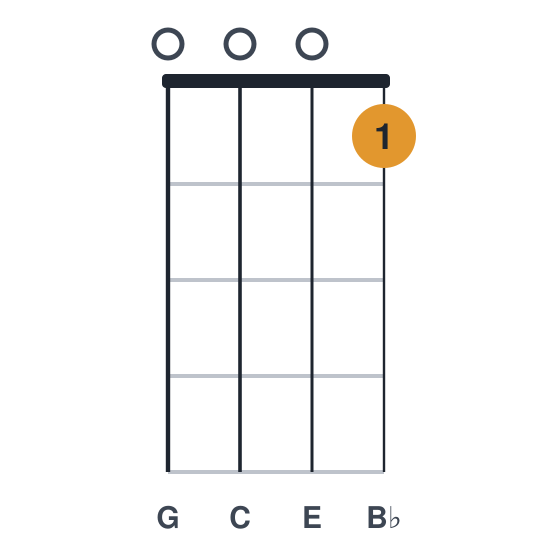
- C7G7 resolves to C
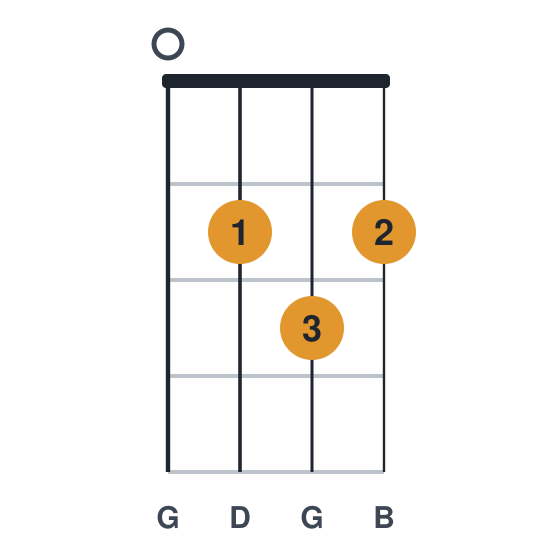
- Gthe plain major underneath it
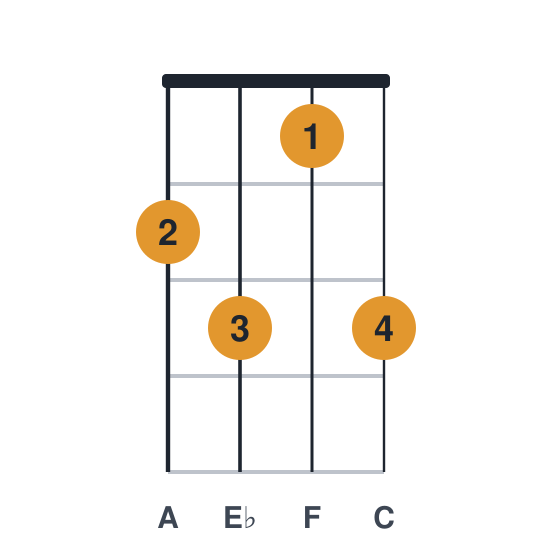
- F7the IV chord next to G7 in blues in C
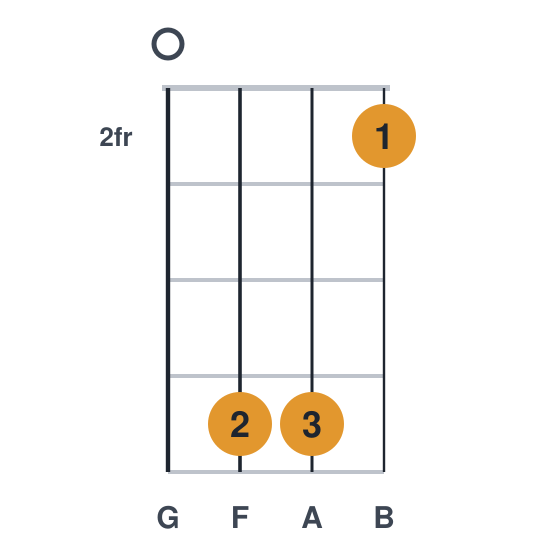
- G9the same seventh with a ninth on top


Other G chords
G7 ukulele chord chart (0212) from melodician.com