Gmaj9 Ukulele Chord
Gmaj9 is the G major ninth chord. It has five notes: G, B, D, F sharp and A, so on four strings the fifth is left out. The standard shape uses three fingers between the 3rd and 6th frets with the open A string sounding the ninth.

Three fingers on a diagonal from the 3rd to the 6th fret with the open A string as the ninth: root on the E string, third on the G string, seventh on the C string.
How to play Gmaj9 on ukulele, step by step
- Index finger: 3rd fret, E string
- Middle finger: 4th fret, G string
- Ring finger: 6th fret, C string
- Leave the A string open. Strum all four strings.
The open A string is the ninth in both shapes on this page, which is the tuning doing half the work. The second shape adds the open G as the root and needs only two fingers.
More ways to play Gmaj9
There are 2 common Gmaj9 shapes: the standard one at the top of the page, plus these further up the neck. You only ever need one. Tap any card to hear it.

Lighter than the standard shape and easier, if you do not mind reaching past the 5th fret.
If notes drop out
- The open A string is muffled
- The index on the E string at the 3rd fret is leaning into it. Stand the finger up; without the open A the chord is only Gmaj7.
- The reach to the 6th fret is long
- Index at the 3rd, middle at the 4th, ring at the 6th: a diagonal climb. Angle the hand along the neck so each finger lands in line.
- The F sharp is weak
- The ring finger holds the seventh on the C string at the 6th fret, the furthest reach in the shape. Press just behind the fret and let the arm's weight help.
What makes it a Gmaj9
G · B · D · F♯ · A 1 3 5 7 9
Gmaj9 is a Gmaj7 chord with a ninth added: G, B, D and F sharp make the seventh chord, and the A on top makes it a ninth. On a ukulele the fifth, D, is dropped: four strings hold four notes, and the fifth is the note the ear misses least. In both shapes here the open A string supplies the ninth itself.
It is the I chord of G major at its softest. G is the ukulele's most common song key after C, so this is a ninth with real work to do: anywhere a song in G holds its home chord for a bar and wants it to glow.
Gmaj9 vs Gmaj7
Gmaj9 is Gmaj7 with an A added. The seventh already settles the chord; the ninth widens it and makes it sound arranged rather than strummed.
On the ukulele the ninth costs a little position, sitting a few frets higher than the everyday Gmaj7, and pays it back with the open A ringing on top of the chord.
Gmaj9 chord questions
Why is there no D in the shapes?
Four strings hold four of the five notes, and the fifth is the one a ninth chord can spare. Root, third, seventh and ninth are all here.
What is the difference between Gmaj9 and Gadd9?
Gmaj9 contains the F sharp, the major seventh. Gadd9 has no seventh: it is plain G with an A added, brighter and plainer.
What is the difference between Gmaj9 and G9?
G9 has an F natural, the flat seventh, and pulls toward C. Gmaj9 has an F sharp and stays put.
Is there an easier Gmaj9?
The second shape on this page needs two fingers: the open G is the root and the open A the ninth, with the seventh and third fretted at the 6th and 7th frets.
Where is Gmaj9 used?
As the I chord of G major in jazz, bossa nova and soul, and in songs in G that want the home chord to sit and shimmer for a bar.
Chords to learn next
- Gmaj7the same chord without the ninth
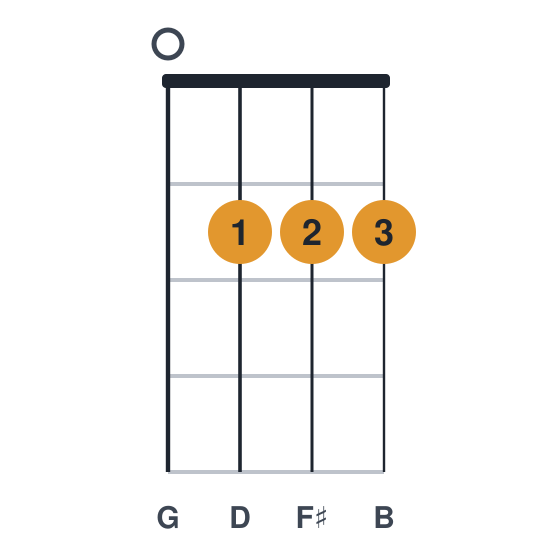
- Gadd9the ninth without the seventh
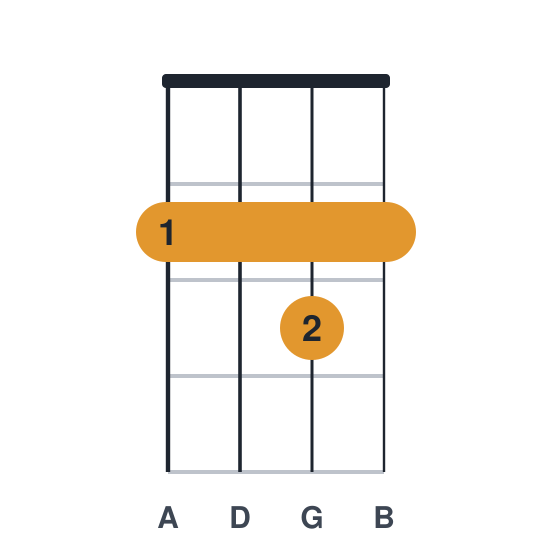
- Gthe plain major
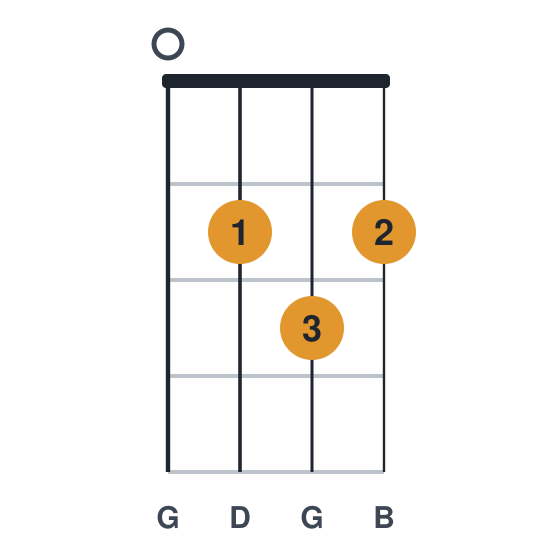
- G6the other soft colour on the same major
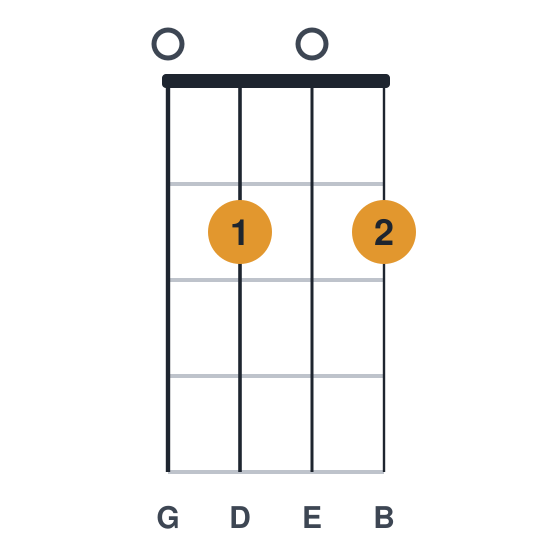


Other G chords
Gmaj9 ukulele chord chart (4630) from melodician.com