G9 Ukulele Chord
G9 is the G dominant ninth chord. On ukulele it keeps four of its five notes: G, B, F and A, with the fifth left out. The standard shape frets three strings and lets the open G string ring as the root.

Index at the 2nd fret of the A string, middle and ring at the 5th fret of the C and E strings, open G string as the root.
How to play G9 on ukulele, step by step
- Index finger: 2nd fret, A string
- Middle finger: 5th fret, C string
- Ring finger: 5th fret, E string
- Leave the G string open. Strum all four strings.
All three shapes on this page share one idea: the open G string is the root of the chord, so it keeps ringing while the fretted notes change position around it.
More ways to play G9
There are 3 common G9 shapes: the standard one at the top of the page, plus these further up the neck. You only ever need one. Tap any card to hear it.

The sparsest shape on the page, half open strings. Light, ringing, and quick to grab mid song.

Higher and glassier, with the open root holding the floor. A good accent or final chord voice.
If it sounds uneven
- The open G string gets muted
- Every finger in this shape works a neighbouring string. Keep the fingertips upright; the open G is the root, and the chord loses its floor the moment a knuckle grazes it.
- The 5th fret pair is uneven
- The middle and ring fingers press the C and E strings at the same fret. Set them down together as one movement so both notes carry.
- It rings differently from chord to chord
- The shape mixes one open string with mid neck fretted notes, which decay at different speeds. Strum a little softer and let the open root do the sustaining.
What makes it a G9
G · B · D · F · A 1 3 5 ♭7 9
G9 is a G7 chord with a ninth added: G, B and F carry the seventh chord and the A is the ninth. A ukulele has four strings for those five notes, so the fifth, D, is left out. In every shape here the open G string supplies the root.
It is the V chord of C, the friendliest key on the instrument, which makes G9 immediately useful: any song in C that wants a smoother G7 wants this chord.
G9 vs G7
G9 adds an A on top of G7. Both pull home to C, but G7 states the fact and G9 rounds it into a phrase.
G7 sits in the first two frets; G9 keeps the open root and climbs the middle of the neck. In a song in C, the swap is free and the colour change is large.
G9 chord questions
Why is there no D in these shapes?
A ukulele has four strings and G9 has five notes. The fifth is the note a ninth chord misses least, so it is the one left out.
Is G9 hard after G7?
The reach is longer: the fretted notes sit at the 2nd and 5th frets around the open root. Place the index at the 2nd fret first and the 5th fret pair after it.
What is the difference between G9 and Gadd9?
G9 contains F, the flat seventh, and pulls toward C. Gadd9 has no seventh at all and simply brightens G major.
Why does the open G string matter so much here?
It is the root of the chord, free from the tuning. All three shapes on this page are built around it, which is why they ring more openly than a fully fretted ninth.
Where is G9 used?
As the V chord in C, in blues in G, and in swing and soul tunes that lean on rounded dominant chords.
Chords to learn next
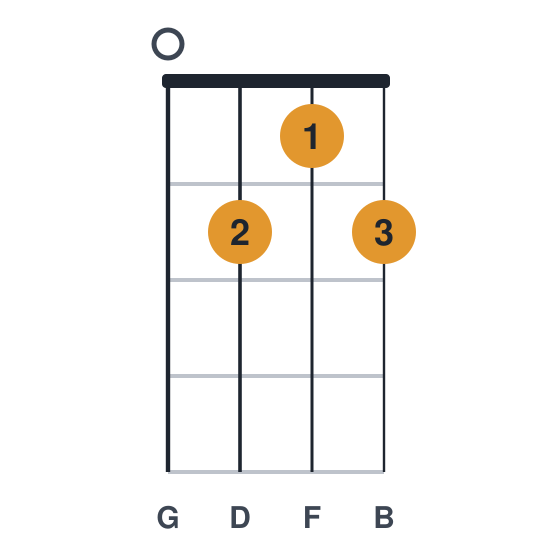
- G7the same chord without the ninth
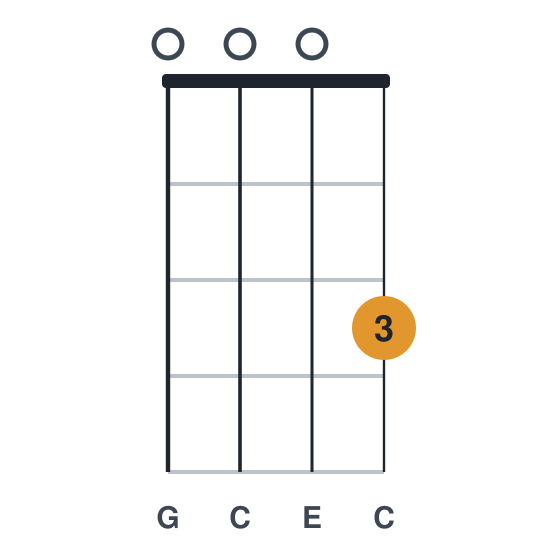
- Cwhere G9 wants to resolve
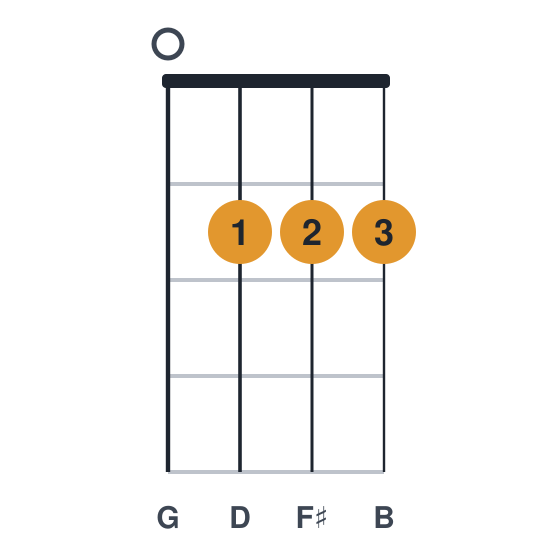
- Gmaj7the other seventh built on this root
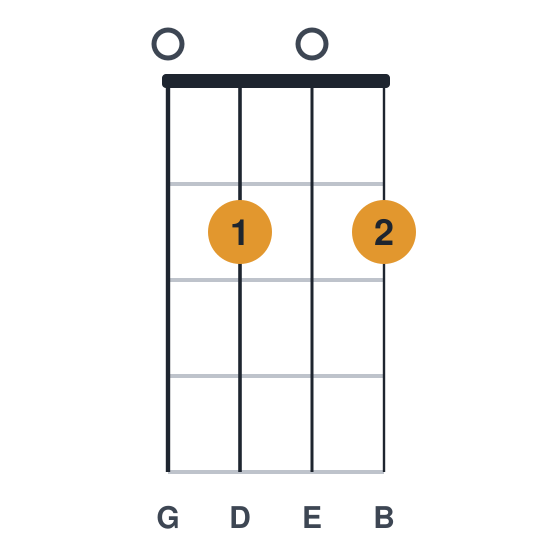
- G6the same root with a sixth instead of a seventh


Other G chords
G9 ukulele chord chart (0552) from melodician.com