Am7 Ukulele Chord
Am7 is the A minor seventh chord. It has four notes: A, C, E and G, and on the ukulele they are the four open strings. Strum without pressing anything and you are already playing Am7.

The four open strings, exactly as the ukulele is tuned. Nothing to press: every note is already in place.
How to play Am7 on ukulele, step by step
- Nothing to press: the four open strings already spell the chord.
- Strum all four strings with nothing fretted.
The same four open strings read from C spell C6, so this one strum has two names. The chord before it and the bass line decide which name fits, and C6 has its own page for the other job.
More ways to play Am7
There are 3 common Am7 shapes: the standard one at the top of the page, plus these further up the neck. You only ever need one. Tap any card to hear it.

Fuller in the middle than the open shape, while the open G keeps the seventh ringing through it.

Bright and spread out: two open strings against two notes high on the neck, almost like a harp roll.
If it sounds wrong
- It rings but sounds thin
- Nothing is fretted, so all the tone comes from the strum itself. Strum from the wrist over the spot where the neck meets the body, not down at the bridge, and the chord fills out.
- It sounds like a different chord
- It may be working as C6: the same four notes carry both names. After a C chord the ear hears C6; after E7 or Dm it hears Am7. That is how the chord works, not a mistake.
- One string sounds dead
- With no fingers down, the usual culprit is the fretting hand resting on a string while it holds the neck. Let the thumb and palm carry the neck and keep the fingers clear of the strings.
What makes it an Am7
A · C · E · G 1 ♭3 5 ♭7
Am7 is a minor seventh chord: an A minor triad (A, C, E) plus a minor seventh (G). The seventh rounds the minor off, which is why m7 chords are the default soft minor sound in pop and soul.
Standard ukulele tuning is G, C, E and A, and those four notes are exactly an Am7. The instrument is tuned to this chord. Am7 works as the ii chord of G and the vi chord of C, and since C is the friendliest ukulele key, Am7 turns up constantly.
Am7 vs Am
Am is A, C and E; Am7 adds the G. On the ukulele the difference is one finger: press the G string at the 2nd fret and Am7 becomes Am. Lifting that finger off is the whole move between the two chords.
The seventh makes the chord softer and less final. If a song leans on a dark, plain minor, play Am; when the music should drift rather than land, Am7 is the one.
Am7 chord questions
Is Am7 really just the open strings?
Yes. Standard ukulele tuning is G, C, E and A, and rearranged those are A, C, E and G: a complete A minor seventh. No other common chord is this easy.
Is Am7 the same as C6?
Same four notes, two names. Read from A it is Am7; read from C it is C6. Context decides which name a chart uses, and each has its own page here.
What is the difference between Am and Am7?
Am7 adds a G to the three notes of Am. On the ukulele Am needs one finger at the G string's 2nd fret and Am7 needs none at all.
When would I use Am7?
As the vi chord in C and the ii chord in G, two of the most common ukulele keys. C, Am7, F, G7 is the doo-wop cycle that runs a thousand songs.
Chords to learn next
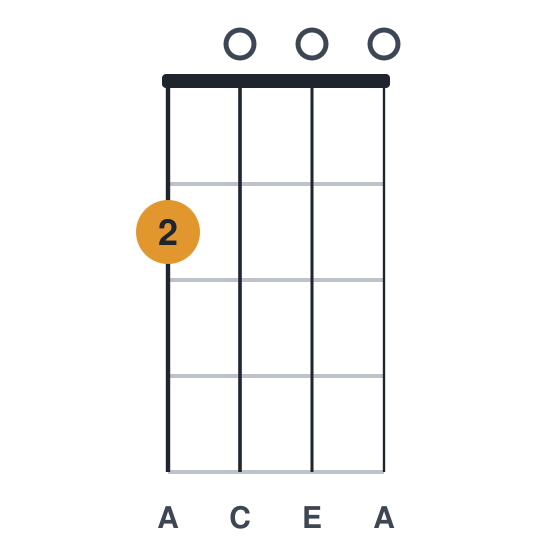
- Amthe same chord without the seventh
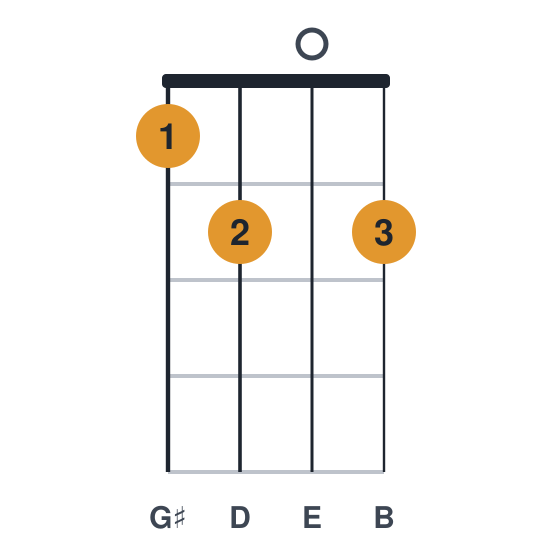
- E7the V chord that resolves to A minor
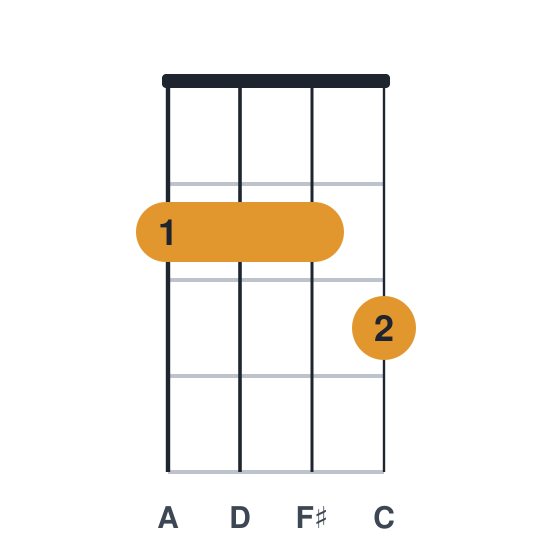
- D7partner in the ii V of G major
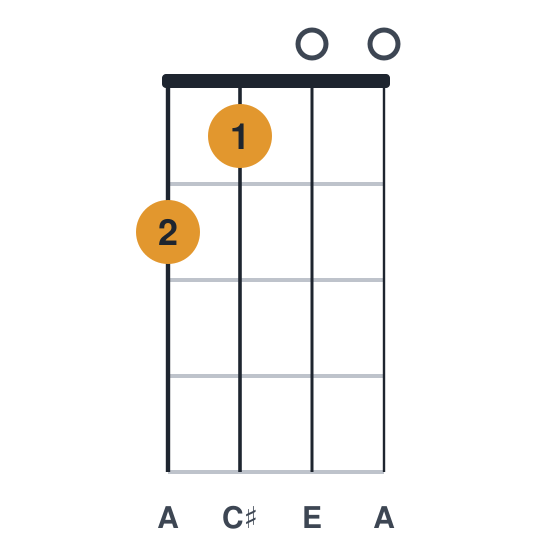
- Athe major on the same root


Other A chords
Am7 ukulele chord chart (0000) from melodician.com