A6 Ukulele Chord
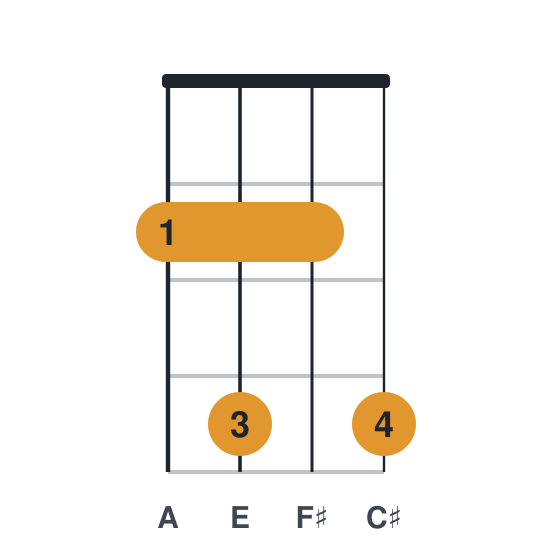
A6 is the A sixth chord. It has four notes: A, C sharp, E and F sharp. The main shape is a small barre: the index flat across the g, C and E strings at the 2nd fret with two fingers reaching the 4th.

A three string barre at the 2nd fret with the ring and pinky at the 4th on the C and A strings. No open strings; the shape slides.
How to play A6 on ukulele, step by step
- Index finger: press flat across the G to E strings at fret 2
- Ring finger: 4th fret, C string
- Pinky finger: 4th fret, A string
- Strum all four strings.
This grip has no open strings, so it slides: the same shape one fret down is Ab6, two frets up is B6. Learn it once and you own a sixth chord anywhere on the neck.
More ways to play A6
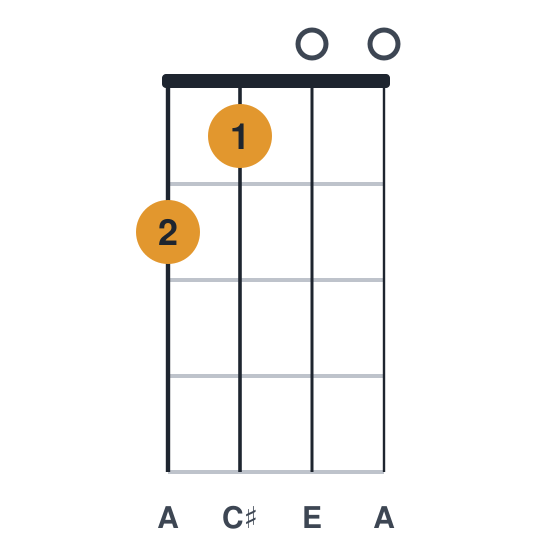
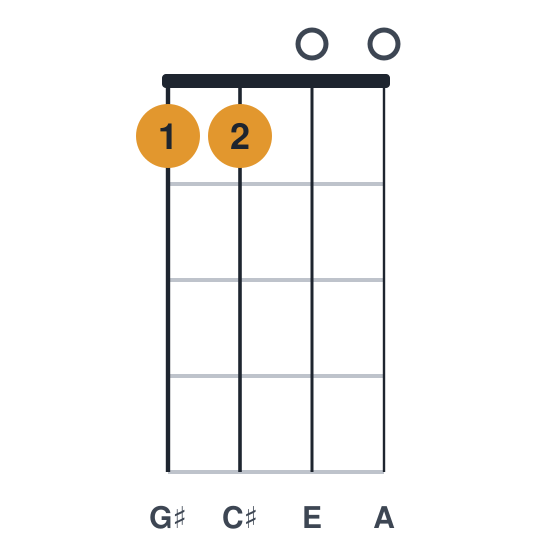
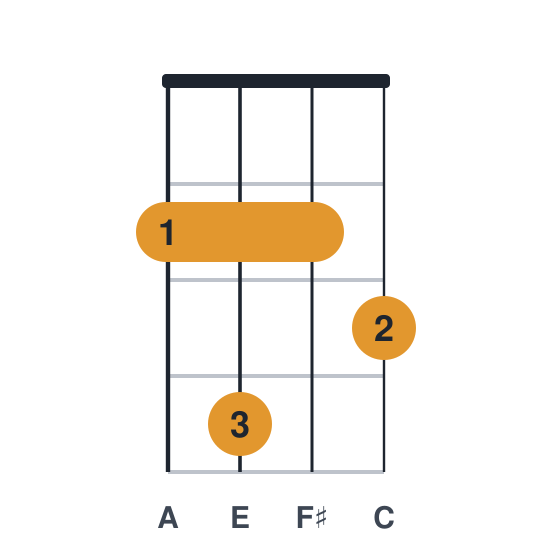
There are 3 common A6 shapes: the standard one at the top of the page, plus these further up the neck. You only ever need one. Tap any card to hear it.

Half fretted, half open: a ringing, spread out A6 that suits fingerpicking.

Bright and close packed at the top of the neck. An ending voicing.
If it sounds muddy or buzzy
- Notes under the barre drop out
- The index covers three strings at the 2nd fret. Roll it slightly onto its outer edge so the bone presses rather than the soft pad, and keep it right behind the fret.
- The A string is quiet
- The pinky at the 4th fret is the weakest point of the shape. Press with its very tip and check the note alone before strumming.
- The stretch feels wide
- Two frets between barre and fingers is normal for this shape. Bring the thumb low behind the neck and the fingers arrive at less of an angle.
What makes it an A6
A · C♯ · E · F♯ 1 3 5 6
A6 is an A major triad (A, C sharp, E) with a sixth added: the F sharp, nine half steps above the root. Nothing is taken away, so the chord still sounds like A, only rounder and warmer.
The same four notes read from F sharp spell F#m7. With no bass string on a ukulele, neither note owns the bottom of the chord, so the surrounding music decides which name your ear picks. One barre covers both.
A6 vs Amaj7
A6 adds an F sharp to the A triad; Amaj7 adds a G sharp. The sixth sits a whole step below the root and sounds finished; the major seventh sits a half step below and sounds suspended.
In songs in A the sixth is the ending colour and the major seventh the dreaming one. Swing and older pop use A6 simply as their normal A.
A6 chord questions
Is A6 the same as F#m7?
The four notes are the same: A, C sharp, E and F sharp. On a ukulele no bass note settles it, so the chords around it decide which name applies.
Is A6 hard to play?
It is a small barre plus two fingers, so it takes more setup than a two finger open chord. The barre only covers three strings, which makes it a good first barre to learn.
What is the difference between A6 and A7?
A6 adds an F sharp and rests; A7 adds a G and pushes toward D. Different jobs from the same root.
Can I move this shape?
Yes. There are no open strings, so the whole grip slides: one fret down it is Ab6, one up it is Bb6. This is the movable sixth shape on ukulele.
Chords to learn next
- Athe plain major underneath it
- F#m7the same four notes counted from F#
- Amaj7the other note people add to a major chord
- Am6the same sixth over a minor chord


Other A chords
A6 ukulele chord chart (2424) from melodician.com