Amaj7 Ukulele Chord
Amaj7 is the A major seventh chord. It has four notes: A, C sharp, E and G sharp. On a ukulele it is two fingers side by side at the 1st fret of the G and C strings, with the E and A strings open.

Two fingers side by side at the 1st fret of the G and C strings, E and A open. The plain A chord softened by one fret.
How to play Amaj7 on ukulele, step by step
- Index finger: 1st fret, G string
- Middle finger: 1st fret, C string
- Leave the E and A strings open. Strum all four strings.
This is the plain A chord with the G string finger pulled back one fret, from the 2nd to the 1st. The two fretted notes sit shoulder to shoulder, and some players flatten one finger across both instead of using two.
More ways to play Amaj7
There are 3 common Amaj7 shapes: the standard one at the top of the page, plus these further up the neck. You only ever need one. Tap any card to hear it.

Mellow and even; the root on the open string lets the fretted notes glow underneath it.

Bell-like and spread out: two high fretted notes against two open strings.
If it sounds cramped
- The two fingers crowd each other
- Index and middle share the 1st fret on neighbouring strings. Stack them in a slight diagonal, index a touch further back, so each fingertip has its own space.
- The open E string sounds dull
- The middle finger on the C string is leaning over. Curl it upright so the E can ring; it carries the fifth of the chord.
- It sounds like plain A
- The G string finger has crept back to the 2nd fret. The major seventh is at the 1st: one fret lower, one shade softer.
What makes it an Amaj7
A · C♯ · E · G♯ 1 3 5 7
Amaj7 is a major seventh chord: an A major triad (A, C sharp, E) plus a major seventh (G sharp). The G sharp presses up against the root a half step away, which gives every maj7 chord its soft, suspended glow. The open E and A strings supply the fifth and the root, so the colour comes entirely from the two fretted notes.
Amaj7 is the I chord of A major and the IV chord of E major, two comfortable ukulele keys. Where plain A states its point and moves on, Amaj7 hangs in the air, which is why ballads and island standards reach for it.
A vs Amaj7
A major is 2100 and Amaj7 is 1100: one finger moves one fret on the G string, turning the doubled colour of the plain chord into a G sharp that leans into the root. The chord stops resolving and starts floating.
The G string tells the whole story on this root: open it is A7, at the 1st fret it is Amaj7, at the 2nd it is plain A. Three chords, one string, one finger.
Amaj7 chord questions
Can I barre the two notes in Amaj7?
Yes. Both fretted notes sit at the 1st fret, so one finger laid flat across the G and C strings plays the same thing. Use whichever grip changes chords faster for you.
What is the difference between Amaj7 and A7?
The note on the G string. A7 leaves it open (a G natural, the flat seventh); Amaj7 frets it at the 1st fret (G sharp, the major seventh). One fret separates bluesy from dreamy.
Do you strum all four strings in Amaj7?
Yes. The two open strings are the root and the fifth, and the two fretted ones carry the seventh and the third.
What keys use Amaj7?
It is the I chord of A major and the IV chord of E major, and it also appears wherever a song wants a softer A.
Is Amaj7 a beginner chord?
Yes. Two fingers at the 1st fret is one of the gentlest grips on the instrument, easier than the plain A for many hands.
Chords to learn next
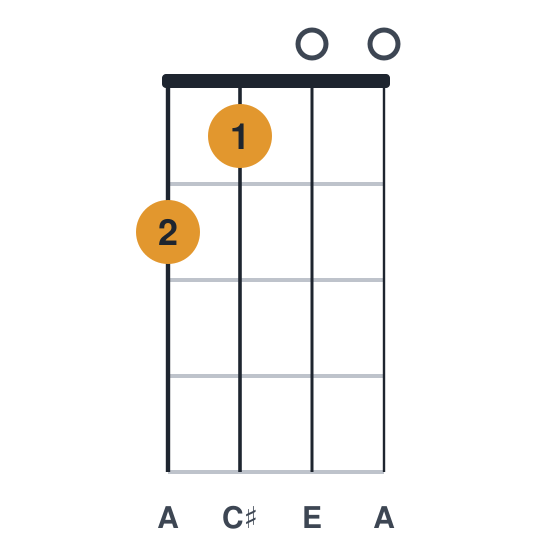
- Athe plain major
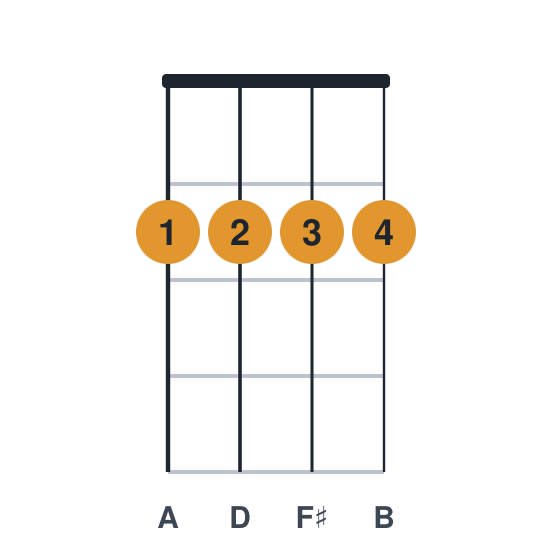
- Bm7the ii chord beside Amaj7 in the key of A
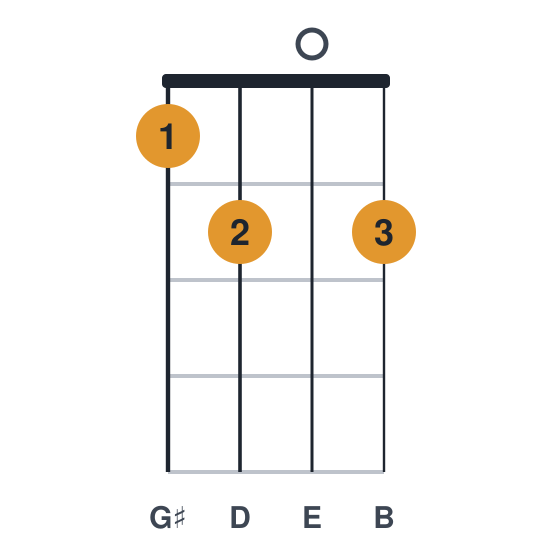
- E7the V chord of A
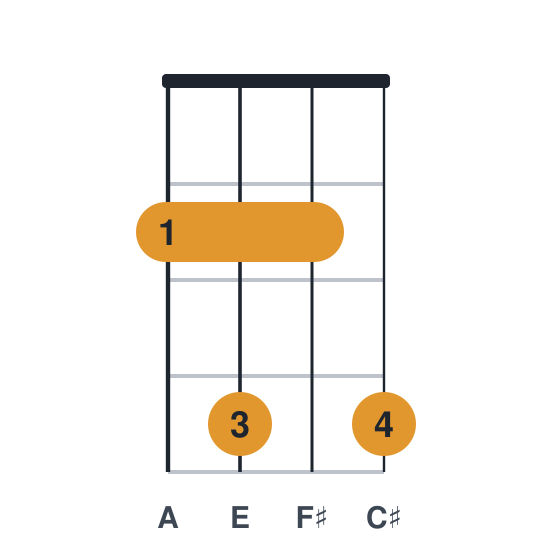
- A6the other soft colour on the same major


Other A chords
Amaj7 ukulele chord chart (1100) from melodician.com