Amaj9 Ukulele Chord
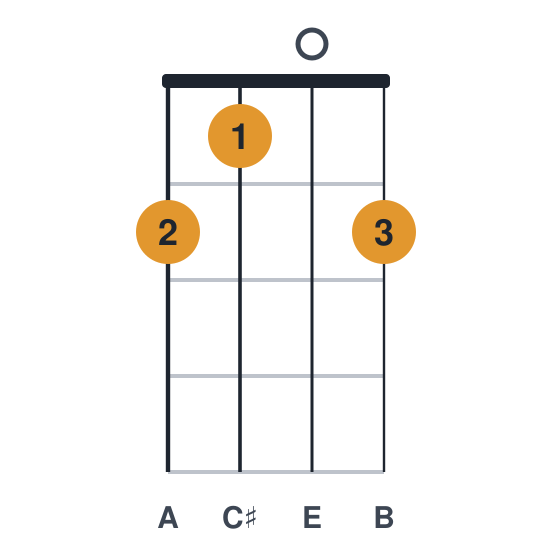
Amaj9 is the A major ninth chord. It has five notes: A, C sharp, E, G sharp and B. A ukulele has four strings, so the shapes here keep root, third, seventh and ninth and let the fifth go. The standard shape uses three fingers inside the first four frets with the open A string as the root.

Three fingers inside the first four frets with the open A string as the root. The ninth sits on the G string at the 4th fret; the fifth is left out, which no ear misses in a ninth chord.
How to play Amaj9 on ukulele, step by step
- Index finger: 1st fret, C string
- Middle finger: 4th fret, G string
- Ring finger: 4th fret, E string
- Leave the A string open. Strum all four strings.
The fifth, E, is left out on purpose: four strings can hold only four of the chord's five notes, and the fifth is the one the ear does not miss.
More ways to play Amaj9
There are 2 common Amaj9 shapes: the standard one at the top of the page, plus these further up the neck. You only ever need one. Tap any card to hear it.

Thinner and higher, closer to a harp than a strum. Useful when another instrument already holds the middle of the chord.
If notes drop out
- The open A string is muffled
- The ring finger on the E string at the 4th fret is leaning on it. Arch the finger and press with the tip so the A rings free.
- The reach from the 1st to the 4th fret feels wide
- The index sits at the 1st fret while two fingers sit at the 4th. Drop the thumb to the middle of the back of the neck and the hand opens up.
- It sounds like plain Amaj7
- The ninth is the B on the G string at the 4th fret. If that finger presses lazily the note dies and the chord loses exactly what makes it a ninth.
What makes it an Amaj9
A · C♯ · E · G♯ · B 1 3 5 7 9
Amaj9 is an Amaj7 chord with a ninth added: A, C sharp, E and G sharp make Amaj7, and the B on top makes it a ninth. On a ukulele the chord drops its fifth, the E: four strings hold four notes, and the fifth is the note a ninth chord can spare. This shape keeps the open A as the root with the third, seventh and ninth fretted around it.
It is the I chord of A major at its softest and the landing chord of a ii V I in A. Major ninths sound settled but unhurried, which is why bossa nova and soul lean on them, and the re-entrant high g keeps the whole chord ringing in one bright octave.
Amaj9 vs Amaj7
Amaj9 is Amaj7 with a B added. Amaj7 is already gentle; the ninth widens it and makes it sound deliberately arranged rather than simply strummed.
On the ukulele the two cost about the same effort, three fingers each, so the choice is purely about colour: Amaj7 rests, Amaj9 shimmers.
Amaj9 chord questions
Why is there no E in this Amaj9?
Four strings hold four notes, and Amaj9 has five. The fifth is the note that adds the least, so every ukulele shape of this chord leaves it out. The ear fills it in.
What is the difference between Amaj9 and Aadd9?
Amaj9 contains the G sharp, the major seventh. Aadd9 has no seventh: it is A major with a B added. The seventh is what makes Amaj9 sound jazzy rather than bright.
What is the difference between Amaj9 and A9?
A9 has a G natural, the flat seventh, and pulls toward D. Amaj9 has a G sharp and stays put. One drives, the other rests.
Is Amaj9 hard to play on ukulele?
No. The standard shape is three fingers with the open A string doing the root's work, no barre and nothing past the 4th fret.
Where is Amaj9 used?
As the I chord of A major in jazz, bossa nova and soul, and anywhere Amaj7 is written and a softer, wider sound is wanted.
Chords to learn next
- Amaj7the same chord without the ninth
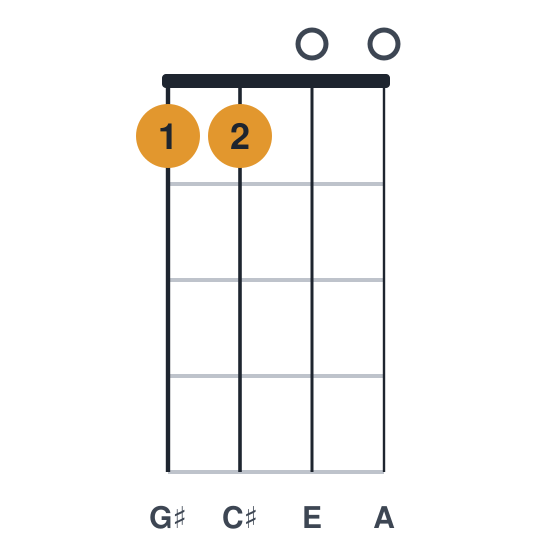
- Aadd9the ninth without the seventh
- Athe plain major
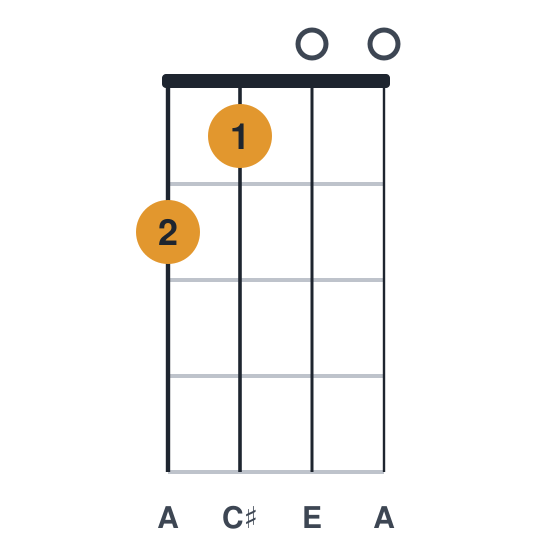
- A6the other soft colour on the same major
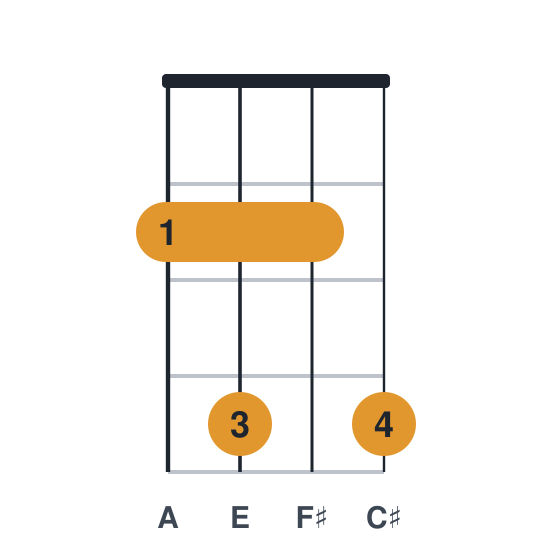


Other A chords
Amaj9 ukulele chord chart (4140) from melodician.com