D7 Ukulele Chord
D7 is the D dominant seventh chord. It has four notes: D, F sharp, A and C. The shape is a small barre: index flat across the g, C and E strings at the 2nd fret, middle finger on the 3rd fret of the A string.

Index barred across the g, C and E strings at the 2nd fret, middle on the 3rd fret of the A string. C7 moved up two frets, barre in place of the nut.
How to play D7 on ukulele, step by step
- Index finger: press flat across the G to E strings at fret 2
- Middle finger: 3rd fret, A string
- Strum all four strings.
The grip is C7 moved up two frets, with the barre doing the nut's job. That is the pattern behind most ukulele seventh chords: master this one and Eb7, one fret higher, is already learned.
More ways to play D7
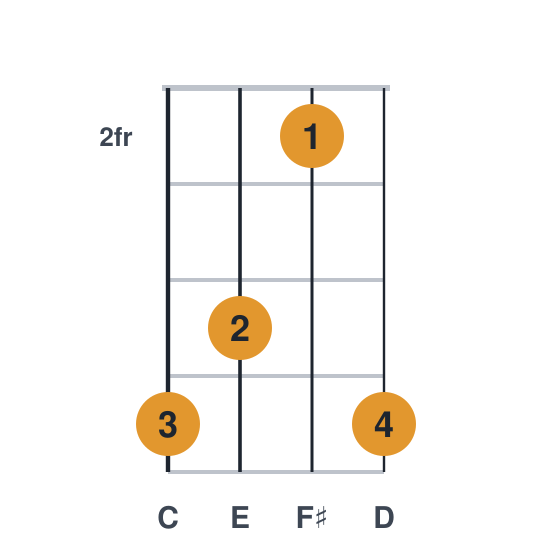
There are 3 common D7 shapes: the standard one at the top of the page, plus these further up the neck. You only ever need one. Tap any card to hear it.

Fuller and darker, all four strings under the hand. A natural choice when the tune already sits mid neck.

Bright and cutting, the highest D7 here. More stab than strum, and happiest on a tenor where the top frets stay in tune.
If it sounds wrong
- The A string note is weak
- The middle finger works alone out on the A string. Keep its tip curled and close behind the 3rd fret so the barre hand does not drag it flat.
- The E string dies
- It sits at the edge of the three string barre. Make sure the index covers it fully rather than ending in the middle of the string.
- The chord buzzes near the nut
- Slide the whole grip snug behind the fret wire: barre right behind the 2nd fret, middle finger right behind the 3rd.
What makes it a D7
D · F♯ · A · C 1 3 5 ♭7
D7 is a dominant seventh: a D major triad (D, F sharp, A) plus a minor seventh, C. The seventh gives it direction: D7 is the V7 of G, pulling to G major and G minor alike.
That makes D7 constant company in songs out of G, from country and bluegrass to campfire standards. It also chains: in the circle progressions the old songbooks love, A7 leads to D7 and D7 leads to G7.
D7 vs D
D is 2220 and D7 is 2223: the same three notes at the 2nd fret with one addition. The A string, open in D, gets fretted at the 3rd fret, and that added note, C, is the whole difference.
D closes a phrase; D7 hands it onward to G. Songs in G use the pair as question and answer, and since the two shapes differ by one finger, the change costs almost nothing.
D7 chord questions
Is D7 sometimes played 2020?
Yes, and it is worth knowing what that shortcut does: 2020 drops the root D entirely. It works in a band where someone else covers the root. This page teaches 2223, the D7 that contains every note of the chord.
What is the difference between D7 and D?
One added note. D is D, F sharp and A; D7 adds C, the seventh, by fretting the A string at the 3rd fret.
What does D7 resolve to?
G. D7 is the V7 chord of G major and G minor, which keeps it busy in two of the ukulele's most common song keys.
Is the barre in D7 hard?
It is one of the easier ones: three strings at the 2nd fret. If C7 is comfortable, this is the same grip with the barre standing in for the nut.
Where is D7 used?
In songs in G at every turnaround, in bluegrass and country vamps, and in circle of fifths runs where A7, D7 and G7 follow each other.
Chords to learn next
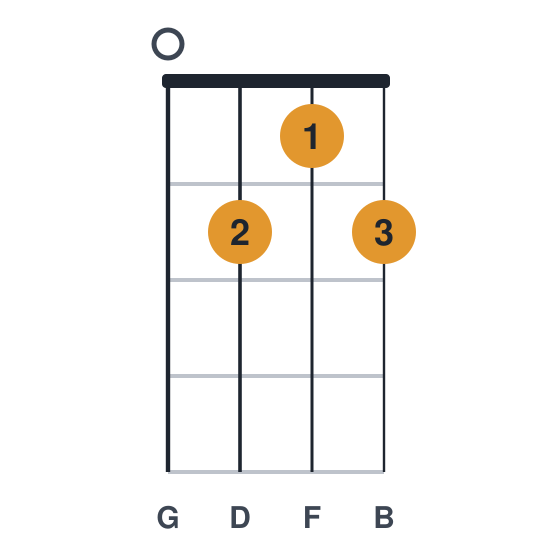
- G7D7 resolves to G
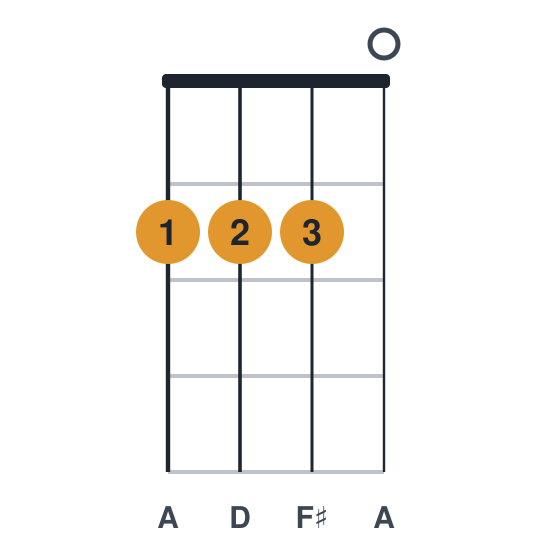
- Dthe plain major underneath it
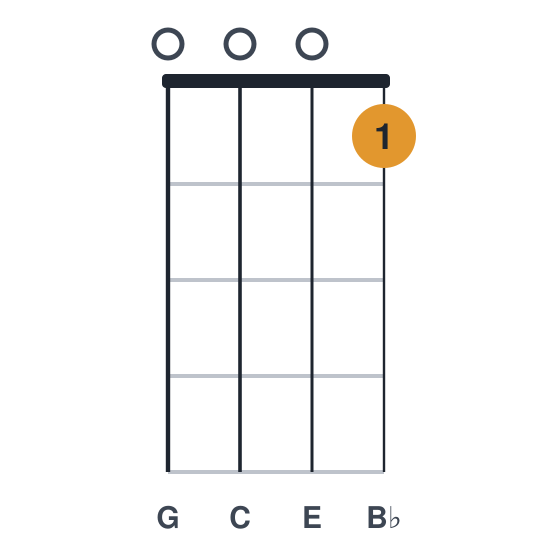
- C7the IV chord next to D7 in blues in G
- D9the same seventh with a ninth on top


Other D chords
D7 ukulele chord chart (2223) from melodician.com