Dadd9 Ukulele Chord
Dadd9 is the D added ninth chord. It has four notes: D, F sharp, A and E. The standard shape is a small barre at the 2nd fret with the ring and pinky fingers reaching the 4th and 5th, a stretchier grip than most ukulele chords ask for.

A small barre at the 2nd fret with the ring finger on the 4th fret of the C string and the pinky on the 5th fret of the A string.
How to play Dadd9 on ukulele, step by step
- Index finger: press flat across the G to E strings at fret 2
- Ring finger: 4th fret, C string
- Pinky finger: 5th fret, A string
- Strum all four strings.
If the stretch fights you, jump to the second shape on this page first: two fingers at the 6th and 7th frets with two open strings, and the same four notes.
More ways to play Dadd9
There are 3 common Dadd9 shapes: the standard one at the top of the page, plus these further up the neck. You only ever need one. Tap any card to hear it.

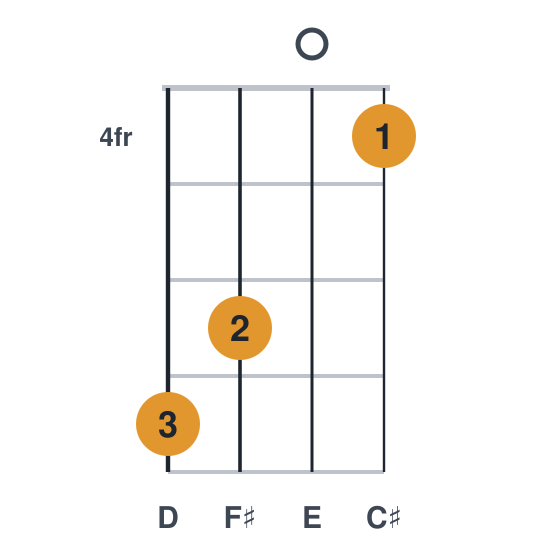
Open and ringing, halfway up the neck but easier than the standard shape. The lazy Dadd9, in the best sense.

High and chiming, over the body on most instruments. An ending voicing more than a verse one.
If it buzzes or the stretch fights you
- The pinky cannot reach the 5th fret
- Turn the wrist so the fingers approach the fretboard more from below. The barre only needs to hold three strings; let the hand pivot around it rather than stay square.
- The barre collapses when the pinky stretches
- Press the index a little harder into the 2nd fret before adding the outer fingers. If the barre is secure first, the stretch does not drag it out of place.
- Notes inside the barre are muffled
- The ring finger arching to the C string can brush the E string on its way over. Check each string one at a time and re-arch the offender.
What makes it a Dadd9
D · F♯ · A · E 1 3 5 9
Dadd9 is a D major triad (D, F sharp, A) with a ninth added: E. The ninth is the second note of the D scale moved up an octave, and because the third (F sharp) stays in the chord, Dadd9 keeps its major character and gains brightness.
It is the I chord of D, the IV of A and the V of G, three of the most common ukulele keys, and the added E belongs to all of them. That is why the swap from plain D to Dadd9 almost always works.
Dadd9 vs Dsus2
Both chords add an E to D, but Dsus2 removes the third (F sharp) to make room for it, while Dadd9 keeps the third and stacks the E alongside. Dadd9 is clearly major with extra shimmer; Dsus2 is hollow and undecided.
On a ukulele Dsus2 happens to be one of the easiest chords there is, so it gets played where Dadd9 was meant. If the song needs the chord to still feel like D major, it needs the add9.
Dadd9 chord questions
Why is Dadd9 a stretch on the ukulele?
The four notes sit three frets apart in this position, from the 2nd to the 5th. The barre holds the bottom while the ring and pinky reach, which is more span than most uke shapes ask for.
Is there an easier Dadd9?
Yes: two fingers at the 6th and 7th frets with the E and A strings open, the second shape on this page. Many players use it as their main Dadd9.
What is the difference between Dadd9 and D9?
D9 also contains a flat seventh, C, which makes it a dominant chord with a blues flavour. Dadd9 adds only the E and stays a bright major chord.
What is the difference between Dadd9 and Dsus2?
Both contain an E, but Dsus2 removes the third (F sharp) and floats, while Dadd9 keeps the third and still sounds fully major.
Can I play Dadd9 instead of D?
Usually yes, especially in the keys of D, G and A where the added E belongs. It brightens one of the ukulele's most-used chords.
Chords to learn next
- Dthe plain major
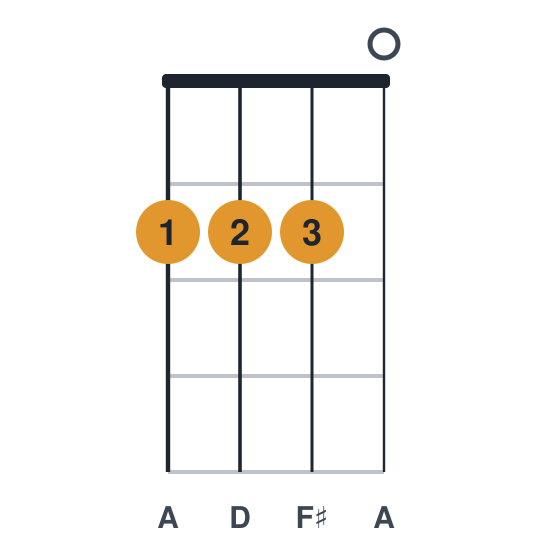
- Dsus2the 9 without the 3
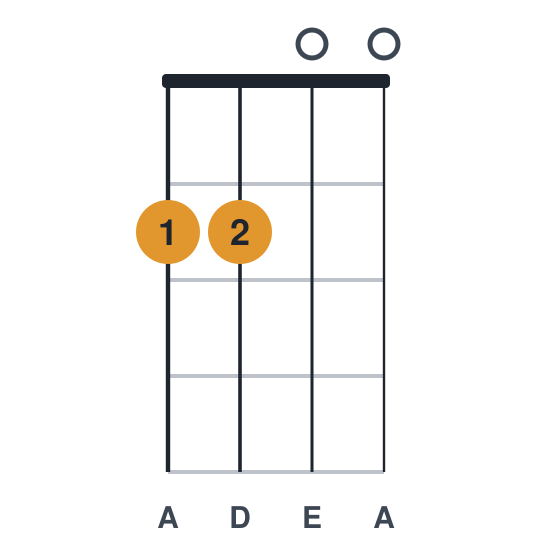
- Dmaj7another colour on the same major
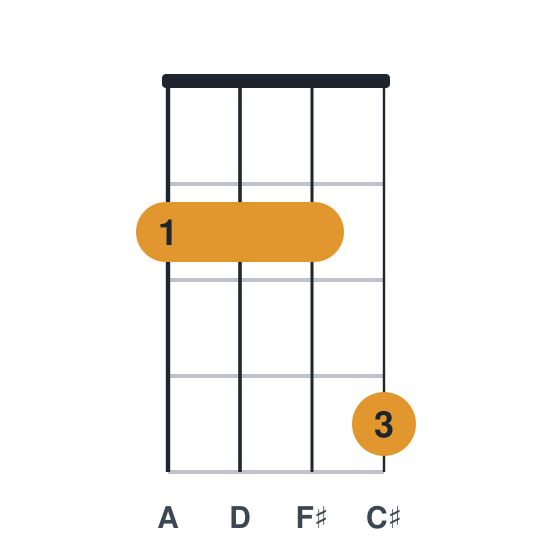
- Dmaj9the same ninth with the seventh under it


Other D chords
Dadd9 ukulele chord chart (2425) from melodician.com