D6 Ukulele Chord
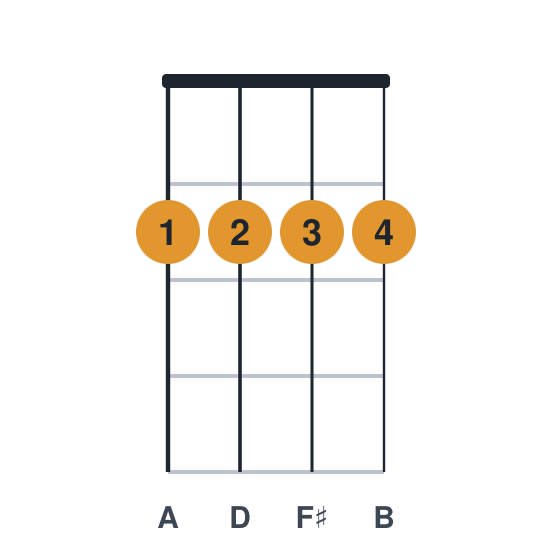
D6 is the D sixth chord. It has four notes: D, F sharp, A and B. The main shape is one straight line: every string fretted at the 2nd fret, printed with four fingers, though many players lay the index flat across all four instead.

Every string at the 2nd fret, one finger per string, or one finger laid flat across all four. The straightest line on the instrument.
How to play D6 on ukulele, step by step
- Index finger: 2nd fret, G string
- Middle finger: 2nd fret, C string
- Ring finger: 2nd fret, E string
- Pinky finger: 2nd fret, A string
- Strum all four strings.
The chart shows four fingers, one per string, but the shape is a straight line, and a common way to play it is one finger laid flat across the 2nd fret. Try both; the flat finger version is also the one that slides up the neck to make other sixth chords.
More ways to play D6
There are 3 common D6 shapes: the standard one at the top of the page, plus these further up the neck. You only ever need one. Tap any card to hear it.

Firmer and more middle of the neck than the straight line, with the root ringing on top.

A spread, airy D6 with the open A inside it. Nicer picked than strummed.
If it sounds muddy or buzzy
- Four fingers will not fit in one fret
- They fit at an angle: stagger them so each fingertip takes its own string, index nearest the g. If it stays cramped, lay the index flat across all four strings instead and let one finger do the work.
- The flat finger version buzzes
- A finger laid across four strings has to sit right behind the fret wire and stay straight. Roll it very slightly onto its bony edge and squeeze from the thumb behind the neck.
- The outside strings are quiet
- Whether fingered or barred, the g and A strings get the least pressure. Strum slowly and check all four notes speak before playing it in time.
What makes it a D6
D · F♯ · A · B 1 3 5 6
D6 is a D major triad (D, F sharp, A) with a sixth added: the B, nine half steps above the root. Nothing is taken away, so the chord still sounds like D, just rounder and more relaxed.
The same four notes read from B spell Bm7. A ukulele has no bass string to declare a winner, so the music around the chord decides which name the ear hears. One straight line, two chart symbols.
D6 vs Dmaj7
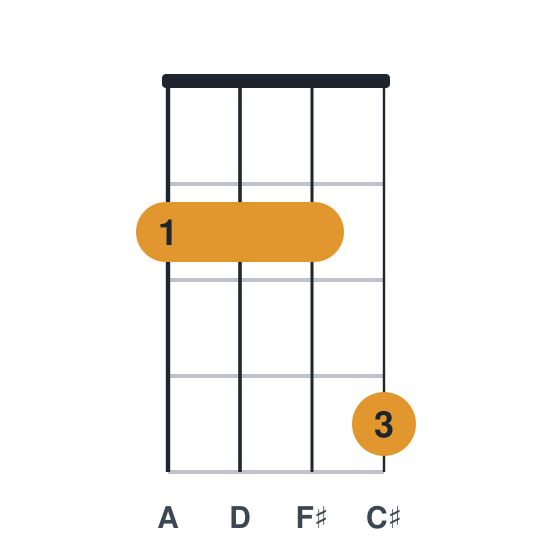
D6 adds a B to the D triad; Dmaj7 adds a C sharp. A whole step below the root against a half step: the sixth settles, the major seventh hovers.
Songs in D often end on D6 rather than plain D because the sixth rounds the ending off. Dmaj7 is the one to reach for mid phrase, when the music should feel like it has not finished.
D6 chord questions
Is D6 the same as Bm7?
The four notes are the same: D, F sharp, A and B. On a ukulele, with no bass note, the chords around it decide which name fits the moment.
Can I barre D6 with one finger?
Yes. The shape is every string at the 2nd fret, so one finger laid flat plays the whole chord. The chart prints four fingers because that grip keeps each note cleaner, but the barre is standard practice too.
What is the difference between D6 and D7?
D6 adds a B and rests; D7 adds a C and pushes toward G. They are one fret apart on the C string and opposite in behaviour.
When would I use D6?
As a softer D: ending songs in D, and in swing and Hawaiian playing where sixth chords stand in for plain majors as a matter of style.
Chords to learn next
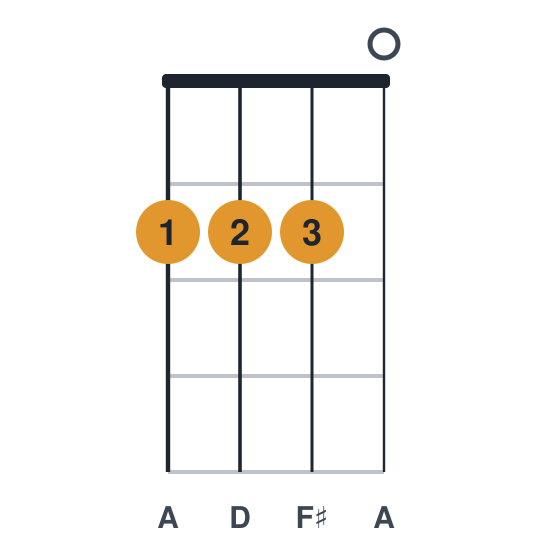
- Dthe plain major underneath it
- Bm7the same four notes counted from B
- Dmaj7the other note people add to a major chord
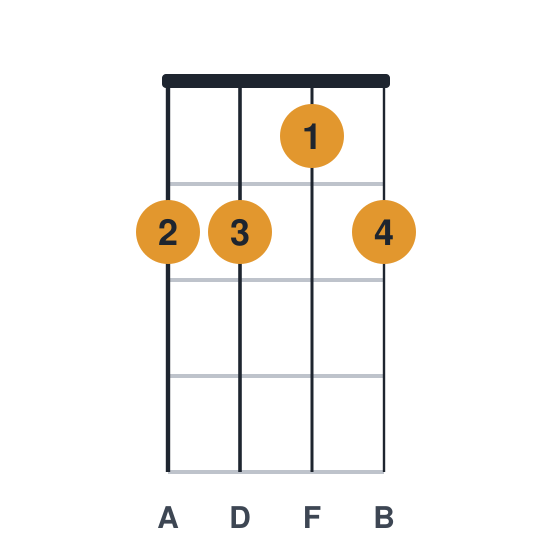
- Dm6the same sixth over a minor chord


Other D chords
D6 ukulele chord chart (2222) from melodician.com