Dm Ukulele Chord
Dm is the D minor chord. It has three notes: D, F and A. The standard shape puts the middle and ring fingers on the 2nd fret of the G and C strings and the index on the 1st fret of the E string, with the A string open.

Middle and ring on the 2nd fret of the G and C strings, index on the 1st fret of the E string, A string open.
How to play Dm on ukulele, step by step
- Index finger: 1st fret, E string
- Middle finger: 2nd fret, G string
- Ring finger: 2nd fret, C string
- Leave the A string open. Strum all four strings.
Dm is the D major shape with one note moved: keep the two 2nd fret fingers down and bring the E string back from the 2nd fret to the 1st. That single fret is the whole major to minor change.
More ways to play Dm
There are 3 common Dm shapes: the standard one at the top of the page, plus these further up the neck. You only ever need one. Tap any card to hear it.

Rounder than the open shape, with the root leading from the G string.

Thin and high, the mandolin end of the neck. More special effect than strumming chord.
If something buzzes or goes quiet
- The open A string goes quiet
- The index on the E string is leaning over. Keep it on its tip; the A string next door needs the room.
- The 2nd fret pair buzzes
- Middle and ring share one fret on neighbouring strings. Keep them side by side just behind the fret rather than stacked one behind the other.
- It sounds like D major
- The E string must sit at the 1st fret, not the 2nd. That one fret is the flat third, the note that makes the chord minor.
What makes it a Dm
D · F · A 1 ♭3 5
Dm is a minor triad: D, a minor third F, and a fifth A. The open A string supplies the fifth, and the three fretted notes sit inside the first two frets, which keeps the shape compact and quick to land.
Dm is the relative minor of F major and works as the ii of C and the vi of F. The key of C is ukulele home ground, so Dm is usually the second or third minor chord a player meets, right after Am and Em.
Dm vs D
One note separates them: Dm has an F where D major has an F sharp. On the ukulele that is the E string, 1st fret against 2nd. The other two fingers do not move, so the change is one finger sliding back a fret.
Play D, then Dm, and listen to the E string alone: the half step down is the entire major to minor turn, easier to hear on this pair than almost anywhere else on the instrument.
Dm chord questions
Is Dm a beginner chord?
Yes. Three fingers inside the first two frets, no barre, and an open string carrying the fifth.
What is the difference between Dm and D?
One note: the E string at the 1st fret instead of the 2nd. F against F sharp is the minor against the major third.
Do you strum all four strings in Dm?
Yes. The open A is the fifth of the chord, so everything rings.
What keys use Dm?
It is the ii chord of C major, the vi chord of F major, and the home chord of D minor.
What should I learn after Dm?
Dm7 softens this chord with a seventh, and Gm pairs with Dm constantly in the key of F.
Chords to learn next
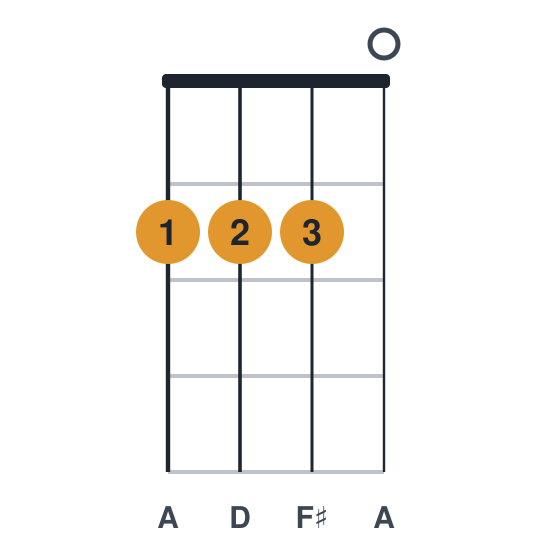
- Dthe major version of Dm
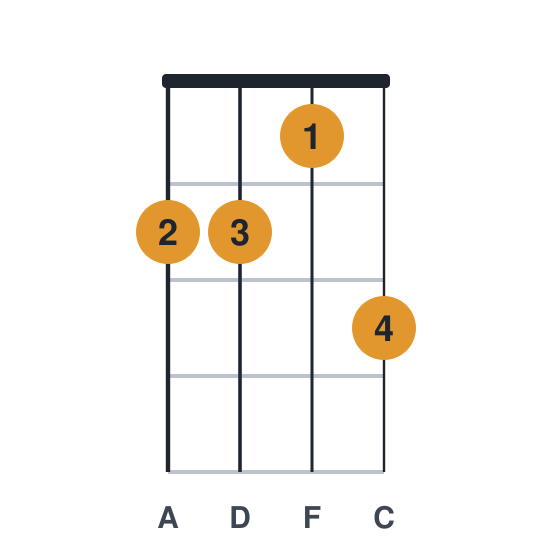
- Dm7adds a seventh for a softer Dm
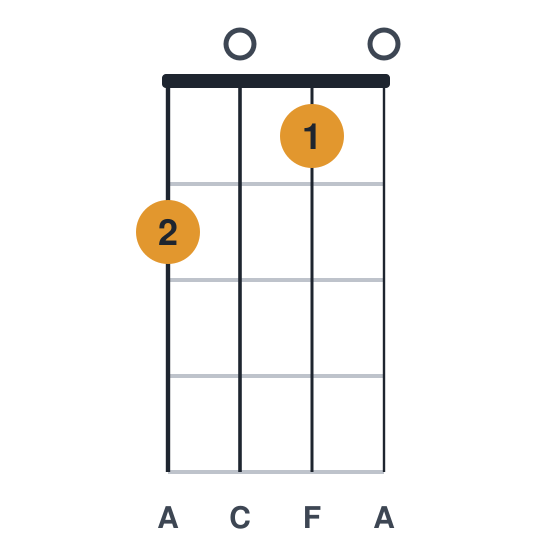
- Fthe relative major of Dm
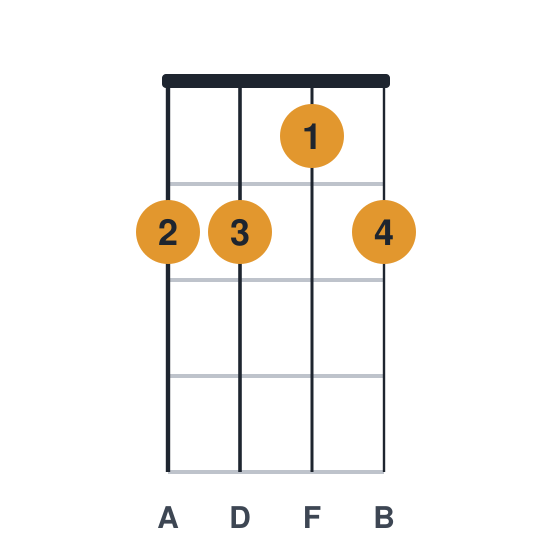
- Dm6the same minor with an old-fashioned sixth


Other D chords
Dm ukulele chord chart (2210) from melodician.com