D9 Ukulele Chord
D9 is the D dominant ninth chord. On ukulele it keeps four of its five notes: D, F sharp, C and E, with the fifth left out. The standard shape is a four finger grip between the 2nd and 5th frets.

Four fingers between the 2nd and 5th frets: third on the E string, ninth on the C, seventh on the G, root on the A string at the 5th.
How to play D9 on ukulele, step by step
- Index finger: 2nd fret, E string
- Middle finger: 4th fret, C string
- Ring finger: 5th fret, G string
- Pinky finger: 5th fret, A string
- Strum all four strings.
This is the movable ninth grip with its root on the A string at the 5th fret. Slide it down two frets and the same hand plays C9; the shape never changes, only the address.
More ways to play D9
There are 3 common D9 shapes: the standard one at the top of the page, plus these further up the neck. You only ever need one. Tap any card to hear it.

Looser than the standard grip, with the ninth ringing open in the middle. A softer, more open take on the same chord.

Airy and wide, half the chord on open strings high on the neck. Sparse enough to sound like an arrangement choice.
If the shape is not clean
- The index note is weak
- The index holds the E string at the 2nd fret, the chord's third, while three bigger fingers press above it. Keep it on its tip and directly behind the fret.
- The two 5th fret notes clash
- Ring and pinky sit side by side on the G and A strings. Let them fall together as a pair; if one lags, its string mutes.
- The whole chord is quiet
- A fully fretted shape only speaks with full pressure on every string. Strum the four strings slowly once and fix any that do not ring before playing in time.
What makes it a D9
D · F♯ · A · C · E 1 3 5 ♭7 9
D9 is a D7 chord with a ninth added: D, F sharp and C carry the seventh chord and the E on top of the stack is the ninth. A ukulele has four strings for those five notes, so the fifth, A, is left out, exactly the note guitar players drop from their ninth grips.
It is the V chord of G, one of the friendliest ukulele keys, which makes D9 a chord worth owning: every song in G that wants a smoother D7 wants this.
D9 vs D7
D9 adds an E on top of D7. Both pull toward G, but D7 sounds plain spoken and D9 sounds dressed up for the evening.
In a song in G, try D7 in the verse and D9 at the turnaround. The job is identical; the ninth just rounds the corner more smoothly.
D9 chord questions
Why is there no A in these shapes?
A ukulele has four strings and D9 has five notes. The fifth is the note a ninth chord misses least, so it is the one left out.
Is D9 hard to play on ukulele?
The standard shape needs all four fingers, but two easier forms sit further up the page: one uses the open E string, and one needs only two fingers with two open strings.
What is the difference between D9 and Dadd9?
D9 contains C, the flat seventh, and pulls toward G. Dadd9 has no seventh at all and just brightens a plain D major.
Can I move the standard shape?
Yes. Nothing in it is open, so it slides whole: two frets down is C9, one fret up is Eb9. The root rides the A string.
Where is D9 used?
As the V chord in G, in blues in D, and in swing and jazz tunes that want their dominant chords rounded off.
Chords to learn next
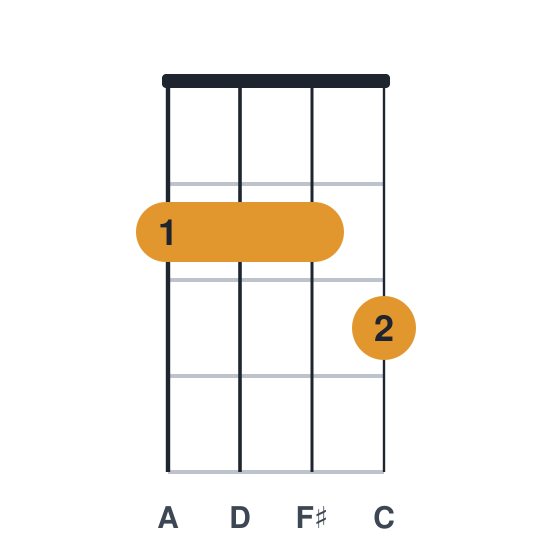
- D7the same chord without the ninth
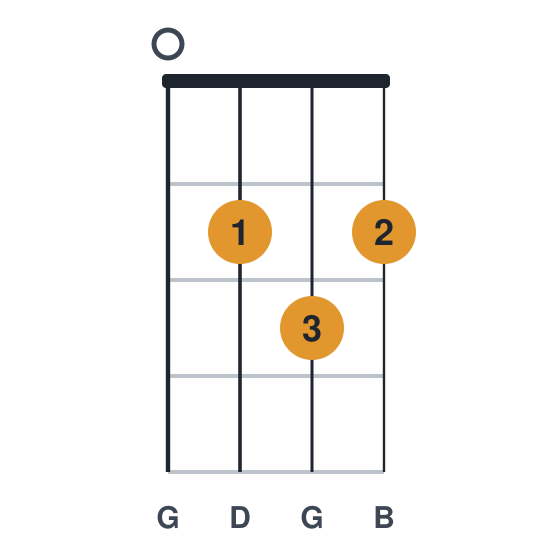
- Gwhere D9 wants to resolve
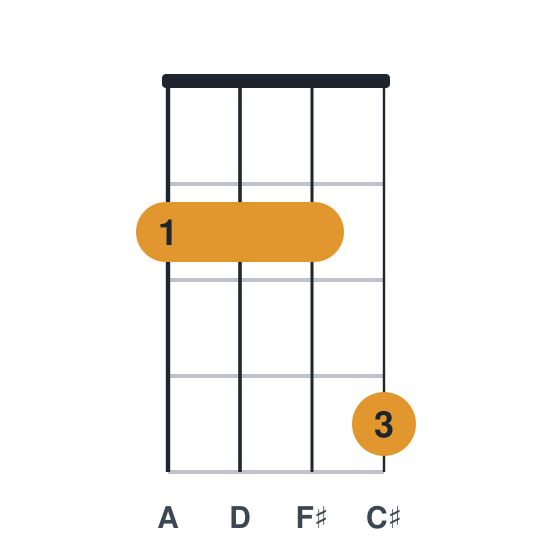
- Dmaj7the other seventh built on this root
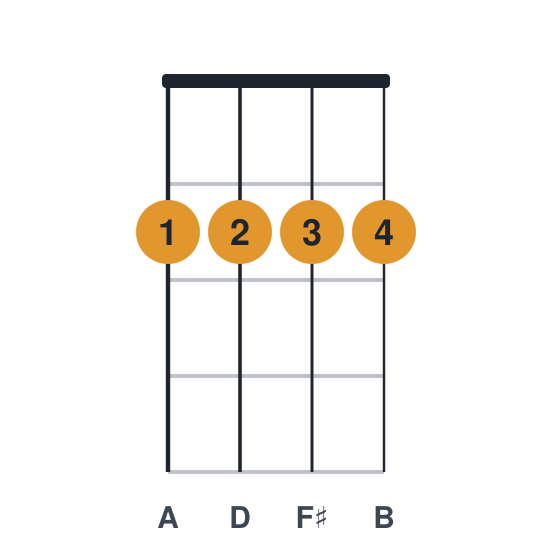
- D6the same root with a sixth instead of a seventh


Other D chords
D9 ukulele chord chart (5425) from melodician.com