F#6 Ukulele Chord
F#6 is the F sharp sixth chord. It has four notes: F sharp, A sharp, C sharp and D sharp. The main shape is the F6 grip moved up one fret: four fingers between the 2nd and 4th frets, no barre.

The F6 grip one fret up: index on the E string at the 2nd, middle and ring at the 3rd, pinky on the A string at the 4th.
How to play F#6 on ukulele, step by step
- Index finger: 2nd fret, E string
- Middle finger: 3rd fret, G string
- Ring finger: 3rd fret, C string
- Pinky finger: 4th fret, A string
- Strum all four strings.
Nothing in this shape is specific to F sharp: it is F6 slid one fret up the neck, and every one of its notes moved with it. Slide it again and you are playing G6.
More ways to play F#6
There are 3 common F#6 shapes: the standard one at the top of the page, plus these further up the neck. You only ever need one. Tap any card to hear it.

Even and firm mid neck; a single flattened finger can play it.

Bright and high. An ending colour at the top of the neck.
If it sounds muddy or buzzy
- The four fingers crowd
- Two fingers share the 3rd fret with one below and one above. Keep the knuckles high and drop each finger on its tip so none leans on a neighbour.
- The E string note is weak
- The index at the 2nd fret sits under the whole shape. Arch the fingers above it and test the string alone before strumming.
- The chord sounds sour
- One string a fret out turns a sixth chord sour fast. Strum slowly: g at 3, C at 3, E at 2, A at 4, nothing open.
What makes it an F#6
F♯ · A♯ · C♯ · D♯ 1 3 5 6
F#6 is an F sharp major triad (F sharp, A sharp, C sharp) with a sixth added: the D sharp, nine half steps above the root. Nothing is taken away, so the chord still sounds like F sharp, just rounder and softer.
The same four notes read from D sharp spell Ebm7. A ukulele has no bass string to settle which name applies, so the surrounding music settles it instead.
F#6 vs F#maj7
F#6 adds a D sharp to the F sharp triad; F#maj7 adds an E sharp, spelled F on a chart. The sixth sits a whole step below the root and rests; the major seventh sits a half step below and floats.
F sharp mostly appears when a song has been moved to suit a singer. Wherever it lands, the sixth is the version that finishes a phrase without leaning anywhere.
F#6 chord questions
Is F#6 the same as Gb6?
Yes, one chord with two spellings. Fretted players write F#6; flat keys write Gb6. Same shape either way.
Is F#6 the same as Ebm7?
The four notes are the same: F sharp, A sharp, C sharp and D sharp. With no bass note, context decides which chord the ear hears.
Is F#6 hard to play?
It is four fingertips in three frets, the same effort as F6. Nothing barres and nothing stretches far; it is busy rather than hard.
What is the difference between F#6 and F#7?
F#6 adds a D sharp and rests; F#7 adds an E and pushes toward B. Endings against motion.
Chords to learn next
- F#the plain major underneath it
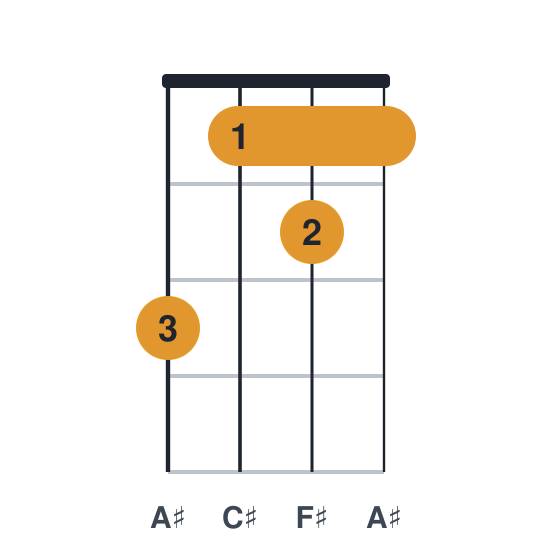
- Ebm7the same four notes counted from Eb
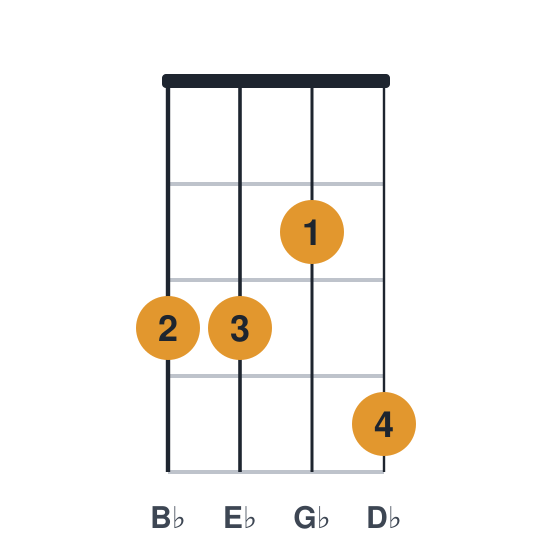
- F#maj7the other note people add to a major chord
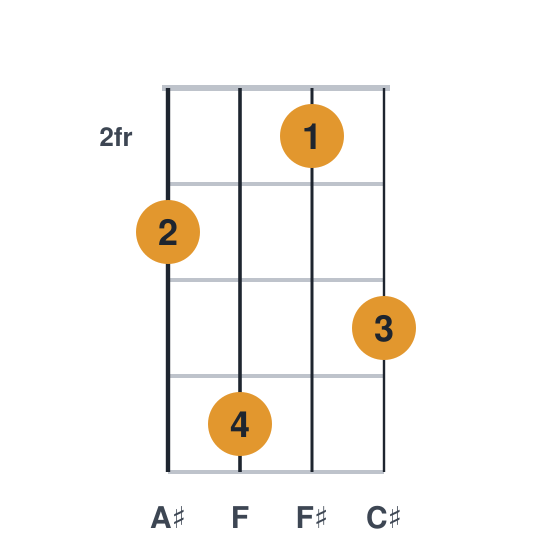
- F#m6the same sixth over a minor chord
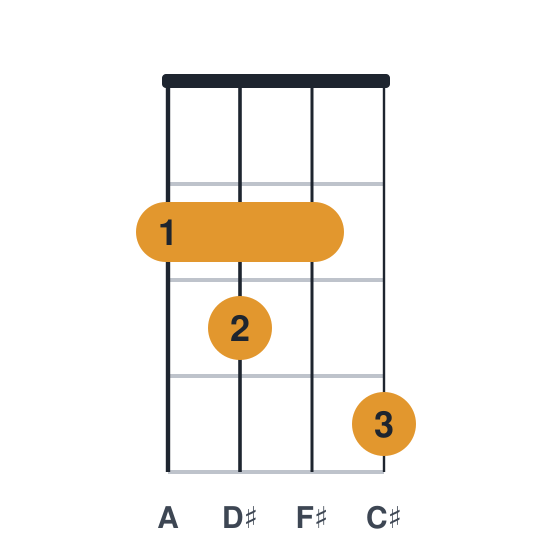


Other F# chords
F#6 ukulele chord chart (3324) from melodician.com